How to Inspect Table Saw Belts, Pulleys, and Bearings
What's inside
As an Amazon Associate I earn from qualifying purchases. This post may contain affiliate links at no extra cost to you.
A table saw can cut accurately for years with little more than cleaning and lubrication, but its drive system deserves a closer inspection at least once a year. The belt, pulleys, and arbor bearings transfer the motor’s power to the blade. A problem in any one of them can cause vibration, burning, reduced cutting power, or a blade that does not stay aligned.
Inspect the system before buying replacement parts. Many symptoms overlap, and replacing a belt will not fix a bent pulley or worn bearing. Unplug the saw, remove the blade, and wait until every moving part has stopped before opening the cabinet.
Contents
What to Check First
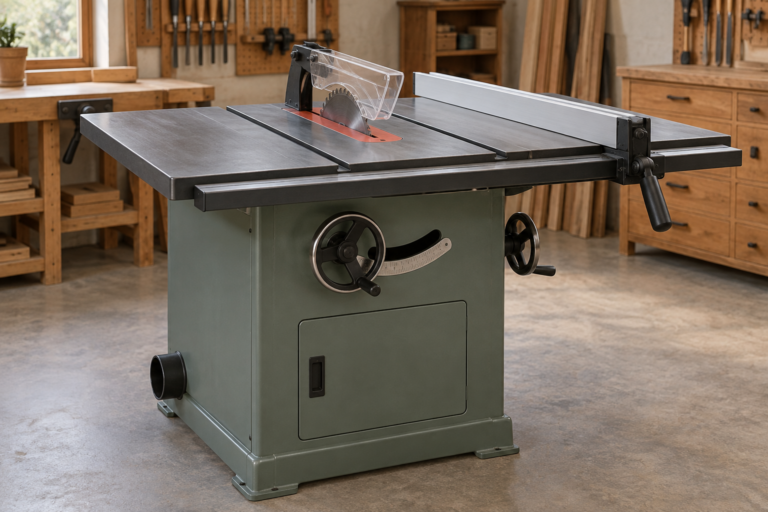
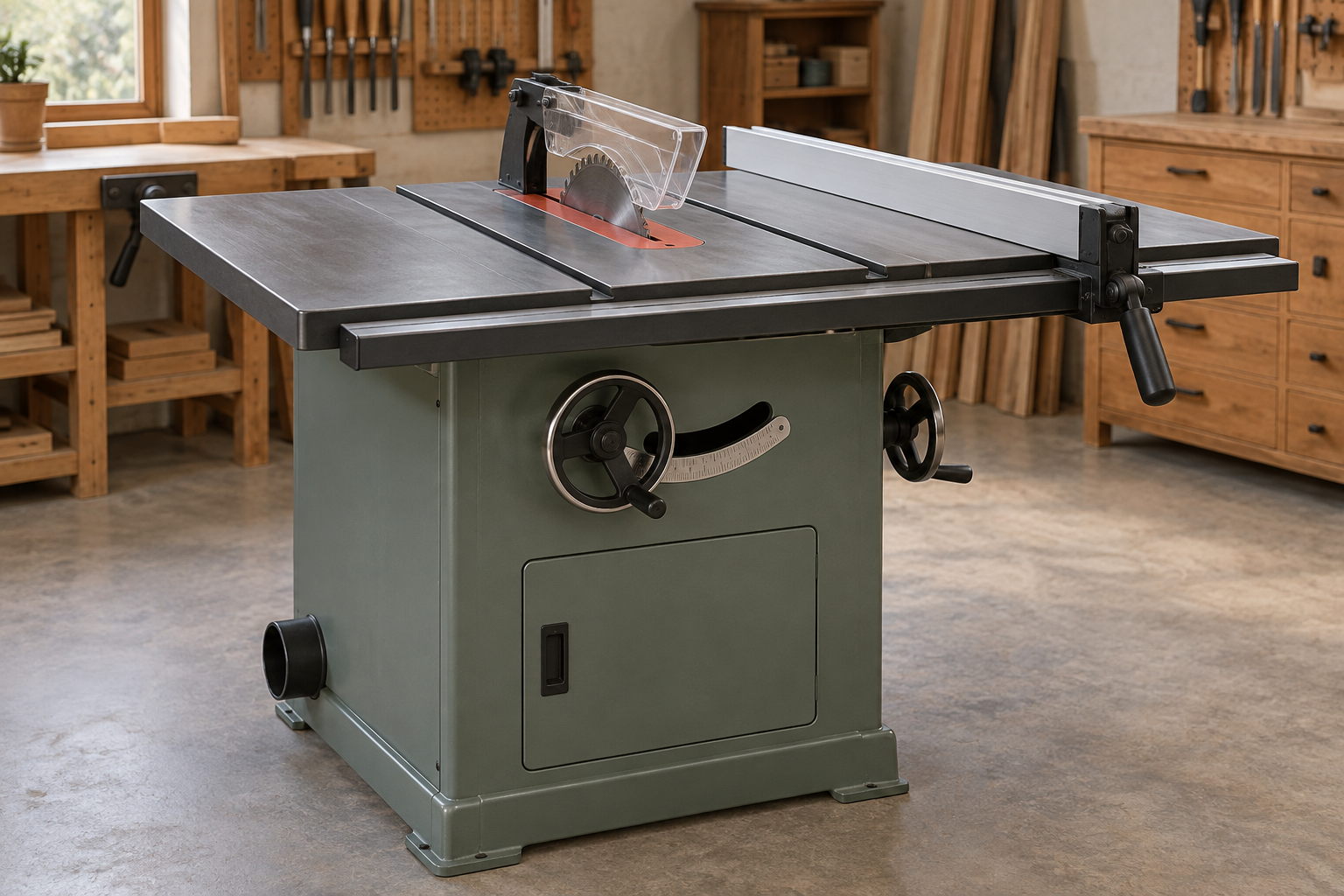
Remove the throat plate and lower the blade fully. On most cabinet and contractor saws, you can inspect the arbor pulley and belt through the cabinet opening. If access is poor, remove the belt guard or motor cover according to the saw’s manual.
Clean away dust with a vacuum and brush. Packed sawdust can make a belt run hot and can hide cracks in a pulley. Do not use compressed air around bearings unless you can prevent dust from being driven deeper into the seals.
Before removing anything, rotate the arbor by hand. It should turn smoothly, with consistent resistance and no rough spots. Hold the pulley and try to move it side to side. A small amount of belt flex is normal; movement of the pulley or arbor shaft is not.
Inspecting the Drive Belt
A belt should have a clean, continuous surface. Look for cracks across the ribs, missing chunks, glazing, frayed edges, oil contamination, and a shiny surface caused by slipping. V-belts can develop a concave wear pattern or become narrower as the sides wear. A ribbed serpentine-style belt may show separated ribs or deep transverse cracks.
Remove the belt if you need to inspect the inner surface. Do not pry it off with a screwdriver; that can damage the pulley edges. Rotate the motor pulley while working the belt off by hand, with the saw unplugged.
Check belt tension according to the manufacturer’s instructions. If no specification is available, a practical starting point is roughly 1/2 inch of deflection at the center of a long span when pressed with moderate finger pressure. This is only a guideline. A short belt span will deflect less than a long one, and excessive tension can damage arbor or motor bearings.
Replace a belt if it is cracked, stretched, contaminated, or visibly damaged. A cheap replacement is acceptable when it matches the original profile, length, and construction. The cheapest generic belt may be a poor choice if it has uneven ribs or excessive stretch. For replacement options, compare table saw drive belts by size and profile, not just by price.
Inspecting Motor and Arbor Pulleys
With the belt removed, inspect both pulleys closely. The grooves should be sharp enough to guide the belt but not knife-edged. Wear creates a polished, widened groove and lets the belt sit too deeply. A pulley with a chipped rim, bent flange, or visible wobble should be replaced.
Spin each pulley by hand. Watch the outer edge against a fixed reference point. Minor visual movement can come from the pulley’s shape, but a repeating side-to-side wobble indicates a bent pulley, damaged shaft, or loose mounting hardware.
Check the set screw or key that secures each pulley. A loose set screw can let the pulley shift along the shaft, throwing the belt out of alignment. The key should fit tightly in its keyway and should not be rounded over. Clean the shaft before reinstalling the pulley, and use the manufacturer’s specified threadlocker only if the manual calls for it.
Alignment matters as much as belt tension. Lay a straightedge across the pulley faces, or use a ruler to check that the motor and arbor pulleys are in the same plane. Misalignment can throw dust from the belt, wear one edge, and produce a rhythmic slap or squeal. Correct it by repositioning the motor or pulley; do not try to compensate with excessive belt tension.
Checking Arbor and Motor Bearings
Arbor bearings support the shaft that holds the blade. Hold the arbor flange and push it up, down, and side to side. There should be no noticeable click or movement. Turn the arbor slowly and feel for grinding, tight spots, or a dry, scratchy sensation.
Reinstall the belt or use the motor pulley to turn the system, then listen while the saw runs briefly. A healthy machine has a steady motor sound. A growl that rises with arbor speed points toward arbor bearings; a rough sound that follows motor speed may come from motor bearings. A squeal often indicates belt slip rather than a bearing fault.
Do not diagnose bearings by sound alone. A damaged blade, bent arbor flange, loose insert, or pulley imbalance can create similar vibration. Remove the blade and run the machine briefly if the manual permits. If vibration remains without the blade, inspect the drive components and bearings.
Most sealed bearings are replaced rather than lubricated. Adding oil to a sealed bearing rarely repairs it and can attract sawdust. Bearing replacement may require a press or a shop with the correct tools. If the arbor shaft is loose, scored, or difficult to remove, professional service is usually cheaper than damaging the casting while forcing the repair.
Common Symptoms and Likely Causes
| Symptom | Likely causes | First check |
|---|---|---|
| Rhythmic slap or squeal | Loose, glazed, or misaligned belt | Belt surface and pulley alignment |
| Strong vibration with blade removed | Wobbling pulley, bent shaft, or bad bearing | Pulley runout and arbor play |
| Motor runs but blade slows easily | Belt slip, worn belt, or failing bearing | Belt tension and bearing roughness |
| Hot rubber smell | Slip, overload, dust buildup, or misalignment | Belt condition and motor pulley position |
| Blade will not stay aligned | Arbor movement, loose flange, or damaged arbor parts | Arbor end play and flange seating |
Choosing Replacement Parts
Match a belt by its printed code, measured length, cross-section, and rib or tooth pattern. Measure the old belt only as a reference if it is stretched. A belt that is slightly too long may slip; one that is too short can overload bearings.
For pulleys, match shaft diameter, keyway size, groove profile, and outside diameter. A pulley with a different diameter changes blade speed, so do not substitute casually. A larger motor pulley increases arbor speed and may create a safety hazard.
For bearings, use the number stamped on the bearing when possible. Buying sealed replacement ball bearings by dimensions alone risks getting the wrong clearance or seal type. An inexpensive bearing is fine for a lightly used saw if its dimensions and rating match. A better bearing is worthwhile for daily production use, but brand name alone does not correct a misaligned assembly.
Reassembly and Test
Clean the shafts and pulley faces before installation. Fit the belt without twisting it, align the pulleys, and set tension without over-tightening. Turn the system by hand several revolutions. The belt should track centrally and should not climb a pulley edge.
Replace guards and covers before powering the saw. Run it for 30 to 60 seconds with no blade load, then shut it off and check for belt dust, unusual heat, or movement. If the belt walks sideways, the pulleys are not aligned or a shaft is bent. Stop immediately rather than letting a small tracking problem destroy the new belt.
Once the machine runs smoothly, make a test cut in scrap wood. A belt replacement should not change blade speed, arbor alignment, or cutting accuracy. If vibration or noise remains, stop replacing parts at random and inspect the arbor assembly, motor mounting, and blade flange as a complete system.