Festool Domino 500 Review: Joinery Capacity, Setup, and Value
What's inside
- What the Festool Domino 500 Does Best
- Joinery Capacity and Mortise Range
- Festool Domino 500 vs Alternatives: Spec Comparison
- Setup Speed: From Layout to First Mortise
- Consumable Costs: A Worked Calculation
- Durability and Ownership Realities
- Decision Matrix: Should You Buy the Festool Domino 500?
- Value Verdict for 2026
- Frequently Asked Questions
- What the Festool Domino 500 Does Best
- Joinery Capacity and Mortise Range
- Festool Domino 500 vs Alternatives: Spec Comparison
- Setup Speed: From Layout to First Mortise
- Consumable Costs: A Worked Calculation
- Durability and Ownership Realities
- Decision Matrix: Should You Buy the Festool Domino 500?
- Value Verdict for 2026
- Frequently Asked Questions
As an Amazon Associate I earn from qualifying purchases. This post may contain affiliate links at no extra cost to you.
The Festool Domino 500 is worth buying if you need fast, repeatable floating-tenon joinery for furniture, cabinets, and small to mid-sized casework in stock from 12mm to 28mm thick, but it is not cost-effective if you only build occasionally with sheet goods or already own a reliable dowel or biscuit system.
As an Amazon Associate we earn from qualifying purchases at no extra cost to you.


Contents
- What the Festool Domino 500 Does Best
- Joinery Capacity and Mortise Range
- Festool Domino 500 vs Alternatives: Spec Comparison
- Setup Speed: From Layout to First Mortise
- Consumable Costs: A Worked Calculation
- Durability and Ownership Realities
- Decision Matrix: Should You Buy the Festool Domino 500?
- Value Verdict for 2026
- Frequently Asked Questions
What the Festool Domino 500 Does Best
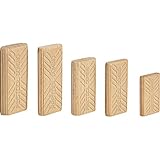
The DF 500 is often described as a biscuit joiner, but it operates as a handheld mortiser. A rotating and oscillating cutter plunges to create a precise mortise for a pre-made beech or sipo domino tenon. The result is a joint with far more glue surface and mechanical alignment than a biscuit, and much faster setup than traditional mortise-and-tenon or doweling without a self-centering jig.
Its sweet spot is 90-degree joints, miters, and edge-to-edge glue-ups in solid wood, plywood, and MDF where you want strong alignment and good strength without the layout and clamping complexity of loose tenons made on a router table or Domino XL.
Joinery Capacity and Mortise Range
Understanding the DF 500’s limits is key to deciding if it fits your work.
Cutter and Tenon Sizes
The DF 500 uses five cutter diameters, each matched to a specific domino size:
- 4mm cutter for 4 x 20mm dominos
- 5mm cutter for 5 x 30mm dominos
- 6mm cutter for 6 x 40mm dominos
- 8mm cutter for 8 x 40mm and 8 x 50mm dominos
- 10mm cutter for 10 x 50mm dominos
Mortise depth is adjustable from 12mm to 28mm via the depth stop, with a maximum plunge of 28mm. The mortise width can be set to three positions: exact fit, plus 6mm oversize, and plus 10mm oversize. The oversize settings are critical for panel glue-ups and long casework where you need lateral float for alignment while keeping one or two mortises tight for registration.
Practical material range is 14mm to 28mm for optimal joint strength. While you can mortise material as thin as 12mm with the 4mm cutter centered, there is very little wall thickness left, so 15mm is a more realistic minimum for furniture. For stock thicker than 28-30mm, the 10 x 50mm domino does not provide the same proportional strength as a traditional mortise, and the Domino XL DF 700 is the more appropriate tool.
Fence and Height Adjustments
The fence system is what gives the DF 500 its speed and precision:
- Fence Height: 5mm to 30mm from cutter center to fence base, adjusted via a geared height lock with a scale. This lets you center the mortise on different stock thicknesses without measuring from an edge.
- Fence Angle: 0 to 90 degrees with positive stops at 0, 22.5, 45, 67.5, and 90 degrees. The fence locks solidly and maintains square better than most biscuit joiners that rely on a stamped fence.
- Retractable Support Pins: Flip-out pins register off the end or edge of the workpiece for repeatable spacing from ends, useful for rail-and-stile or carcase joints without marking every mortise.
- Edge Guide and Cross Stop: The included edge guide and optional cross stop accessories allow narrow stock and repeatable mortise spacing along a panel edge.
Once height and angle are set, you can move from joint to joint by referencing the fence or pins, which is why setup speed is significantly faster than a doweling jig that requires separate center marking for each hole.
Festool Domino 500 vs Alternatives: Spec Comparison
To gauge value, compare the DF 500 against its larger sibling and common alternatives on measurable specs.
| Feature | Festool Domino 500 (DF 500) | Festool Domino 700 (DF 700 XL) | Standard Biscuit Joiner (1600W class) | Self-Centering Dowel Jig |
|---|---|---|---|---|
| Cutter / Joint Type | 4, 5, 6, 8, 10mm spiral mortise cutter | 8, 10, 12, 14mm spiral mortise cutter | 100mm x 4mm blade, #0, #10, #20 biscuits | 6, 8, 10mm drill bushings |
| Plunge Depth | 12 – 28mm | 15 – 70mm | ~10 – 20mm (biscuit slot) | Through drilling, depth by collar |
| Dominos / Fastener Size | 20mm to 50mm long | 50mm to 140mm long | #0 (47mm), #10 (53mm), #20 (56mm) | Dowels 20mm to 40mm |
| Weight (tool only) | 3.2 kg (7.05 lbs) | 5.2 kg (11.46 lbs) | 3.0 – 3.8 kg | 0.5 – 0.9 kg (jig only) |
| Power | 420W | 720W | 600 – 1600W | Drill dependent |
| Fence Angle Range | 0-90 degrees, 5 detents | 0-90 degrees, 5 detents | 0-90 degrees, often 0/45/90 detents | 90 degrees only |
| Dust Extraction Port | 27mm, for Festool CT system | 27mm / 36mm | Bag or 35mm port (varies) | None |
| Best Stock Thickness | 14 – 28mm | 22 – 70mm | 12 – 25mm | 12 – 40mm |
The table highlights the trade-off: The DF 500 is optimized for furniture-scale joinery where finesse and alignment matter. The DF 700 adds capacity for entry doors, beds, and large tables but is heavier and less nimble on 3/4-inch plywood. Biscuit joiners are faster and cheaper but offer little structural strength, while dowel jigs are accurate but slower to lay out.
Setup Speed: From Layout to First Mortise
The DF 500 reduces layout time because the tool itself controls spacing and centering.
Typical setup sequence for a cabinet carcase side to shelf joint:
- 1. Select domino size based on stock thickness. For 18-19mm plywood, use 5 x 30mm or 6 x 40mm. For 22mm solid wood, use 8 x 40mm.
- 2. Install matching cutter and set mortise depth to the domino length divided by two. For a 40mm domino in a T-joint, set one side to 20mm and the other to 20mm. For a miter, you may offset depths to maintain wall thickness.
- 3. Set fence height to center. For 18mm stock with a 6mm cutter, set fence to 9mm center height. Lock the fence.
- 4. Set mortise width. Use the tight setting for the first mortise on each joint for registration, and the wide setting for remaining mortises to allow for slight misalignment.
- 5. Mark only one reference line across the joint, align the sight window, and plunge. Use the support pins for end distance if working without pencil marks.
- 6. Connect to dust extraction. The DF 500 ejects a high volume of chips; without extraction, mortises can pack and affect depth accuracy.
An experienced user can go from unboxing the cutter to cutting test mortises in under 3 minutes. For a four-corner cabinet with four dominos per corner, layout and cutting typically takes 12-18 minutes after the initial fence calibration, compared to 30-45 minutes with a traditional dowel jig requiring individual marking and clamping.
Consumable Costs: A Worked Calculation
The machine’s price is only part of ownership. Cutters and dominos are ongoing costs.
Domino tenons are sold in boxes and bulk bags. Cutters are solid carbide spiral bits with a typical lifespan of 800-1,200 mortises in plywood/MDF and 1,500+ in solid hardwood before needing replacement, depending on dust extraction and avoiding MDF with high glue content.
Cost per joint example for a typical small shop:
Assume you build 30 projects per year (cabinets, side tables, bookshelves) averaging 32 dominos per project. That is 960 dominos per year.
- Dominos: A box of 1,000 x 6 x 40mm beech dominos generally retails in the $45 to $65 range. Per domino cost: $0.045 – $0.065. For 960 dominos, annual cost is $43 – $62.
- Cutters: A replacement cutter generally retails in the $45 to $65 range. If you use the 6mm cutter for 70% of work, you will replace it once per year at that volume. Annual cutter cost: ~$45 – $65.
- Cost per mortise (domino + cutter wear): Approximately $0.09 – $0.13 per mortise, or $0.18 – $0.26 per joint (two mortises).
Compared to biscuits at $0.03 – $0.05 each and dowels at $0.02 – $0.04 each, dominos cost roughly 2-3x more per joint. The premium is justified if you value the time saved on alignment and the ability to dry-fit and disassemble before glue-up, which biscuits swell and prevent.
Durability and Ownership Realities
The DF 500 is built for daily shop use, but several points affect long-term ownership:
- What wears first: The height adjustment gear and fence locking lever see the most wear. Sawdust packing in the rack can make height adjustment gritty if not blown out regularly. The plunge guides and spring return mechanism need periodic cleaning; dust buildup causes a sticky plunge. The power cord and plug-it connector at the tool end is a known flex point.
- Cutter maintenance: Resin buildup on the spiral cutter increases heat and burning. Clean with a resin remover and avoid forcing the plunge. A dull cutter leaves fuzzy mortise walls and loose-fitting dominos, especially in plywood.
- Dust extraction is not optional: Without a CT dust extractor or equivalent vacuum with a 27mm hose, fine dust packs in the mortise and under the fence base, throwing off depth and height by 0.3-0.5mm. Always run with extraction.
- Common mistakes: Setting the fence height from the wrong reference face, forgetting to switch between tight and wide mortise width, and plunging too fast in hard maple or white oak which can deflect a 4mm or 5mm cutter. Use a steady, moderate feed rate and let the cutter do the work.
- Storage and systainer: The DF 500 ships in a Systainer with inserts for cutters and accessories. Keeping cutters in their tubes and dominos sealed against humidity prevents swelling and rust, which directly affects joint fit.
Decision Matrix: Should You Buy the Festool Domino 500?
| Your Situation | Recommendation | Why |
|---|---|---|
| Building 1-2 projects per year, mostly plywood cabinets and shop storage | Skip the DF 500 | Consumable cost and machine price outweigh time savings; a biscuit joiner or dowel jig covers alignment needs. |
| Intermediate to advanced furniture maker, solid wood tables, chairs, casework | Strong fit for DF 500 | Precision fence and repeatable mortises justify cost; you will use the 5-10mm range constantly. |
| Small shop, limited space, no stationary mortiser | Strong fit for DF 500 | Handheld mortising replaces a mortiser, slot mortiser, and doweling fixtures in a single Systainer footprint. |
| Primarily building doors, workbenches, or stock over 30mm thick | Choose DF 700 XL instead | DF 500 lacks the depth and domino size for large-scale tenons; you will max out its capacity quickly. |
| Professional cabinet shop, high volume, need speed over versatility | Consider DF 500 + DF 700 or dedicated line boring | DF 500 excels for face frames and carcases, but a line boring machine or CNC is faster for pure production. |
| Tight budget, already proficient with loose tenon router jigs | Defer the DF 500 | A router with a mortising jig gives similar strength at lower cost, though with slower setup. |
Value Verdict for 2026
In 2026, the Festool Domino 500 remains positioned as a premium joinery system, typically retailing in the $1,100 to $1,300 range for the set with cutters and dominos, and $900 to $1,100 for the tool-only version. Market prices vary by retailer and included accessories.
Its value is not in raw cutting power but in system integration: precise fence control, fast mortise width switching, effective dust extraction, and a domino assortment that is dimensionally consistent. If your work involves frequent 14-28mm joinery where alignment and glue surface matter and you build often enough to amortize consumables, the DF 500 pays back in reduced layout time and rework. If your projects are infrequent, large-scale, or already served by an accurate doweling or router mortising method, the investment is harder to justify.
For shoppers comparing within the Festool system, the decision is about capacity: choose the DF 500 for furniture and cabinets, the DF 700 for timber and large joinery, or use the DF 500 as the core tool and add the XL only when you regularly exceed 28mm depth or 10mm tenon width.
Frequently Asked Questions
Can the Festool Domino 500 cut mortises for stock thinner than 14mm?
Yes, with the 4mm cutter and 4 x 20mm dominos you can join 12mm stock, but centering leaves only about 4mm of wall on each side. For drawer bottoms or thin panels, consider a different joint or reinforce with glue and mechanical fasteners rather than relying solely on the domino.
Do you need Festool dominos, or can you make your own?
You can mill your own loose tenons from hardwood, but they must match the mortise dimensions exactly and have the glue relief grooves and slightly compressed fit that Festool dominos provide. Shop-made tenons without the textured surface and chamfered ends often fit too tight or too loose and can starve the joint of glue.
Is the DF 500 strong enough for chairs and tables?
For light to medium-duty chairs, stools, and tables in the 14-28mm range, properly sized dominos provide strong joints, especially when using multiple dominos per joint and sipo dominos for exterior use. For heavy-load leg-to-apron joints on dining tables with 35mm+ legs, the larger tenons from the DF 700 provide more long-term racking resistance.