
Key takeaways
- Compare the best wood glues for furniture projects, from fast-setting PVA to reversible hide glue, with specs on open time, strength and water resistance.
What's inside
As an Amazon Associate I earn from qualifying purchases. This post may contain affiliate links at no extra cost to you.
- Top Pick: Titebond III Ultimate Wood Glue
- Runner-up: Titebond Original Wood Glue
- Also consider: Gorilla Wood Glue
For most furniture projects, the best wood glue is a quality PVA or aliphatic resin glue matched to the job: Titebond III Ultimate for the longest working time and waterproof bonds, Titebond Original for fast indoor assembly, Gorilla Wood Glue for short clamp times, Titebond II Premium for pieces that may see occasional moisture, and Titebond Liquid Hide Glue for traditional joinery and antique repair where reversibility matters. All five are proven furniture-grade adhesives with published bond strengths stronger than the wood itself, and the right choice comes down to open time, water resistance, and glue-line behavior under finish.
As an Amazon Associate, we earn from qualifying purchases.
Contents
Table of Contents
- Titebond III Ultimate Wood Glue
- Titebond Original Wood Glue
- Gorilla Wood Glue
- Titebond II Premium Wood Glue
- Titebond Liquid Hide Glue
- How to Choose Wood Glue for Furniture
- FAQ
- Conclusion
- Product and ASIN Reference
Titebond III Ultimate Wood Glue

Titebond III Ultimate is the most versatile bottle on this list and the easiest single recommendation for furniture work. It is a one-part PVA formula that passes the ANSI/HPVA Type I water-resistance specification, the strictest rating given to wood glues, which means cured joints tolerate the humidity swings, kitchen spills, and damp basements that furniture regularly encounters. Franklin International rates its bond strength at 4,000 psi, the highest figure among the Titebond PVA line.
The spec that matters most at the bench is its 8 to 10 minutes of open assembly time. Complex furniture glue-ups — a chair with a dozen mortise-and-tenon joints, a wide tabletop panel, a cabinet carcass — take time to assemble and square up, and Titebond III keeps the glue workable noticeably longer than faster-setting formulas. It can also be applied at temperatures down to 47 degrees Fahrenheit, which extends the working season in unheated shops. It cleans up with water while wet, is FDA approved for indirect food contact once cured, and dries to a tan color that blends well with medium-tone woods, though on pale maple the glue line is more visible than with lighter-drying glues. It sits in the premium tier of this roundup.
Specs
- Type: One-part PVA (crosslinking polymer emulsion)
- Bottle size: 16 oz
- Water resistance: ANSI/HPVA Type I waterproof
- Open assembly time: 8 to 10 minutes
- Minimum application temperature: 47 degrees Fahrenheit
- Bond strength: 4,000 psi
- Cleanup: Water while wet
- Dried color: Tan
- Food contact: FDA approved for indirect food contact
Titebond Original Wood Glue

Titebond Original is the industry-standard aliphatic resin glue that has anchored furniture shops since 1955, and it remains the best budget-tier choice for indoor furniture. Its defining trait is speed: strong initial tack and a fast set shorten clamp time to roughly 30 to 60 minutes for unstressed joints, so parts move off the clamps and through the shop quickly. Franklin International rates the bond at 3,600 psi, stronger than most furniture hardwoods, and the cured glue sands cleanly without softening, which keeps glue lines from telegraphing through a finish.
The trade-offs are clear in the published specs. Original is an interior-only glue with no meaningful water resistance, so it is the wrong bottle for bathroom vanities, kitchen pieces near sinks, or anything headed outdoors. Its open time of about 5 minutes also rewards a rehearsed glue-up; dry-fit first, because there is little room to reposition parts once surfaces meet. It requires temperatures above 50 degrees Fahrenheit for application. For indoor tables, chairs, cabinets, and bookcases, though, its fast set, easy water cleanup, and light dried color make it the workhorse pick.
Specs
- Type: Aliphatic resin emulsion
- Bottle size: 8 oz (also sold in 4 oz, 16 oz, 32 oz, and gallon sizes)
- Water resistance: Interior use only; not water-resistant
- Open assembly time: About 5 minutes
- Minimum application temperature: 50 degrees Fahrenheit
- Bond strength: 3,600 psi
- Clamp time: 30 to 60 minutes for unstressed joints
- Cleanup: Water while wet
- Dried color: Yellow-translucent
Gorilla Wood Glue

Gorilla Wood Glue is a PVA formula built around short clamp times, which makes it a strong fit for furniture builders who own fewer clamps than they would like. The Gorilla Glue Company specifies a clamp time of just 20 to 30 minutes, with handling strength arriving quickly and a full cure in 24 hours. That fast turnaround keeps small-shop production moving when a single set of clamps has to serve several subassemblies in one session.
It passes ANSI/HPVA Type II water resistance, a step above interior-only glues, so joints tolerate humid rooms and occasional splashes even though the glue is not rated for full exterior exposure. It works on hardwoods, softwoods, and natural wood composites, requires a minimum application temperature of 55 degrees Fahrenheit, and dries to a natural tan color. The cured glue is sandable and paintable, and the anti-clog cap is a practical touch for a glue opened daily. It sits in the mid-range tier and comes in an 18 oz bottle, slightly larger than the standard 16 oz size.
Specs
- Type: PVA (polyvinyl acetate)
- Bottle size: 18 oz
- Water resistance: ANSI/HPVA Type II water-resistant
- Open assembly time: Up to 10 minutes
- Clamp time: 20 to 30 minutes
- Full cure: 24 hours
- Minimum application temperature: 55 degrees Fahrenheit
- Cleanup: Water while wet
- Dried color: Natural tan
- Finish behavior: Sandable and paintable
Titebond II Premium Wood Glue

Titebond II Premium is the middle path in the Titebond PVA family: a one-part, crosslinking polyvinyl acetate that passes ANSI/HPVA Type II water resistance, giving furniture joints protection against humidity and incidental moisture without the longer open time or darker dried color of Titebond III. Franklin International rates its bond strength at 3,750 psi, and it develops a strong initial tack with a fast set, so assemblies grab quickly and clamp times stay short.
For furniture, its most useful published trait is that it is unaffected by lacquer and most finishes, and it sands well, so squeeze-out cleaned at the right stage will not leave shiny witness marks under a topcoat. It is FDA approved for indirect food contact, which suits kitchen furniture and serving pieces. Its minimum application temperature of 55 degrees Fahrenheit is the highest on this list, so cold shops should plan around it in winter. With about 5 minutes of open time it suits straightforward glue-ups — panels, frames, casework — rather than the most complex multi-joint assemblies. It dries a honey-cream color that reads lighter than Titebond III on pale woods. It sits in the mid-range tier.
Specs
- Type: Crosslinking polyvinyl acetate
- Bottle size: 16 oz
- Water resistance: ANSI/HPVA Type II water-resistant
- Open assembly time: About 5 minutes
- Minimum application temperature: 55 degrees Fahrenheit
- Bond strength: 3,750 psi
- Cleanup: Water while wet
- Dried color: Honey cream
- Food contact: FDA approved for indirect food contact
- Finish behavior: Unaffected by lacquer; sands easily
Titebond Liquid Hide Glue

Titebond Liquid Hide Glue serves a different furniture niche from the PVA bottles above: traditional joinery, veneer work, and the repair of antique furniture. It is a natural protein emulsion — the first hide glue offered in a ready-to-use liquid form, requiring no mixing, heating, or stirring — and its defining advantage is reversibility. Hide glue joints can be softened with heat and moisture years later, so a chair rung or veneer patch can be taken apart and repaired without damaging the wood, which is exactly why conservators and restoration shops keep it on hand.
The published specs support furniture work well: Franklin International rates the bond at 3,591 psi, the long assembly time of up to 10 minutes plus a slow set makes it forgiving for hammer veneering and complicated assemblies, and hide glue is known for excellent creep resistance, meaning loaded joints do not gradually slide over time. It is also unaffected by finishes. The limits matter too: it is not for exterior use or anywhere moisture is likely, it is not for structural or load-bearing applications, and its minimum application temperature is 50 degrees Fahrenheit. It dries a translucent amber. It sits in the mid-range tier and is the specialist pick of this roundup.
Specs
- Type: Natural protein emulsion (liquid hide glue)
- Bottle size: 8 oz
- Water resistance: Not for exterior use or where moisture is likely
- Assembly time: Up to 10 minutes, with a slow set
- Minimum application temperature: 50 degrees Fahrenheit
- Bond strength: 3,591 psi
- Cleanup: Water while wet
- Dried color: Translucent amber
- Key trait: Reversible with heat and moisture; excellent creep resistance
- Limitation: Not for structural or load-bearing applications
How to Choose Wood Glue for Furniture
Start with moisture exposure, because it rules out more bottles than any other factor. Furniture that lives in dry rooms can use any glue on this list, including interior-only Titebond Original. Pieces for kitchens, bathrooms, entryways, or homes with big humidity swings should step up to a Type II water-resistant glue such as Gorilla Wood Glue or Titebond II Premium, and anything that may see standing water or outdoor duty needs the Type I rating of Titebond III Ultimate.
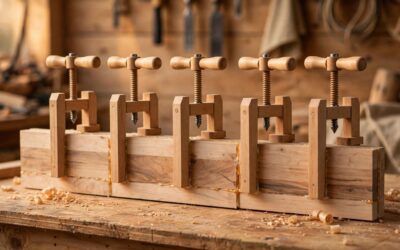
Next, match open time to the complexity of the glue-up. A simple panel or frame-and-panel door goes together in a couple of minutes, so a fast-setting glue with about 5 minutes of open time is fine and keeps the day moving. A chair, a carcass with many joints, or a first attempt at a complicated assembly calls for the 8 to 10 minutes of Titebond III or the slow set of liquid hide glue. Always dry-fit and rehearse the clamping sequence before opening any bottle.
Consider the glue line and finish as well. Dried color differs by formula: Titebond Original dries pale yellow-translucent, Titebond II dries honey cream, and Titebond III and Gorilla Wood Glue dry tan, which shows more on pale woods like maple and ash. All PVA glues can leave invisible residue that resists stain, so remove squeeze-out carefully — either wipe it with a damp cloth immediately or let it gel and lift it with a chisel, per the manufacturer’s directions. Hide glue is the exception: it is unaffected by finishes and is the safest choice under stain-critical work and veneer.
Finally, think about the future of the piece. Heirloom furniture and antiques are best served by hide glue because the joints can be reversed for repair. Production furniture benefits from short clamp times, where Gorilla Wood Glue’s 20 to 30 minute clamp window shines. And check the temperature rating against your shop: Titebond III works down to 47 degrees Fahrenheit, while Titebond II and Gorilla Wood Glue need 55 degrees, a real constraint in an unheated winter workshop.
FAQ
Is wood glue strong enough for furniture joints on its own?
Yes, when the joint itself is sound. Published bond strengths for the glues here run from about 3,591 to 4,000 psi, and a properly fitted mortise-and-tenon, dowel, or edge joint glued with any of them typically fails in the wood rather than at the glue line. Glue does not rescue a loose, poorly fitted joint, though; mechanical fit does most of the work, and the adhesive locks it in place.
What is the difference between Type I and Type II water resistance?
Both ratings come from ANSI/HPVA testing. Type I, met only by Titebond III Ultimate in this roundup, is the stricter standard and designates a waterproof bond suitable for interior and exterior use. Type II, met by Titebond II Premium and Gorilla Wood Glue, designates a water-resistant bond that tolerates humidity and occasional moisture but is not intended for prolonged soaking or full weather exposure.
Can I use wood glue to fill gaps in a furniture joint?
Standard PVA and hide glues are poor gap fillers; they shrink as they dry and lose strength across wide gaps. The glues in this roundup are formulated for tight-fitting joints. If a joint is loose, the better fixes are to shim it with a thin veneer or wood sliver and then glue it, or to choose a different adhesive category designed for gap filling rather than expecting a PVA to bridge the space.
How long should furniture glue-ups stay clamped?
Follow the published clamp times: roughly 20 to 30 minutes for Gorilla Wood Glue and 30 to 60 minutes for Titebond Original on unstressed joints, with longer clamping for stressed joints. Most of these manufacturers recommend waiting a full 24 hours before machining, finishing, or putting a piece into service, because the bond continues to cure after the clamps come off.
Conclusion
There is no single best wood glue for furniture, but there is a best match for each project. Choose Titebond III Ultimate when you want one bottle that handles everything, including long glue-ups and moisture-prone pieces. Reach for Titebond Original for fast, economical indoor assembly, Gorilla Wood Glue when clamp time is the bottleneck, and Titebond II Premium for a lighter glue line with Type II water resistance. Keep Titebond Liquid Hide Glue for veneer, traditional joinery, and any piece you may need to take apart again someday.
Related guides
More from Amazon
Programs that pair well with the guide above. Offers and eligibility are set by Amazon and may change.
A free business account with business pricing and bulk-buying tools for work, shop or home office.
Create a business accountFree shipping on eligible items, Prime Video and more. Eligible new members can start with a free trial.
Start a Prime free trialAudiobooks and podcasts to listen to on the go. Eligible new members can start with a free trial.
Try Audible freeAd-free music streaming. Eligible new subscribers can start with a free trial.
Try Music Unlimited freeAs an Amazon Associate we earn from qualifying purchases.
Write Your Review
No reviews yet. Be the first to share your experience!