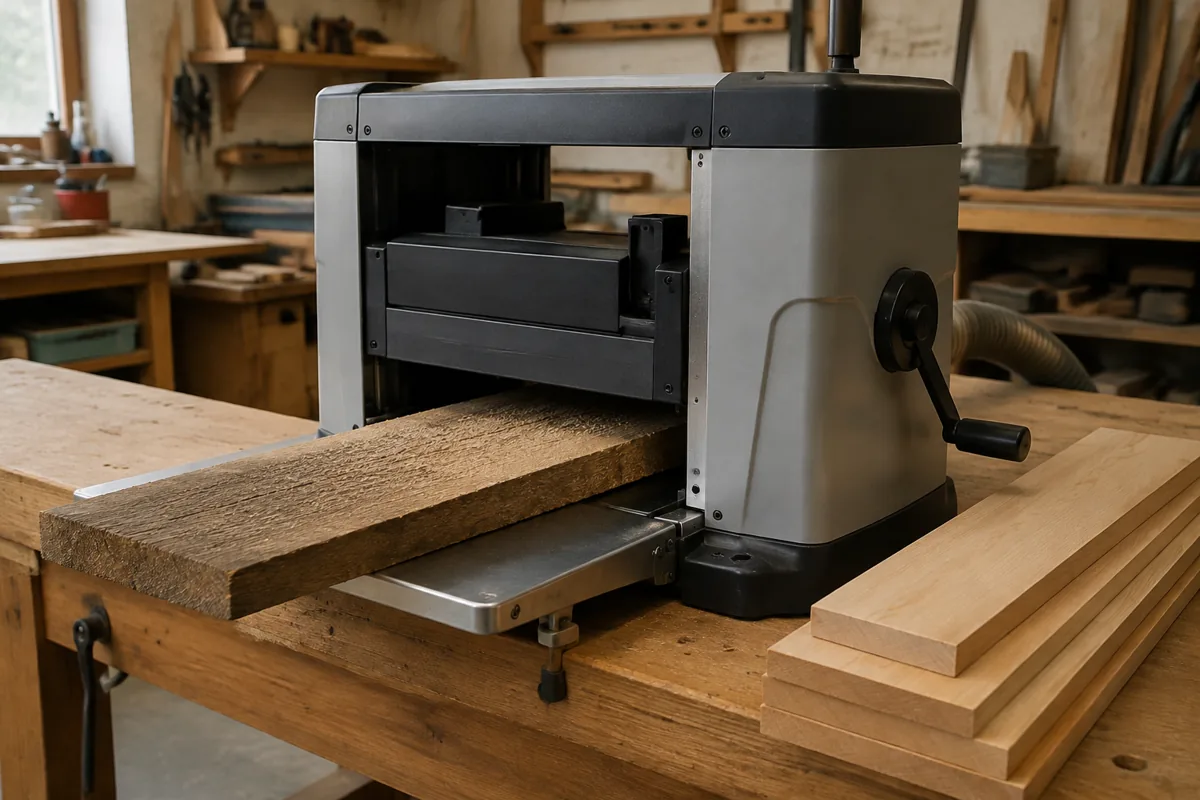
Best Stationary Planers with Automatic Cutterhead Locking
What's inside
As an Amazon Associate I earn from qualifying purchases. This post may contain affiliate links at no extra cost to you.
Contents
What automatic cutterhead locking does
A thickness planer’s cutterhead spins while the machine removes wood. On many portable planers, that vibration can let the cutterhead assembly shift slightly, changing the board’s thickness from one end to the other. The result is snipe: a deeper cut near the leading or trailing end of a board. Automatic cutterhead locking is intended to limit that movement when the planer is set, helping reduce snipe and maintain a more consistent cut.
The lock is not a substitute for sound setup. Long boards still need support, knives or inserts must be sharp, and feed rollers need to grip evenly. A locking mechanism may reduce one cause of snipe; it does not guarantee snipe-free stock.
What to prioritize before buying
For a home shop, the useful questions are capacity, cutterhead design, dust collection, and how often you will move the machine. Most benchtop planers handle stock around 12 to 13 inches wide and roughly 6 inches thick, but check the actual specifications: width and maximum thickness vary. A wider machine can save time if you routinely work with broad panels, but it costs more and takes more room.
Knife-style cutterheads are generally less expensive to buy and maintain. When a knife gets nicked, the mark can run along the board; replacing or resetting knives takes care and can be frustrating. Helical or spiral heads use multiple small inserts. A damaged insert can often be rotated or replaced individually, and the cut is usually quieter with less tear-out in difficult grain. The trade-off is a higher purchase price and the need to keep track of inserts and screws.
Dust extraction matters more than many first-time buyers expect. A planer produces a large volume of chips quickly. A small shop vacuum can clog or struggle, while a suitable dust collector and correctly sized hose keep the hood clear. Check the machine’s port size and your collector’s capacity before purchase. Also check the planer’s weight and stand: a heavy benchtop unit is easier to use safely when it is bolted down or placed on a stable, level surface.
Planer types compared
| Type | Best fit | Trade-offs |
|---|---|---|
| Portable knife-head planer with cutterhead lock | Occasional milling and limited shop space | Lower cost and easier to move; knives need more attention, and setup still affects snipe. |
| Portable helical-head planer | Frequent use, mixed grain, and reduced knife-maintenance time | Costs more upfront; inserts are replaceable, but a full set can be expensive. |
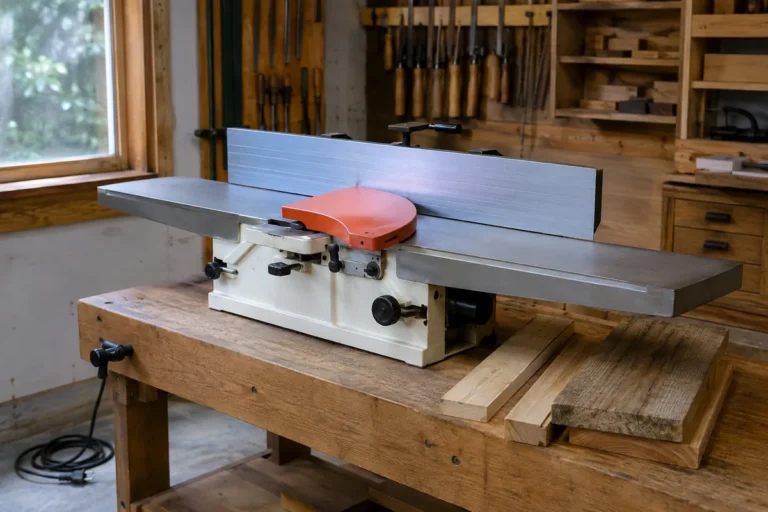
| Stationary floor planer | Regular production work and larger stock | Greater capacity and stability; requires more floor space, power, and dust collection. |
Choosing a planer for your shop
If you mainly plane short boards for furniture, a portable planer with an automatic lock can be a sensible buy. Compare the locking feature alongside table length, cutterhead access, and replacement-knife availability rather than treating it as the deciding specification. Browse benchtop thickness planers with automatic cutterhead locks and confirm the lock is explicitly described in the manufacturer’s specifications; similar-looking machines may not have it.
Choose a helical-head model if you plane often, work with figured hardwood, or want to avoid aligning long knives. It can reduce tear-out and make routine maintenance less disruptive, but it will not fix dull inserts, poor grain direction, or an excessive depth of cut. Compare benchtop helical-head thickness planers by width, insert availability, and dust-port compatibility. For a small shop, a less expensive knife-head machine may be the better choice if you plane only occasionally and are willing to manage snipe with setup.
A floor-standing planer makes sense when you process stock frequently or need more capacity and a steadier feed. It is not automatically a better choice for a hobbyist: moving a large machine into place, providing adequate power, and collecting chips can cost as much as the feature upgrade you were considering. If you need a floor model, compare floor-standing thickness planers against your actual stock width and workload.
How to reduce snipe with any planer
Support long stock so it enters and exits level with the planer bed. A board that tips down as its end passes a roller can be cut more deeply. Use infeed and outfeed tables or rollers adjusted to the same height as the bed, and make sure they do not push the stock upward. Feed boards with the crown facing up when possible, and plane both faces gradually rather than removing a large amount from one side.
Take light passes, especially on the final cut. A practical starting point is about 1/32 inch per pass for a finish pass; harder wood, wide boards, and a strained motor may require less. Avoid trying to remove 1/8 inch in one pass from a wide hardwood board unless the machine’s manual says it can handle that load. Feed at a steady pace and inspect the first board before running a batch.
When end snipe persists, leave extra length and trim the affected ends after planing. This wastes some material but is reliable. Some users also run sacrificial boards before and after the workpiece, though the method depends on the planer’s feed system and should follow its manual.
Final checks before purchase
Read the manual or product specifications for the locking mechanism, maximum cutting depth, minimum board length, and required power. Confirm that knives or inserts are available locally, and price a replacement set before deciding that a more expensive cutterhead will save money. Look for a clear procedure for changing the head or rotating inserts; awkward access can turn a minor repair into a shop-stopping job.
Automatic locking is a useful control for cutterhead movement, not a promise of perfect thickness or finish. Buy it if the price difference is modest and snipe control matters in your work. If it forces you into a machine that is too heavy, too wide, or beyond your dust-collection budget, a simpler planer with careful support and light passes is often the more practical choice.