
What's inside
As an Amazon Associate I earn from qualifying purchases. This post may contain affiliate links at no extra cost to you.
The short answer: the best featherboard is the one that matches how your table is built and what you cut most. Miter-slot featherboards suit cast-iron or aluminum tables with standard slots. Clamp-on versions suit saws and router tables with unusual edges or no slots. Magnetic ones are quick but depend on a steel surface and a firm hold. Look for flexible, evenly spaced fingers, a locking mechanism that does not creep, and enough adjustment range to apply light, steady pressure just ahead of the cutter.
This guide explains how featherboards work, what the main designs offer, which features to check, and where setups go wrong. It does not rank specific products or quote test results. Use it to decide which type fits your shop, then compare current listings and read the instructions that come with both the accessory and your machine.
Contents
Our Top Picks
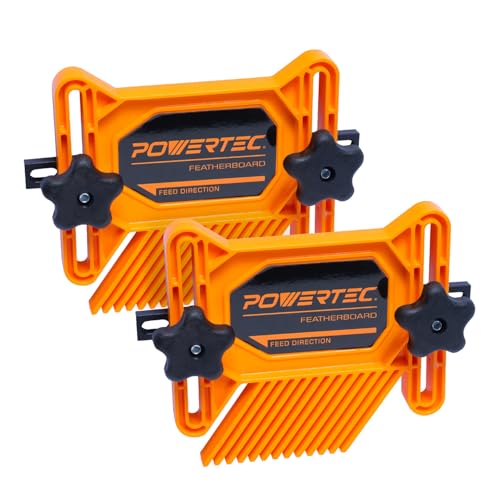 POWERTEC Universal Tandem Featherboards for Table SawFeatherboards (2PCs)10.63 x 7.5 x 2.5 inchesCheck on Amazon
Contents
- What a featherboard does and does not do
- Types of featherboards
- Comparison table
- Features worth paying attention to
- Where featherboards earn their keep
- Setting one up correctly
- Buyer checklist
- Featherboard safety
- Mistakes to avoid
- Frequently asked questions
- Bottom line
What a featherboard does and does not do
A featherboard is a slotted piece of wood or plastic whose angled fingers flex against a workpiece. The fingers lean in one direction, so the board slides forward easily but resists being pulled back. Mounted to the table or fence, it presses stock gently against the fence or down against the table while you feed. The result is a steadier cut, a more even edge, and fewer wandering feeds.
What it helps with
Consistent pressure is the main benefit. When a board drifts away from the fence, the cut width changes and the surface can burn or chatter. A featherboard removes much of that drift and frees one hand from nursing the work against the fence. It also gives some resistance against a board lifting or being drawn backward, which makes the feed feel calmer and more repeatable.
What it cannot do
A featherboard is not a guard, a splitter or a replacement for a pusher. It does not protect you from the cutter, and it cannot compensate for a bowed board, a misaligned fence or a dull blade. It also should not be placed where it would pinch a board against a spinning blade. Treat it as a helper for control, not as a safety device in its own right.
Types of featherboards
There are several families. The names differ from seller to seller, so focus on how the thing mounts and how it applies pressure.
Miter-slot featherboards
These have a bar, knob or expanding hardware that locks into the miter slot on the table. They are popular for table saws and router tables because they stay put and offer repeatable positioning. Check that the bar matches your slot width and depth, since slots are not identical across machines. Sliding adjustment along the slot makes setup quick, and many have a swivel or angle adjustment for the fingers.
Clamp-on featherboards
A clamp-on design grips the table edge, fence or another surface using a cam or screw clamp. It is the answer when your table has no miter slot in the right spot, or when you want to mount the board to a fence face. Look for a clamp that opens wide enough for your table thickness and holds without needing to be overtightened, which can mar surfaces or distort a thin fence.
Magnetic featherboards
Magnetic bases switch on or off to grip a steel table or fence. They are very fast to move, which is helpful for repeating setups. They are only for surfaces the magnet can hold firmly, and cast iron or steel tops are typical. Aluminum and phenolic tops will not work. A magnetic base can shift under load if the surface is dirty or the pressure is high, so keep the contact area clean and test the hold before every cut.
Shop-made featherboards
Many woodworkers cut their own from straight-grained hardwood, with the fingers sawn at a shallow angle and a slot or hole for a clamp or bolt. They cost little and can be sized to your machine. The trade-off is that each one is a one-off, and flex depends on grain. If you make your own, keep spare blanks and check that the fingers are not cracked before use.
Wheel and roller-style pressure devices
Some hold-downs use wheels or rollers on a spring arm instead of fingers. They apply constant pressure and let stock glide, which suits long boards and repeated runs. They are more complex, and they need more careful adjustment. They can be a good second tool, but they are not always a direct substitute for a simple finger-style board.
Comparison table
Use the table as a quick orientation rather than a ruling. Individual designs vary, and the details in each listing should guide your decision.
| Type | Mounts to | Strength | Watch out for |
|---|---|---|---|
| Miter-slot | Slotted table | Stable, repeatable position | Bar must match your slot size |
| Clamp-on | Table edge or fence | Works where there is no slot | Clamp may mar or flex thin parts |
| Magnetic | Steel table or fence | Very quick to move | Needs a clean steel surface; can slip |
| Shop-made | Clamp or bolt | Cheap, sized to your machine | Grain and finger quality vary |
| Wheel or roller hold-down | Slot or clamp | Smooth, constant pressure | More adjustment and more parts |
For a general-purpose shop with a slotted saw table, a miter-slot model is often the easiest place to start. If your router table has a fence with a flat face, a clamp-on one may serve better. Magnetic units shine when you swap setups often on steel surfaces.
Features worth paying attention to
Finger design and flex
The fingers do the work. They should be evenly cut, springy but not floppy, and long enough to maintain contact as the board moves. Too stiff and they gouge or resist feeding; too soft and they offer no control. Plastic fingers are consistent, while wooden ones can vary with the grain. Look for a design where the fingers lean forward in the direction of feed so that they bite on a pullback.
Locking mechanism
A knob that loosens with vibration is a real nuisance. Look for a locking system that stays tight, is easy to reach with gloves off, and does not require tools for routine adjustments. Cam levers are fast, while threaded knobs offer finer control. Whichever you choose, check it again partway through a long session, because vibration can work things loose.
Angle and position range
The ability to angle the fingers and slide the board along its mount makes a major difference. You want to place the fingers just ahead of the cutter, not beside or behind it, and the pressure should be light enough that the board still moves freely. Models with a wide adjustment range handle different thicknesses without extra spacers.
Overall size and height
Taller fingers are useful for thick stock or edge-guiding on a fence; low-profile models suit thin material and tight setups. Check that the featherboard will not collide with the blade guard, router bit guard or dust hood on your machine. A model that fits one setup may be awkward in another.
Material and durability
Most commercial featherboards are plastic or composite. They resist moisture and can be easy to clean. Some have metal hardware and replaceable fingers. Check reviews for reports of cracked fingers or stripped knobs, since those are the typical failure points. Remember that a damaged featherboard should be retired rather than patched.
Where featherboards earn their keep
Table saw rips
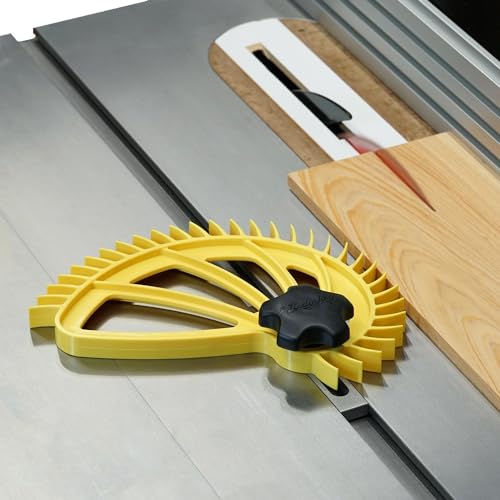
On a saw, a featherboard presses the stock against the fence ahead of the blade. It should sit in front of the blade, never beside or beyond it, so that the cut-off piece is not pinched. Many woodworkers also use a second one pressing down on the table for thin stock. Follow your saw’s instructions on guards and accessories before adding one.
Router table work
On a router table, featherboards hold the stock against the fence and down on the table as you move past the bit. This is where they are especially handy for narrow, repetitive profiles, as they keep the pass uniform and reduce chatter. Keep the fingers clear of the bit and check the pressure so the stock can still slide.
Band saw and jointer uses
Some woodworkers use a featherboard on a band saw table to keep resaw stock tight to a fence, and others use one on jointer fences. These are more specialised uses and depend heavily on the machine and cut. Consult the machine instructions first, and consider whether a different jig or technique is more suitable.
Shapers, drill presses and sanders
Anywhere a board must slide steadily along a fence, a pressure device may help. The same rule applies everywhere: place it ahead of the cutting action, keep the pressure light, and make sure it cannot trap a cut piece. If the setup feels crowded, step back and rethink the approach.
Setting one up correctly
Set up with the machine unplugged. Place the workpiece against the fence and in position just before the cutter, then position the featherboard so the leading fingers touch the board a little ahead of the blade or bit. Lock it, then push the board through by hand with the power off to feel the resistance. It should move forward smoothly, with light pressure along its length. If you must shove, loosen the setup.
Pay attention to the position of the front finger. The first few fingers should engage the uncut board, not the section being cut. After that, feed a scrap piece with power on, watch the cut, and make small adjustments as needed. Check the hold again after a few passes, since vibration can shift knobs, and remove the featherboard when you change to a task that would put it in the cutter’s path.
Buyer checklist
- Does it mount in a way that suits your table: miter slot, clamp-on or magnetic?
- Does the bar or clamp match your slot width, table thickness and fence height?
- Are the fingers evenly cut, flexible and angled to resist pullback?
- Does the lock stay tight under vibration and release without tools?
- Can you set the position just ahead of the cutter with enough range?
- Will it clear the guard, dust hood or bit cover on your machine?
- Is the material sturdy, with a replacement path for fingers or hardware?
- Do the product instructions explain safe placement?
- Have you checked current specifications and reviews for loosening or cracking?
To start comparing, look at miter-slot featherboards or a magnetic featherboard if your table is steel.
Featherboard safety
Featherboards help control the work, but they introduce their own hazards when placed badly. A table saw or router table can still injure you, so follow the general principles below and your machine’s manuals.
Placement rules
- On a saw, place the featherboard ahead of the blade so it does not trap the piece between fence and blade.
- Keep the fingers well away from the cutter and ensure they cannot be pulled into it.
- Use light pressure only; the stock must slide without force.
- Keep your hands clear of the featherboard fingers while feeding.
Working habits
- Unplug the machine before positioning or adjusting a featherboard.
- Use a push stick or push block at the end of the cut, since the featherboard stops helping once the board passes it.
- Wear eye and hearing protection and avoid loose clothing.
- Retire cracked or loose accessories.
Kickback and binding are the usual concerns on a saw. A featherboard does not eliminate either. If the board binds, switch the machine off, wait for the cutter to stop, and diagnose the problem rather than forcing it through.
Mistakes to avoid
Placing it beside or behind the blade
A featherboard pressing on the stock at or after the blade can pinch the cut piece and cause binding. Always keep it ahead of the cutter, and check this again after any fence adjustment.
Applying too much pressure
Over-tight setups make feeding hard, create burn marks and can stall a motor. The board should slide with light, even resistance. If you need force, back the featherboard off.
Ignoring surface compatibility
Magnetic bases on aluminum, mismatched bars in slots, and clamps on very thick tables all lead to wobble. Confirm compatibility with your own machine before ordering.
Treating it as a guard
A featherboard is not a guard. Keep your guard, splitter or riving knife in use where the cut allows it, and keep a push stick nearby for the end of every pass.
Forgetting to recheck after vibration
Knobs and magnets can loosen or shift during a session. A quick check between passes is cheap insurance.
Frequently asked questions
1. What does a featherboard do?
It presses a workpiece lightly against a fence or table with flexible fingers, giving a steadier feed and a more consistent cut. The angled fingers allow forward movement but resist backward drift.
2. Do I need a featherboard for a table saw?
It is not required, but many woodworkers find it helps with consistent rips, especially on long or thin stock. It should supplement good technique and a pusher, not replace them.
3. Where should I place a featherboard on a table saw?
Ahead of the blade, pressing the stock against the fence, and never beside or beyond the blade where it could pinch the cut piece. Check your saw manual for guidance on accessories.
4. Are magnetic featherboards any good?
They are convenient on steel tables and fences, and quick to reposition. They only work on surfaces that attract a magnet, and they can shift if the surface is dirty or the load is high.
5. Can I make my own featherboard?
Yes. Use straight-grained hardwood, saw the fingers at a shallow angle, and provide a way to lock it in place. Inspect it often and replace it when fingers crack.
6. How tight should a featherboard be?
Light enough that you can still slide the board by hand with the machine off. A little flex in the fingers is normal, but the stock should never feel stuck.
7. Will a featherboard prevent kickback?
It can reduce the chance of a board drifting or being pulled back, but it is not a kickback solution. Proper setup, a sharp blade and a splitter or riving knife remain important.
8. Can I use one on a router table?
Yes, often to hold stock against the fence and down on the table. Keep it clear of the bit, use light pressure and follow the instructions for your router table and bit.
Bottom line
Pick the type that mounts securely to your own table, choose flexible, evenly cut fingers and a lock that stays tight, and place it ahead of the cutter with gentle pressure. Keep a push stick for the last part of every pass, and verify current specifications before ordering. For a second look, browse clamp-on featherboards or a featherboard set for saws and router tables.
Disclosure: As an Amazon Associate, we earn from qualifying purchases. Links marked as sponsored may earn us a commission at no extra cost to you.
Related guides
More from Amazon
Programs that pair well with the guide above. Offers and eligibility are set by Amazon and may change.
A free business account with business pricing and bulk-buying tools for work, shop or home office.
Create a business accountFree shipping on eligible items, Prime Video and more. Eligible new members can start with a free trial.
Start a Prime free trialAudiobooks and podcasts to listen to on the go. Eligible new members can start with a free trial.
Try Audible freeAd-free music streaming. Eligible new subscribers can start with a free trial.
Try Music Unlimited freeAs an Amazon Associate we earn from qualifying purchases.
Write Your Review
No reviews yet. Be the first to share your experience!