Best Budget Hand Planes for 2026
What's inside
As an Amazon Associate I earn from qualifying purchases. This post may contain affiliate links at no extra cost to you.
Contents
Best budget hand plane: the short answer
The best budget hand plane for most beginners is a No. 4-size bench plane from a reputable maker, provided its sole is acceptably flat and its iron can be sharpened and adjusted without excessive fuss. For small parts and one-handed work, choose a block plane instead; for smoothing broad boards, a No. 5 jack plane is more versatile. At the low end of the market, expect to spend some time checking and tuning the tool before it cuts well.
This guide compares the common choices by the details that determine whether an inexpensive plane is useful: sole flatness, blade quality, adjustment, grip comfort, and setup effort. Prices are approximate general-market ranges in 2026, not fixed quotes; condition, seller, and region affect them.
As an Amazon Associate we earn from qualifying purchases at no extra cost to you.

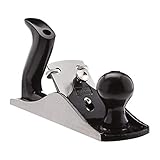


Budget hand planes compared
| Type | Typical length | Approx. weight | General new-price range | Best use | Likely setup effort |
|---|---|---|---|---|---|
| No. 4 bench plane | About 9 in. (230 mm) | About 4–5 lb (1.8–2.3 kg) | $40–$100 | Everyday smoothing and small-to-medium boards | Moderate; check sole, iron, and lateral adjustment |
| No. 5 jack plane | About 14 in. (355 mm) | About 5–6 lb (2.3–2.7 kg) | $50–$120 | General stock preparation and longer surfaces | Moderate; longer sole makes flatness more important |
| Low-angle block plane | About 6–7 in. (150–180 mm) | About 1–2 lb (0.45–0.9 kg) | $25–$80 | End grain, edges, and small parts | Low to moderate; inspect iron seating and mouth |
| Budget No. 4-style plane, unbranded | Usually about 9 in. (230 mm) | Often about 4–5 lb (1.8–2.3 kg) | $20–$50 | Occasional work if you can tune tools | Potentially high; quality varies from unit to unit |
Dimensions and weights are typical for these plane sizes, not guaranteed specifications for every model. Treat the cheapest unbranded option as a project: a low purchase price may be offset by time spent flattening, sharpening, and correcting a poor fit.
Choose by the work you actually do
| Your situation | Best fit | Why |
|---|---|---|
| First plane; furniture repairs or general shop use | No. 4 bench plane | A manageable length and weight make it a useful all-round smoother. |
| Mostly rough boards or longer edges | No. 5 jack plane | The longer sole bridges dips better, while the plane remains versatile. |
| Small workspace or short, precise jobs | Block plane | Compact, easy to store, and suited to easing edges and trimming end grain. |
| Very limited budget and willingness to tune | Used branded plane in sound condition | A known maker’s tool may be a better starting point than a new, poorly finished casting. |
| Frequent work and little time for setup | Better-finished No. 4 or No. 5 | Paying more can reduce initial correction and make adjustments more repeatable. |
What matters more than the lowest price
Sole flatness
A plane does not need a mirror finish, but its sole should be sufficiently flat around the mouth and along the length to support a consistent cut. A pronounced hollow or twist can make the iron difficult to set for fine shavings. Check a clean sole with a reliable straightedge in several directions, especially across the front and behind the mouth. A gap is a warning, not an automatic verdict: assess where it falls and how large it is before deciding whether correction is practical.
Blade quality and sharpening
Many budget planes arrive with an iron that is blunt, unevenly ground, or both. That does not make the plane unusable, but it means sharpening is part of the purchase. Look for enough blade thickness to resist chatter and a cap iron that seats securely. The cutting edge needs to be square to the blade sides for predictable lateral adjustment. A sharp iron matters more to cut quality than a polished body.
Adjustment and grip
Move the depth and lateral controls through their range before buying if possible. They should engage predictably, without slipping or binding. The lever cap should hold the iron firmly, and the iron should not rock in its bed. Check that the tote and front knob feel secure and comfortable in your hand; rough edges, loose hardware, or an awkward reach can turn routine adjustment into a chore.
How much tuning should you expect?
Plan for a short inspection and sharpening session even with a mid-priced plane. A very inexpensive model may need more work, and some defects are not worth fixing. Use this sequence to separate normal setup from a poor purchase:
- Inspect first: Check the casting for cracks, loose handles, damaged threads, and a lever cap that cannot clamp firmly. These are more serious than cosmetic marks.
- Clean the working surfaces: Remove oil or residue from the sole and iron. Keep the sole dry afterward and apply a light rust-preventive coating when storing the plane.
- Sharpen the iron: Establish a consistent bevel and remove the burr. Make sure the edge is square enough for the cut you want.
- Reassemble and test: Seat the iron flat, tighten the cap, and begin with a shallow projection. Adjust the lateral control until the shaving is even across the blade.
- Only flatten if needed: If the sole has a meaningful high spot that affects the cut, use a flat reference surface and abrasive, checking often. Unnecessary lapping removes material without improving performance.
Test on straight-grained scrap, not a valuable workpiece. A plane that produces continuous, even shavings after sharpening and adjustment may be entirely serviceable even if its finish looks plain. Persistent chatter, a blade that will not stay set, or a sole defect requiring extensive metal removal are reasons to return or replace it.
New or used: which is the better budget buy?
A new low-cost plane gives you unworn parts and a return option, but its machining and iron fit may be inconsistent. A used Stanley or Record plane can offer a well-established design, but inspect it carefully: check for cracks around the mouth, a distorted sole, stripped adjustment threads, and a badly pitted iron. Rust on exposed surfaces is often manageable; damage to the bed or mouth is harder to correct.
Compare the total cost, not just the tag. For example, a $35 plane that needs a replacement iron and several hours of correction may cost more in time and parts than a $75 plane that only needs sharpening. If you enjoy tool restoration, that lower-priced option may still be worthwhile. If you need a reliable cutter quickly, prioritize a sound sole, secure iron, and usable adjustment mechanism.
Ownership realities
The cutting edge is the first routine consumable: it dulls and needs honing, particularly when working abrasive or dirty stock. Keep boards free of grit, store the plane dry, and retract the iron when putting the tool away. Periodically check that the lever cap and handles remain secure. Avoid forcing a heavy cut to compensate for a dull blade; it increases tear-out and makes a budget plane feel worse than it is.
For most buyers, a well-adjusted No. 4 is the safest first purchase. Choose a No. 5 if longer boards are common, or a block plane if your jobs are mainly edge cleanup and small parts. A low price is appealing, but the best budget hand plane is the one whose condition and setup demands match your available time and skill.