Best Band Saws with Large Tables for Irregular Workpieces
What's inside
As an Amazon Associate I earn from qualifying purchases. This post may contain affiliate links at no extra cost to you.
Contents
What makes a band saw table useful for irregular work
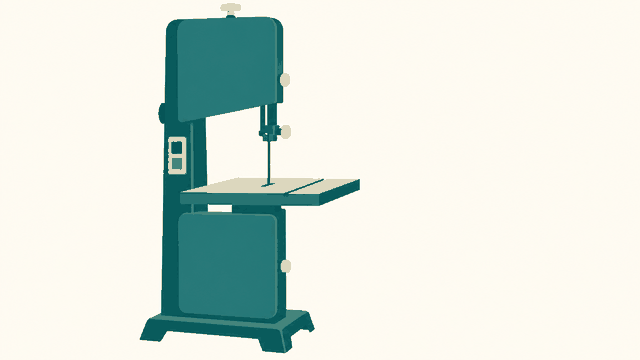
A wide table helps support bowls, live-edge slabs, templates, and other awkward shapes while you guide them through the blade. But table size alone does not make a saw a good choice: a large workpiece can still tip, snag, or twist if it is poorly supported. Check table dimensions, throat capacity (the distance from blade to frame), cutting height, and whether the table tilts. Also consider how the saw will fit in your shop; a big cast-iron table is heavy and takes up space.
For many hobby shops, a table roughly 14 by 14 inches or larger is comfortable for general irregular work. Bigger tables are useful for broad, flat pieces, but they do not increase throat capacity. A 14-inch throat limits the width of a cut to about 14 inches from the blade to the frame, no matter how large the table is. For wider resawing or cutting, look for a suitable resaw capacity and enough motor power—not simply a larger tabletop.
What to check before buying
Table support: A rigid cast-iron table resists flex and stays flat under a heavy blank. Extension tables or auxiliary supports can help with long stock, but they must be level with the main table so the work does not catch at the edge. A shop-made plywood support can be a sensible budget fix if it is securely attached and does not interfere with the blade or guides.
Blade capacity and guides: A saw that accepts a range of blade widths gives you more options. Narrow blades turn tighter curves; wider blades track straighter for resawing. Check the manufacturer’s blade-width range and guide design. Guides that are difficult to adjust can make blade changes and setup frustrating. Regardless of price, the blade must be sharp, correctly tensioned, and set close to the work.
Cutting height and motor: Cutting height determines how thick a piece can pass under the upper guide. Do not assume the rated capacity will feel easy with dense hardwood or a dull blade. A small benchtop saw may manage thin curves and occasional light stock, but it can struggle on thick, irregular blanks. For demanding work, a floor-standing saw with adequate motor power is the safer bet.
Compare the main options
| Type | Typical strengths | Trade-offs | Best fit |
|---|---|---|---|
| Benchtop saw | Lower cost, compact, easier to move | Smaller table and throat; less capacity for thick stock | Thin curves, small templates, occasional use |
| 14-inch floor-standing saw | More stable, wider blade choices, larger work surface | Costs more and needs floor space; capacity varies by model | Regular shop use and medium-size irregular blanks |
| Large-capacity floor saw | More throat and cutting height for broad or thick work | Higher price, power and footprint demands | Large slabs, frequent resawing, or oversized workpieces |
For a budget shop handling mostly small pieces, a benchtop woodworking band saw can be enough. If your work routinely pushes the table or throat limits, compare 14-inch floor-standing band saws instead. Verify the actual table and capacity specifications; “14-inch” describes the wheel size, not the table width.
Handling irregular work safely
Before cutting, mark the cut line and check that the workpiece can sit flat without rocking. If it rocks, stabilize it with a cradle or a securely clamped auxiliary support. Do not try to hold an unstable blank down with your fingertips. For a round or curved surface, plan a flat reference face or use a purpose-built jig. Keep hands out of the blade path and use push sticks or other suitable aids when they improve control.
Set the upper blade guide just above the workpiece—about 1/8 inch is a useful starting point—so the exposed blade length stays short. Feed steadily without forcing the cut. Forcing a dull or narrow blade can make it wander, burn the wood, or bind; twisting the work to correct a wandering cut can kink or break the blade. If the saw slows, the blade bends, or the piece starts to pinch, stop and reassess rather than pushing harder.
For tight curves, use a narrow blade and make relief cuts from the waste edge to the cut line. These short cuts let waste pieces fall away instead of trapping the blade as the curve closes. Do not back a blade out of a tight kerf while it is moving. Switch off and wait for the blade to stop before freeing a stuck piece.
Buying and setup trade-offs
A large cast-iron table is worthwhile if you regularly guide broad, heavy pieces by hand. If most of your work is small, flat stock, a smaller saw with a well-supported auxiliary surface may cost less and be easier to place. Add the cost of suitable blades, dust collection, and a stable stand when comparing prices. A table can be wide yet awkward if its edges obstruct a jig or the machine sits too close to a wall.
On delivery, check that the table is square to the blade and that the blade tracks properly before judging cut quality. Follow the manual for tension and guide settings; there is no universal tension number that fits every blade and saw. Test on scrap of similar thickness and species. If the cut drifts, first check blade sharpness, tension, tracking, and feed rate. Replacing or correctly setting up the blade often solves the problem more cheaply than upgrading the machine.