Best Table Saws with Easy Blade-Height Adjustment for Joinery
What's inside
As an Amazon Associate I earn from qualifying purchases. This post may contain affiliate links at no extra cost to you.
Contents
Why blade-height adjustment matters for joinery
For joinery, blade height is a working setting, not a set-and-forget detail. A tenon cheek, groove, or shallow dado cut may need a different height from a through-cut, and small errors show up as a shoulder that does not seat or a groove that is too deep. A height wheel that turns smoothly and holds its setting makes repeatable work easier; it does not compensate for a blade that is dull, misaligned, or poorly supported.
Most table saws use a handwheel to raise and lower the arbor. Some provide finer-feeling adjustment through a well-made elevation mechanism, but few consumer saws have a calibrated digital height readout. Expect to verify critical settings with a rule, setup block, or depth gauge. For a shoulder cut, measure from the table to the tooth tip, then make a test cut in scrap and check the result before cutting the workpiece.
What to look for in the mechanism
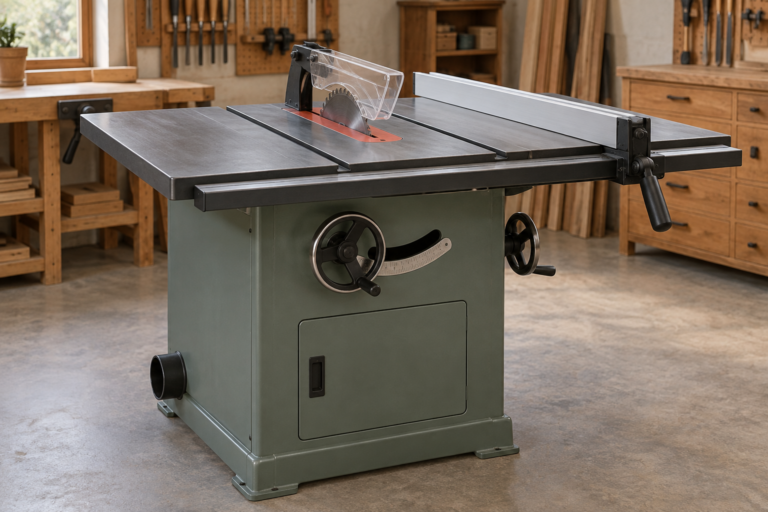
Turn the elevation wheel through its range before buying, if possible. It should move without binding or sudden changes in effort. Check that the blade does not visibly rock as it rises, and that the lock or bevel mechanism does not disturb the height setting when tightened. A rough mechanism is not just irritating: backlash can make it hard to approach a setting consistently, particularly when making several shallow passes.
Look beyond the wheel. A sturdy arbor, a flat table, reliable blade-to-miter-slot alignment, and a fence that locks parallel to the blade matter more to accurate joinery than a height knob with a premium feel. A cabinet saw is generally heavier and more stable; a contractor-style or hybrid saw can be a sensible choice for a smaller shop. Portable jobsite saws can make good cuts, but their lighter stands and smaller tables demand more attention when supporting long stock.
Saw types at a glance
| Saw type | Height adjustment and stability | Best fit | Main trade-off |
|---|---|---|---|
| Cabinet saw | Typically smooth handwheel action; heavy base helps keep settings steady | Frequent joinery and larger stock | Cost, weight, and space requirements |
| Hybrid or contractor-style saw | Can offer good adjustment feel; quality varies by mechanism and fit | Serious small-shop work | Less mass and often less support than a cabinet saw |
| Jobsite saw | Usually handwheel adjustment; compact design can mean more flex and limited table support | Occasional joinery or a shop that must be packed away | Supporting long or wide work can be awkward |
Choosing a saw for repeatable settings
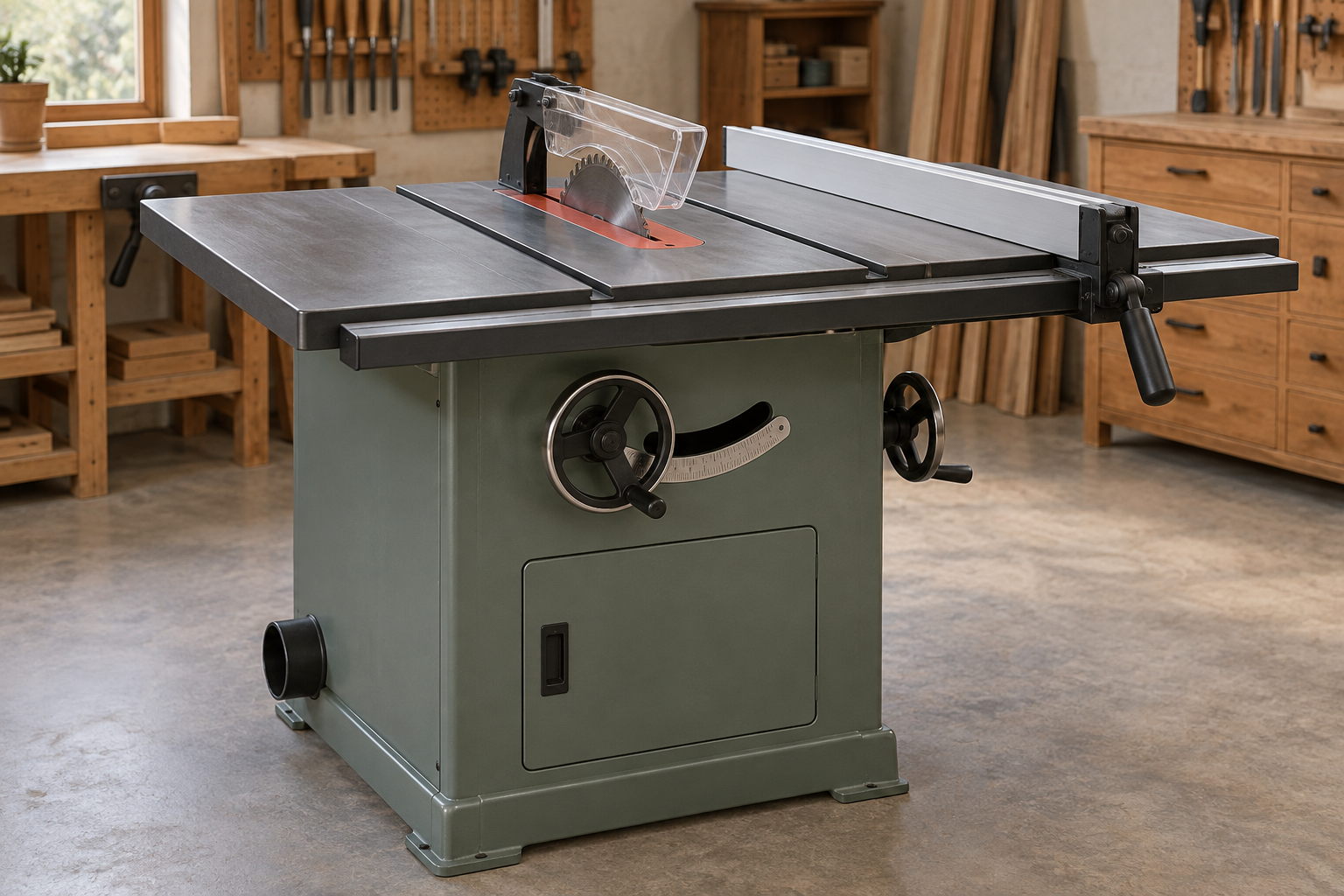
If the saw will stay in one shop and cut joinery most weeks, start with 3 hp cabinet table saws. Their mass and generally robust trunnion and arbor assemblies are useful when making repeated cuts, and their larger tables help support work. Check the electrical supply before choosing one: many 3 hp saws require 230-volt power, which a shop may not have. Also account for dust collection, floor space, and the cost of a suitable blade.
A hybrid table saw with a 30-inch fence is often a better balance for a home shop. It may run on ordinary 120-volt power, depending on the saw, and can handle tenons, grooves, and general furniture work. Before buying, check the actual elevation-wheel travel and how easy it is to reach the wheel with the blade guard installed. A lower price is not a bargain if the fence or arbor needs repeated adjustment.
For occasional repairs, small projects, or a saw that must be stored between jobs, a jobsite table saw with rack-and-pinion adjustments can be adequate. The rack-and-pinion feature is usually associated with fence adjustment rather than blade elevation, so confirm the actual blade-height control in the specifications; do not assume it provides finer vertical movement. If most cuts are short and the work is well supported, paying cabinet-saw prices is unnecessary.
Set blade height for the cut
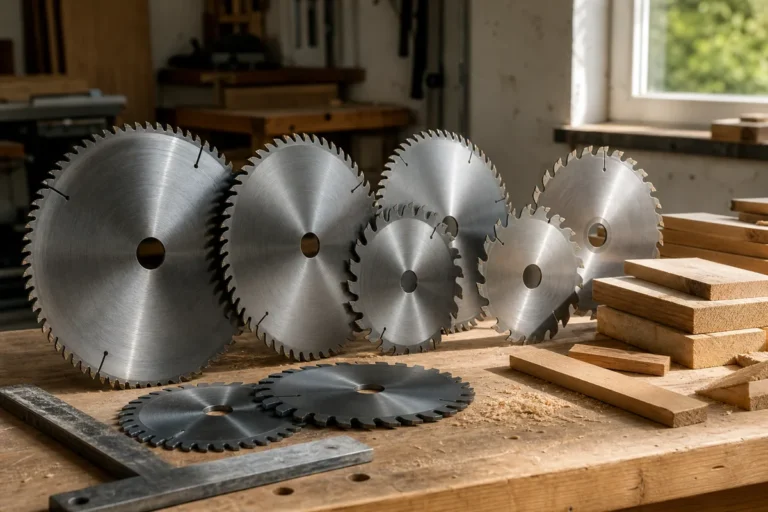
There is no single height that suits every joint. For a tenon cheek, set the blade to the distance from the face of the board to the shoulder, then make a test cut. For a groove, use a depth gauge or a scrap sample to confirm depth; the saw scale is a starting point, not a measurement standard. On a dado stack, check that the stack is approved for the saw and that the arbor has enough thread engagement after the stack and washer are fitted.
Raise the blade only as high as the cut and setup require, following the saw and blade makers’ instructions. More exposed blade increases the consequences of contact; too little clearance can also cause binding or poor chip evacuation in some operations. Use a push stick or push block, keep hands clear of the blade path, and use a riving knife and guard where the operation permits. Never remove safety equipment simply to make a height setting easier.
Common adjustment failures
Sawdust packed around the elevation screw or trunnions can make a wheel feel stiff and cause the user to force it. Clean the mechanism and lubricate only as the manual specifies; excess oil attracts more dust. If the blade height creeps during a cut, check the locking mechanism, arbor assembly, and trunnion fasteners rather than trying to compensate with a heavier hand on the wheel.
Another frequent problem is measuring from the wrong tooth position. Blade teeth alternate between left and right bevels, so a measurement taken casually from one side can differ from the effective cutting height. Use a consistent reference, rotate the blade by hand with the saw unplugged to locate the highest tooth, and confirm with a test cut. For repeat work, keep a labeled setup block for common depths and recheck it when changing blades.
Prioritize a sound fence, accurate alignment, and a stable stand alongside easy elevation. Those features prevent more joinery errors than a premium-looking handwheel alone. Buy the heavier saw if it will earn its space through regular work; choose the cheaper, compact option if its capacity and support match the cuts you actually make.