Best Planers with Adjustable Bed Rollers for Difficult Stock
What's inside
As an Amazon Associate I earn from qualifying purchases. This post may contain affiliate links at no extra cost to you.
Planing difficult stock is less about maximum horsepower than control. Short, cupped, twisted, resinous, or highly figured boards can lift, stall, snipe, or finish with tear-out even in a good machine. A planer with adjustable bed rollers gives you another way to tune the support under the board. The rollers can sit slightly proud of the bed for rough, dirty stock, or flush when you need the most consistent thickness.
Contents
What Adjustable Bed Rollers Do
Most portable and stationary thickness planers have two bed rollers running lengthwise beneath the board. They reduce friction as stock passes over the bed. On many machines, the rollers are fixed at roughly 0.005 to 0.020 inch above the bed. That height is a compromise: enough clearance to keep rough stock moving, but not so much that the board rocks.
Adjustable rollers let you change that compromise. A higher setting helps with rough, dirty, or resin-coated lumber because less of the board drags across the bed. A lower setting improves control on wide, thin, or slightly bowed boards. For demanding work, the useful adjustment range is usually about 0.005 to 0.025 inch, though the exact specification varies.
Do not confuse bed rollers with top-mounted pressure rollers. The bed rollers support the board from below; pressure rollers hold it down inside the cutterhead assembly. You need both systems working correctly. A planer with adjustable bed rollers cannot compensate for weak pressure springs, worn feed rollers, or a cutterhead that is not parallel to the table.
Which Planer Type Makes Sense?
| Planer type | Best use | Advantages | Limitations |
|---|---|---|---|
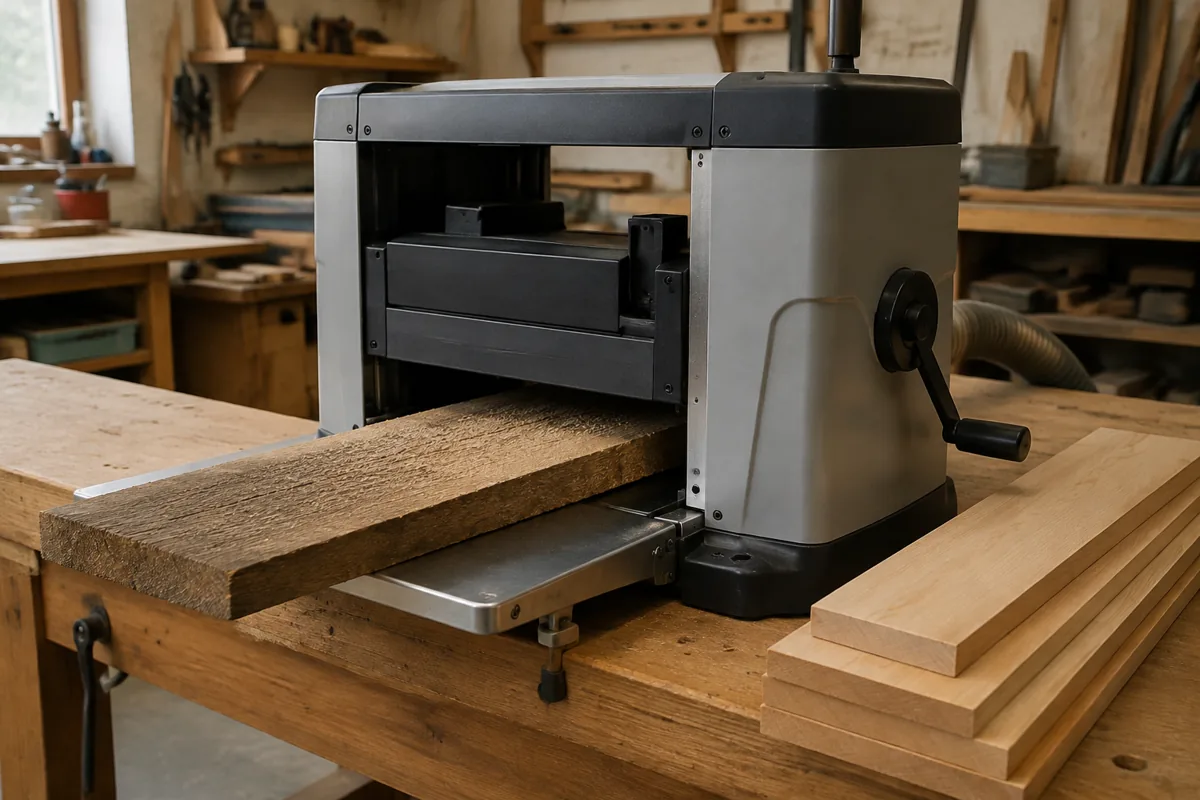
| Portable lunchbox planer | Typical home-shop boards up to 12 or 13 inches wide | Lower price, easy to move, widely available knives and parts | Less mass, more vibration, usually weaker stock control |
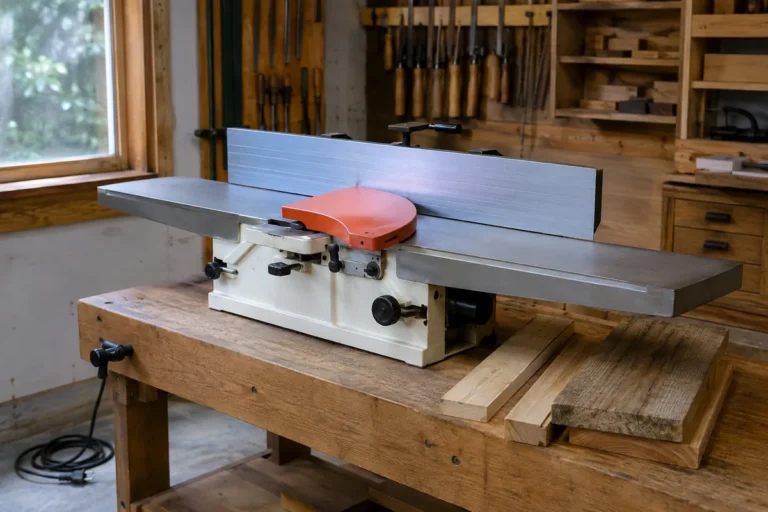
| Stationary benchtop or floor planer | Frequent hardwood work and heavier boards | More rigid frame, stronger feed system, better dust collection | Costs more and needs permanent floor space |
| Spiral or helical-head planer | Figured grain, knots, and difficult species | Cleaner cuts, quieter operation, replaceable carbide inserts | Higher purchase price; does not eliminate snipe or bad setup |
For occasional furniture work, a cheaper [portable thickness planer with adjustable bed rollers](https://www.amazon.com/s?k=portable+thickness+planer+adjustable+bed+rollers&tag=powertoolsdiy04-20) can be sufficient. It is the sensible choice if you mostly process straight, 4/4 boards and can afford to make several light passes. A heavier floor-standing machine becomes worthwhile when you routinely plane 8/4 stock, long boards, or batches of material.
Features That Matter on Difficult Stock
Rigid table and column system: Difficult boards expose flex quickly. If the table shifts under feed pressure, thickness varies from one side of the board to the other. Cast iron is desirable, but a well-braced steel frame can also work. Look for a table that locks firmly and does not move when you push sideways on it.
Independent roller adjustment: Ideally, each bed roller can be adjusted and locked without dismantling half the machine. The adjustment should be repeatable. If turning one screw changes the opposite side, calibration becomes frustrating. Bed rollers should also be easy to clean; packed resin can raise a roller unevenly and make a board rock.
Two feed speeds: A fast setting is useful for ordinary stock. A slower setting, commonly around 16 feet per minute compared with 30 feet per minute, improves surface quality and reduces tear-out. It does not replace sharp knives or correct grain direction, but it gives the cutterhead more chances to make a controlled cut.
Helical or spiral cutterhead: Carbide inserts handle reversing grain and small knots better than straight knives. They also keep cutting after a small section is nicked. However, a helical head will still tear out badly if you remove 1/8 inch in one pass. Its main benefit is a wider margin for error, not permission to ignore feed direction.
Long infeed and outfeed support: A board can be flat at the cutterhead and still tip at the ends. Use extensions or roller stands that are coplanar with the planer table. Poor support is a common cause of snipe, especially on boards longer than 6 feet.
How to Set Up the Planer
Start by flattening one face at the jointer, with a sled, or by hand. A thickness planer makes the opposite face parallel; it does not reliably flatten a severely cupped board. For twisted stock, use a planer sled until one face is stable.
Clean the bed and apply a dry lubricant or paste wax approved for woodworking machinery. Avoid oily products that can contaminate finishes. Set the bed rollers only high enough to move the board freely. A practical starting point is 0.010 inch above the bed. Test with a straight board, then reduce the height if thin stock rocks or shows uneven thickness.
Take light cuts on difficult material. Start around 1/32 inch, or less on figured hardwood, and measure after every pass. On a small portable planer, removing 1/16 inch from a wide hardwood board may overload the motor and produce a rough, ridged surface. Listen for slowing; a sustained motor bog means the cut is too deep, the knives are dull, or the feed system is slipping.
What to Buy
For a general home shop, prioritize a 12- to 13-inch planer with adjustable bed rollers, two feed speeds, a lockable table, and available replacement knives. A [12-inch helical-head thickness planer](https://www.amazon.com/s?k=12+inch+helical+head+thickness+planer&tag=powertoolsdiy04-20) is usually the best upgrade for figured or knotty wood, provided your dust collector can handle the chips.
If you process long, heavy stock every week, shop for a [floor-standing planer with adjustable bed rollers](https://www.amazon.com/s?k=floor+standing+woodworking+planer+adjustable+bed+rollers&tag=powertoolsdiy04-20). The extra weight and stronger feed drive reduce vibration and slipping. The cheaper portable option is fine when boards are short, cuts are light, and you are willing to support the work carefully.
Before buying, verify the roller adjustment range, maximum stock width and height, minimum board length, cutterhead speed, replacement-parts availability, and dust-port size. Those details matter more than a large horsepower number printed on the box.