Rear Handle Circular Saw Review
Key takeaways
- We judge the rear handle circular saw category on shoe flatness, fence accuracy, guard action and vibration, and explain where worm drive, hypoid and cordless layouts each make sense.
What's inside
As an Amazon Associate I earn from qualifying purchases. This post may contain affiliate links at no extra cost to you.
Most upgrades to a rear handle circular saw start with frustration rather than curiosity. A compact sidewinder stalls two thirds of the way through wet pressure treated 2×10, or the motor housing sits between your eye and the line so you are guessing at the last six inches. This rear handle circular saw review looks at the format the way a framing crew or a timber shop actually uses it: a big shoe, a long sightline down the blade, and enough torque headroom that the wood stops setting the pace.
We have not run a dynamometer and will not pretend otherwise. What a review desk can do honestly is judge these saws on the mechanical details that decide whether one is still worth owning in five years. Is the shoe flat and stiff? Does the rip fence hold its setting? How does the lower guard behave entering a bevel? Do the depth and bevel levers lock without creep? Those things separate good saws from loud ones far more reliably than any number printed on the box.
As an Amazon Associate we earn from qualifying purchases at no extra cost to you. Product prices and availability are accurate as of the date shown and are subject to change.


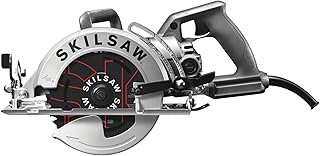

| Format | Drive Layout | Where It Shines | What To Watch |
|---|---|---|---|
| Corded worm drive | Right angle gear set, blade left | Torque in wet 2x and engineered lumber, long sightline | Heaviest class, gear oil needs checking |
| Corded hypoid | Sealed hypoid gear set, blade left | Similar grunt with no fluid service, often quieter | Fewer models to choose from |
| Corded in-line rear handle | Direct drive, higher no-load speed | Lighter saw, lower price, quick in dry lumber | Bogs sooner in dense or soaked stock |
| Cordless rear handle | High voltage packs such as FlexVolt, M18 FUEL, LXT X2 | No cords on a deck or roof, electric brake standard | Battery cost and top heavy balance |
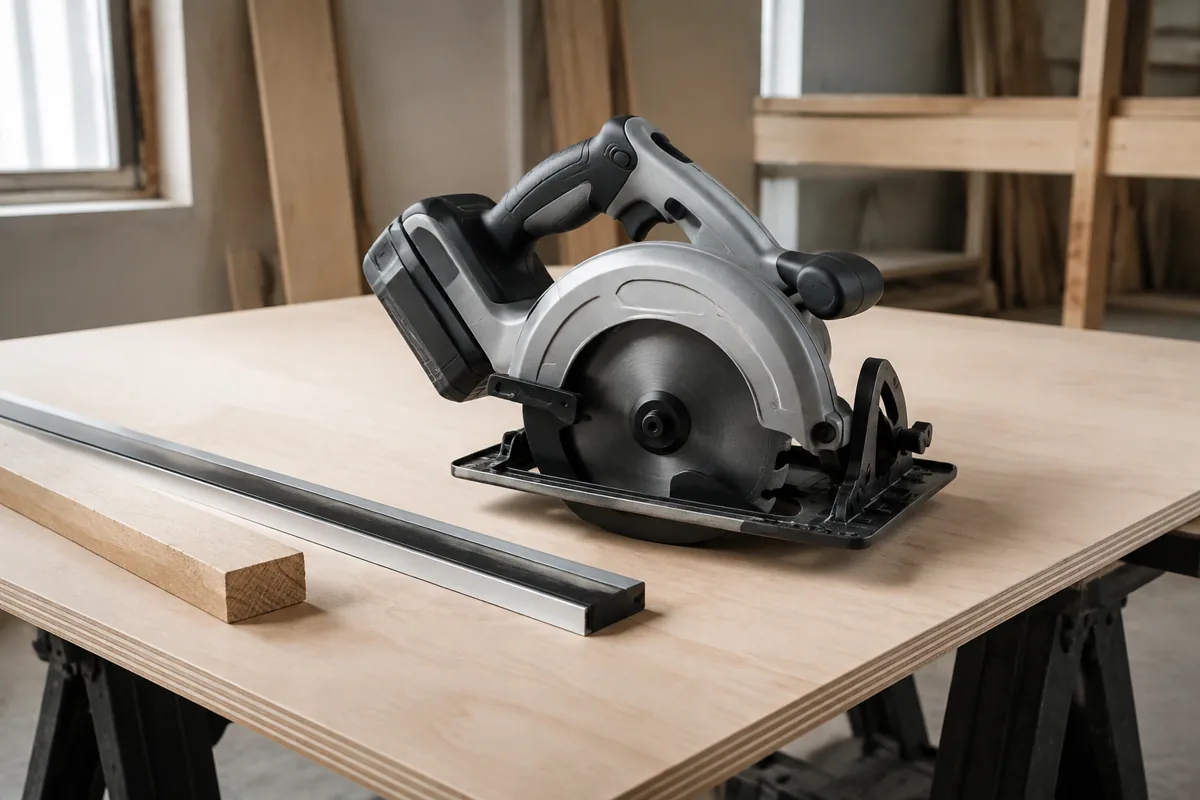
Rear Handle Circular Saw Review: The Criteria We Judge On
Base flatness and shoe stiffness
Set the saw upside down on a jointer bed or a piece of granite and look for light under the shoe. Magnesium bases in this class are usually honest, while stamped steel on the budget end can be twisted enough to push an 8-foot rip out of square. Stiffness counts as much as flatness. Press near the front of the shoe: if it flexes under hand pressure, it will also flex away from a straightedge guide.
Fence, guides and adjustment locks
The included rip fence is a fair proxy for how seriously a maker took the rest of the saw. We want one that clamps square, does not rock in its slot, and reads the same from both edges. Depth and bevel levers should carry real cam pressure, with positive detents at 22.5 and 45 degrees and a hard zero stop you can trust. Bevel scales that wander after a few dozen cuts are the quiet failure in this category.
Guard action and vibration
Work the lower guard by hand while the saw is cold. It should snap closed under spring tension and lift smoothly when the nose meets stock, not skate or hang at a shallow bevel. At no load a healthy saw hums instead of buzzing. Vibration you can feel in your wrist usually points to a tired bearing or a poorly balanced arbor, and it shows up later as blade wander and fatigue.
Worm Drive, Hypoid or In-Line Direct Drive
Worm drive saws trade blade speed for torque through a right angle gear set and place the blade on the left, which most right handed users find gives a cleaner view of the line. They are long and nose heavy, and happiest on repetitive work at bench height. Hypoid saws use a different gear geometry in a sealed case: comparable grunt, no oil checks, thinner model selection. In-line rear handle saws spin faster and cost less, which is fine in dry framing lumber and less fine in soaked joists.
Corded Worm Drive Saws
If you cut wet dimensional lumber, engineered beams or stacked plates all day, this layout still earns its weight. Budget for gear oil and expect to build shoulder tolerance in the first week.
Hypoid Saws
Near identical torque delivery with a sealed gear case and nothing to check. A sensible default for anyone who wants worm drive behavior without a maintenance habit.
Cordless Rear Handle Saws
The high voltage cordless rear handle saws, DeWalt FlexVolt and Milwaukee M18 FUEL among them, are well past novelty status. Brushless motors and electric brakes are standard, and on a roof or a deck the absence of a cord is a real safety gain. The tradeoffs are honest: pack cost, a top heavy feel with a large battery fitted, and the need to think about runtime before you climb a ladder. Remodelers and deck builders usually come out ahead. A production crew with power at the panel still wins on cost per cut with a cord.
Cordless Rear Handle Saws
Buy into the battery platform you already own instead of chasing specs across brands. Plan on two large packs if you intend to cut all day away from a charger.
- ✔ Long sightline down the cut line for confident freehand tracking
- ✔ Torque headroom for wet 2x stock, engineered lumber and stacked cuts
- ✔ Left blade layout suits right handed operators on long rips
- ✔ Larger shoes track straightedge guides more predictably
- ✘ Heavy at the shoulder for overhead and ladder work
- ✘ Chip ejection throws toward the operator on some layouts
- ✘ Worm drive gear oil needs periodic attention
- ✘ More saw than a cabinet shop breaking down sheet goods needs
Dust Ports, Blades and the Fixes for Most Complaints
Dust management here ranges from a molded chip deflector to a genuine port sized for a shop vac hose. A port matters indoors and barely registers outdoors, so weigh it accordingly, and check that it does not foul the blade wrench or a full bevel. Two setup changes solve most complaints we hear. Replace the factory blade, since a quality 24-tooth framing blade cuts cleaner and cooler than most stock offerings and a 40-tooth turns the same saw into a usable sheet goods breakdown tool. Then check the shoe against the blade with a machinist square at 90 degrees and at 45 before the saw sees real work.
Frequently Asked Questions
Is a rear handle saw better than a sidewinder for general woodworking? For shop work, usually not. If you mostly break down plywood and cut dry lumber, a lighter sidewinder or a track saw is easier to control. The rear handle format pays off in wet stock, thick stock and long repetitive rips.
Do worm drive saws really need gear oil changes? On most corded worm drive models, yes. The manual gives an interval and a fill line, and ignoring both is why used examples so often arrive sounding rough. Hypoid and cordless designs are sealed and skip the chore.
Why is the blade on the left? It puts the cut line in direct view of a right handed operator and keeps the saw body supported over the keeper side of the cut. The offcut then falls away on the right, which takes some retraining if you have only run blade-right saws.
The Verdict
Judged on mechanics rather than marketing, the rear handle format remains the right answer for a specific job: heavy, wet or repetitive cutting where torque and sightline outweigh mass. Buy the saw with the flattest, stiffest shoe and the most convincing depth and bevel locks you can afford, lean toward a sealed hypoid or a cordless platform if you dislike maintenance, and put the savings into good blades. Anyone whose work is mainly sheet goods at a bench should spend that money on a track saw instead.
Check prices on Amazon →