
Key takeaways
- Compare the best disposable foam earplugs for the woodshop: bulk boxes with NRR 33 and NRR 29 ratings, wrapped pairs, and roll-down fit guidance.
What's inside
As an Amazon Associate I earn from qualifying purchases. This post may contain affiliate links at no extra cost to you.
As an Amazon Associate we earn from qualifying purchases.
A planer, a router, and a dust collector running together will push a small shop well past the level where hearing protection stops being optional, and disposable foam earplugs are the form many woodworkers actually keep wearing. A fresh pair costs very little, there is nothing to clean, nothing presses against safety glasses or a respirator strap, and a bulk box by the door means a clean pair is always within reach. The five products below are the established bulk plugs from the major makers, covering the two rating levels that dominate this class and the main shapes and pack formats on sale.
One caution applies to every pick here. The Noise Reduction Rating is an EPA laboratory figure that each maker prints for the exact product, measured with correctly fitted plugs. It is not a promise of what any individual wearer will get. Real-world protection depends on fit, and fit depends on the roll-down insertion described in the FAQ: a plug rolled thin, inserted deep, and allowed to expand fully protects far better than the same plug pushed in shallow. No earplug can guarantee against hearing loss, and a plug that will not stay sealed should be replaced by a different shape, not worn anyway.
This article contains affiliate links, and the site may earn a commission on qualifying purchases made through them.
Contents
Quick Answer
For most shops, the Howard Leight Maximum is the default bulk buy: the maker prints an NRR of 33 dB, the highest rating here, in a 200-pair box of individually bagged pairs. The Moldex SparkPlugs match that rating in a tapered plug. The 3M E-A-R Classic and 3M 1100 are the NRR 29 alternatives, and the Mack’s Ultra Soft jar suits smaller shops wanting low-pressure foam in a 50-pair pack.
Howard Leight Maximum Disposable Earplugs (MAX-1)
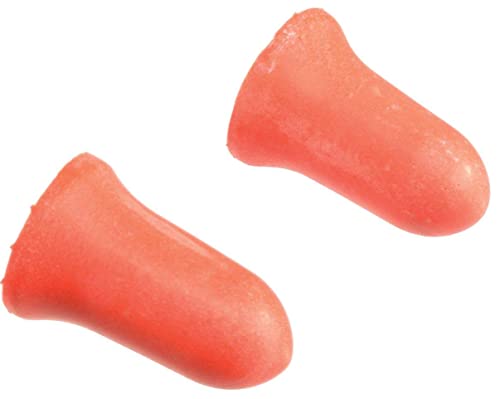
The Maximum is the plug Howard Leight positions at the top of its disposable range, and the maker prints an NRR of 33 dB for it, the highest rating offered on any single-use plug in this roundup. It is a polyurethane foam plug with a contoured bell shape that flares at the outer end; the maker says the shape is easier to insert and resists the tendency of a straight plug to back out of the ear canal during a long session. The foam has a smooth, soil-resistant closed-cell skin, which matters in a woodshop because a plug rolled between dusty fingers picks up less grime before it goes in. The box holds 200 uncorded pairs, and the maker’s ordering information lists each pair individually packaged in a poly bag, so pairs stay clean loose in a toolbox or apron pocket.
Specs
- Maker and model: Howard Leight by Honeywell, MAX-1
- Type: Disposable foam earplugs, uncorded
- Material: Polyurethane foam, contoured bell shape
- Noise Reduction Rating: NRR 33 dB, as printed by the maker
- Pack: 200 pairs per box, each pair individually packaged in a poly bag
- Colour: Orange
See the Howard Leight Maximum on Amazon
Moldex SparkPlugs Disposable Foam Earplugs (6604)

The SparkPlugs are Moldex’s best-known disposable, and Moldex prints an NRR of 33 dB for the 6604, level with the Howard Leight Maximum. Where the Maximum is bell-shaped, the SparkPlugs plug is a longer tapered design in extra-soft foam, which some wearers find easier to roll thin and seat deeply. The plugs come in assorted bright colours, which makes a dropped plug on a dusty floor easier to spot. The box holds 200 uncorded pairs, individually wrapped, and Moldex states that its disposable earplugs are made in the USA. If the bell shape of the Maximum feels short in your ear, this is the same rating in the other mainstream shape.
Specs
- Maker and model: Moldex, SparkPlugs 6604
- Type: Disposable foam earplugs, uncorded
- Material: Extra-soft foam, tapered shape
- Noise Reduction Rating: NRR 33 dB, as printed by the maker
- Pack: 200 pairs per box, individually wrapped
- Colour: Assorted
See the Moldex SparkPlugs on Amazon
3M E-A-R Classic Ear Plugs (310-1001)

The E-A-R Classic is the original slow-recovery foam plug and still the reference point for the class. 3M prints an NRR of 29 dB and a CSA Class AL rating for the 310-1001. The plug is a firm cylinder rather than a tapered or bell shape, made from slow-recovery, low-pressure foam; it goes in with the same roll-down technique but feels noticeably firmer once expanded, which some woodworkers prefer because the plug is easy to grip and reposition, and others find less comfortable over a full day. The box holds 200 uncorded pairs, each pair sealed in its own pillow pack, a format that keeps pairs clean in a shop apron better than a loose handful.
Specs
- Maker and model: 3M E-A-R Classic, 310-1001
- Type: Disposable foam earplugs, uncorded
- Material: Slow-recovery, low-pressure foam, cylindrical shape
- Noise Reduction Rating: NRR 29 dB, CSA Class AL, as printed by the maker
- Pack: 200 pairs per box, one pair per pillow pack
- Colour: Yellow
See the 3M E-A-R Classic on Amazon
3M 1100 Foam Ear Plugs

The 3M 1100 is the tapered counterpart to the E-A-R Classic in 3M’s own range. 3M prints an NRR of 29 dB and a CSA Class AL rating. The plug is a slow-recovery polyurethane foam that 3M describes as hypoallergenic, softening with body heat once inserted, with a smooth, dirt-resistant surface and a tapered shape intended to fit a wide range of ear canal sizes. It is the shape most first-time plug wearers manage best, because the taper guides the rolled plug into place. The box holds 200 uncorded pairs in poly bag packaging. Woodworkers who find the Classic’s firm cylinder uncomfortable but want to stay with 3M generally land here; those who need a cord for in-and-out work should note that this model is uncorded, and 3M sells the same plug in a pre-corded version under a different model number.
Specs
- Maker and model: 3M, 1100
- Type: Disposable foam earplugs, uncorded
- Material: Slow-recovery polyurethane foam, tapered shape
- Noise Reduction Rating: NRR 29 dB, CSA Class AL, as printed by the maker
- Pack: 200 pairs per box, poly bag packaging
- Colour: Orange
Mack’s Ultra Soft Foam Earplugs, 50 Pair

Mack’s sells the Ultra Soft in the consumer channel rather than the industrial one, and the format reflects that: 50 pairs in a safety-sealed jar with a flip-open top instead of a 200-pair box, and the pairs are loose in the jar rather than individually wrapped. McKeon Products prints an NRR of 33 dB, level with the two bulk leaders above. The foam is the maker’s Comfy Cush low-pressure polyurethane, tapered and slow to expand, aimed at wearers who find industrial plugs create too much pressure over long sessions. The plugs are made in the USA. For a one-person shop that uses a few pairs a week rather than a few a day, the jar is the practical pack size, with the trade-off that loose pairs should stay in the closed jar, not a pocket.
Specs
- Maker and model: Mack’s (McKeon Products), Ultra Soft, model 9250
- Type: Disposable foam earplugs, uncorded
- Material: Comfy Cush low-pressure polyurethane foam, tapered shape
- Noise Reduction Rating: NRR 33 dB, as printed by the maker
- Pack: 50 pairs in a flip-top jar, not individually wrapped
- Colour: Beige
See the Mack’s Ultra Soft on Amazon
How to Choose
Start with the rating, but read it correctly. The NRR is a laboratory figure, and both safety agencies and the makers themselves warn that field results run lower; 3M’s own literature recommends reducing the printed NRR by 50 percent when estimating the protection a typical wearer actually receives. That is why fit outranks the number: an NRR 29 plug sealed deeply will outperform an NRR 33 plug sitting shallow. Choose the shape your ears will seal with. Bell and tapered plugs roll down and insert most easily; the E-A-R Classic’s firm cylinder suits wearers who like a plug they can grip and adjust.
Then match the pack to the shop. A 200-pair box of individually wrapped or bagged pairs is the hygienic format for a shared shop or anyone who carries pairs in pockets and toolboxes. A jar of loose pairs is fine for one wearer at one bench, provided the lid stays shut against dust. Corded versions exist in several of these model lines and suit stop-start work, but every pick above is uncorded, the right default around rotating machinery because there is no cord to catch. Finally, treat the plugs as the consumable they are: a pair that is dirty, torn, or no longer expanding back to shape goes in the bin.
Who Should Skip
Skip disposable foam plugs if you cannot get any of these shapes to seal and stay in; a plug that will not fit protects very little, and earmuffs are the better route. Skip them if your work requires hearing voices, alarms, or a change in a machine’s note between cuts, since a well-sealed plug blocks those along with the noise; electronic muffs exist for that pattern of work. Anyone with ear pain, drainage, a perforated eardrum, or recent ear surgery should talk to a clinician before putting anything in the ear canal. And if you object to single-use consumables, reusable plugs and muffs are covered in this site’s general hearing protection guides instead.
FAQ
Is the NRR the amount of noise a plug actually removes?
No. The NRR is a laboratory rating printed by the maker under an EPA test method, achieved with correctly fitted plugs on test subjects. Individual results vary with ear canal shape and insertion depth, and 3M’s guidance recommends estimating real protection at roughly half the printed figure. A lower-rated plug fitted deeply can protect better than a higher-rated plug fitted badly.
How do you fit a foam earplug correctly?
Roll the plug between clean fingers into a thin, crease-free cylinder. Reach over your head with the opposite hand and pull the ear up and back to straighten the canal. Insert the rolled plug deeply, then hold a fingertip over it while the foam expands to seal, which takes the better part of a minute. A correctly fitted plug should not be visible from the front when someone faces you, and your own voice should sound slightly hollow.
How often should disposable foam earplugs be replaced?
They are single-use plugs. Fit a fresh pair at the start of the work session, and replace a pair the same day if it becomes soiled, wet, torn, or stops expanding back to its original shape. Foam that has lost its slow recovery no longer seals reliably, and no washing routine restores it.
Can foam earplugs be worn under earmuffs?
Yes, plugs and muffs are commonly worn together for the loudest work, a practice called double protection, and it adds some protection over either device alone, though not the sum of the two printed ratings. It is a sensible step for long sessions on the loudest machines, provided both devices are fitted properly.
Final Verdict
For a working woodshop, the Howard Leight Maximum is the straightforward first box to buy: the highest printed rating in the class, a shape that resists backing out, and individually bagged pairs that stay clean wherever they are stored. The Moldex SparkPlugs are the equal-rated alternative in a longer tapered plug. The two 3M picks trade four decibels of printed rating for the firm’s longest-established designs, the Classic for wearers who like a firm cylindrical plug and the 1100 for the easiest tapered fit. The Mack’s jar covers the small shop that wants low-pressure foam without a 200-pair box. Whichever box lands on the bench, the protection comes from the fit: roll down, insert deep, let it expand, and start each session with a fresh pair.
Product and ASIN Reference
| Product | ASIN |
|---|---|
| Howard Leight Maximum Disposable Earplugs (MAX-1), 200 Pairs | B0013A0C0Y |
| Moldex SparkPlugs Disposable Foam Earplugs (6604), 200 Pairs | B07KSNY9XQ |
| 3M E-A-R Classic Ear Plugs (310-1001), 200 Pairs | B008MCU2M4 |
| 3M 1100 Foam Ear Plugs, 200 Pairs | B008MVYL7C |
| Mack’s Ultra Soft Foam Earplugs, 50 Pair | B0051U7W32 |
Related guides
More from Amazon
Programs that pair well with the guide above. Offers and eligibility are set by Amazon and may change.
A free business account with business pricing and bulk-buying tools for work, shop or home office.
Create a business accountFree shipping on eligible items, Prime Video and more. Eligible new members can start with a free trial.
Start a Prime free trialAudiobooks and podcasts to listen to on the go. Eligible new members can start with a free trial.
Try Audible freeAd-free music streaming. Eligible new subscribers can start with a free trial.
Try Music Unlimited freeAs an Amazon Associate we earn from qualifying purchases.
Write Your Review
No reviews yet. Be the first to share your experience!