How to Replace Table Saw Trunnion Bearings
What's inside
As an Amazon Associate I earn from qualifying purchases. This post may contain affiliate links at no extra cost to you.
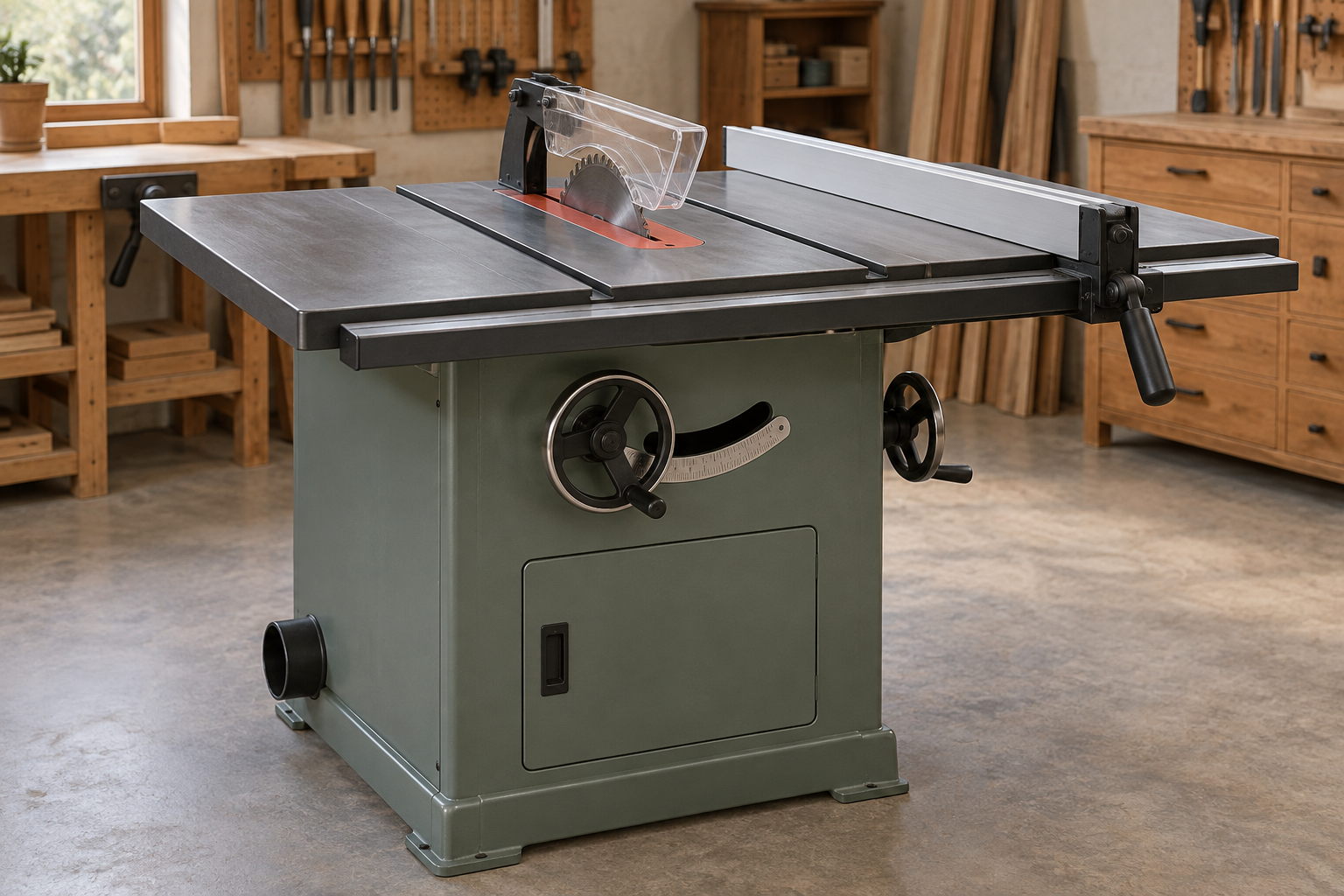
Replacing trunnion bearings is a substantial table-saw repair, not a routine blade change. The trunnions support and move the arbor assembly as you raise, lower, and tilt the blade. Worn bearings can cause rough adjustment, blade runout, vibration, or a growling sound—but those symptoms can also come from a bent blade, dirty elevation gears, a damaged arbor, or a loose pulley. Confirm the fault before taking the saw apart.
Contents
Confirm the bearing problem
Unplug the saw and remove the blade, throat plate, and blade guard. Check that the arbor nut is tight and inspect the blade for damage. Turn the arbor by hand. A bearing that feels gritty, catches, or makes a rough rolling sound is suspect. Also check for side-to-side play: hold the arbor flange and gently try to move it across the arbor’s axis. Noticeable movement can indicate worn bearings, but first verify that the pulley, arbor flange, and other fasteners are secure.
If the saw runs safely, a dial indicator can help separate arbor runout from blade wobble. Measure at the arbor flange, then at the blade. The allowable runout depends on the saw; use its service manual rather than treating one tolerance as universal. A bent arbor or damaged bearing seat will not be fixed by new bearings alone.
Check parts and access
Find the model and serial number, then look up the parts diagram and service instructions. Trunnion arrangements vary: some saws have an arbor assembly that can be removed from the cabinet, while others require tilting the heavy table or separating the trunnion from the saw. Identify the bearing numbers, seals, retaining rings, and any shims before ordering. A bearing’s dimensions and fit matter; a bearing that happens to slide onto the shaft may still be the wrong type or internal clearance.
Buy the specified bearings if they are available. If the manual identifies a standard bearing number, a reputable bearing supplier can provide the same size and specification. Avoid choosing solely by outside dimensions. A matched pair is generally sensible when both bearings are the same age and the assembly is already apart, but replacing only the failed bearing can be reasonable if the other is demonstrably sound and access is difficult. For the correct part, compare the saw maker’s parts listing with table-saw arbor bearings; confirm the exact number before buying.
Tools and preparation
Gather the service manual, sockets and hex keys that fit your saw, snap-ring pliers if needed, a soft-faced mallet, and a bearing puller or press. You may need a stable support or lifting help: a cast-iron table can weigh well over 100 pounds, and an arbor assembly is awkward even when it is much lighter. Do not balance the table on loose blocks or work beneath an unsupported assembly. Take photos as you go and label wiring, shims, and fasteners.
A small arbor press is useful for controlled bearing installation, but it is not mandatory for every design. The right approach depends on how the bearings are retained and whether the shaft or housing can be removed. A bearing puller set may be worthwhile if the old bearing must come off a shaft; for a one-time job, borrowing a puller or using a local machine shop can cost less. Do not drive a bearing off by hammering directly on the shaft or bearing cage.
Remove the arbor assembly
Disconnect power at the plug or breaker and verify the saw cannot start. Remove the blade, belt, and guards as directed. If the manual calls for removing the table, get help and protect the machined surface from scratches. Keep track of washers and shims in their original order; they can affect alignment and tilt. Support the arbor and trunnion assembly before loosening its mounting bolts, then remove it according to the saw’s procedure.
Once exposed, inspect the shaft, bearing seats, housing, retaining rings, and seals. A deep groove where a bearing sits, a cracked housing, or a scored shaft can prevent a new bearing from fitting correctly. Stop and seek a machine shop or replacement assembly if a bearing seat is damaged; pressing in a new bearing will not restore the fit.
Remove and install bearings
Remove retaining clips or collars first. Use a puller or press that bears on the correct race. When removing a bearing from a shaft, force belongs on the inner race; when removing one from a housing, force belongs on the outer race. During installation, press the race that has the interference fit. Pushing through the opposite race transfers force across the rolling elements and can damage a new bearing before the saw is used.
Install bearings in the same orientation as the originals, and replace seals or clips that are damaged. Do not add grease to sealed bearings unless the manufacturer specifies it. If the bearing will not start squarely or needs excessive force, stop and check for a burr, wrong part, or misalignment. Never use the retaining ring to pull a bearing into place.
Compare repair options
| Option | Best fit | Main trade-off |
|---|---|---|
| Replace bearings yourself | You have the manual, safe lifting help, and proper pressing tools | Lowest parts cost, but alignment and reassembly are your responsibility |
| Have a shop replace bearings | The assembly is difficult to remove or needs a press | Labor adds cost, but reduces the risk of damaging the shaft or housing |
| Replace the arbor assembly | The shaft, seat, or housing is damaged, or bearings are not serviceable separately | Often the most expensive option, but may be simpler than repairing worn fits |
Reassemble and test
Refit the assembly, shims, belt, guards, and table in the order specified by the manual. Check that the blade raises, lowers, and tilts smoothly through its full range without rubbing. Set blade alignment and bevel stops using the saw’s adjustment procedure; removing the table or trunnion can change alignment. Tension the belt as specified rather than tightening it as much as possible, since excessive belt tension adds load to the bearings.
With the blade guard in place and the work area clear, reconnect power and start the saw briefly without cutting. Listen for a new hum, scraping, or vibration, then shut it off and recheck fasteners and belt tracking. Make a cautious test cut only after the blade is aligned and all safety equipment is restored. If the noise remains, the arbor still has play, or the saw will not hold its alignment, stop using it and recheck the bearing fit, shaft, and trunnion mounting.