How to Size a Dust Collector for a Planer and Jointer
What's inside
As an Amazon Associate I earn from qualifying purchases. This post may contain affiliate links at no extra cost to you.
Contents
Start with the planer or jointer, not the collector’s horsepower
A planer and a jointer make large volumes of chips quickly. The right collector has to move enough air through the actual hose, fittings, and machine hood to keep those chips from piling up. A motor’s horsepower rating alone won’t tell you whether it can do that.
As a practical starting point, many benchtop machines with a 2½-inch dust port can work with a capable shop vacuum or compact collector. A stationary planer or jointer with a 4-inch port usually needs a dust collector rated around 600–1,000 CFM at the machine, depending on the machine and duct layout. Wide planers, long runs, restrictive fittings, or simultaneous use of multiple machines can require more. Treat those figures as planning ranges, not guarantees: check the machine manual for its airflow recommendation and port size first.
Understand airflow and static pressure
CFM is the volume of air a collector moves. Static pressure is the resistance it can overcome as air passes through hoses, bends, ductwork, filters, and the machine’s internal hood. A collector may advertise a high free-air CFM number, measured with little or no resistance, but deliver much less once connected. Look for an airflow curve or a rated CFM at a stated static pressure when the manufacturer provides one.
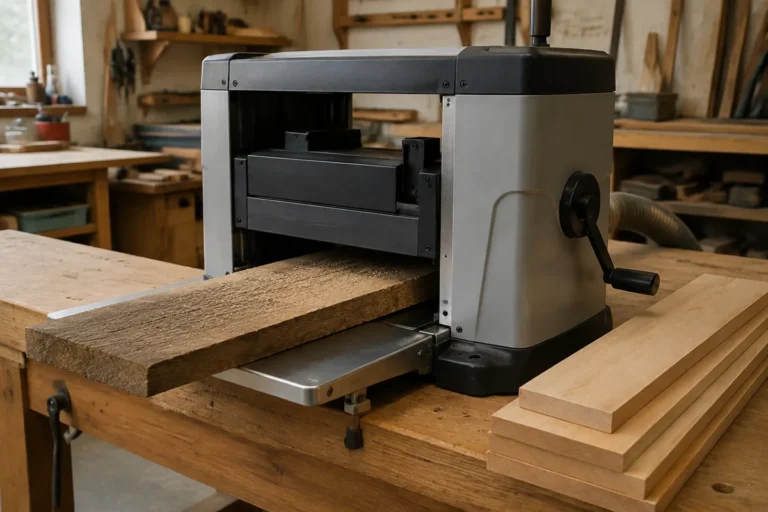
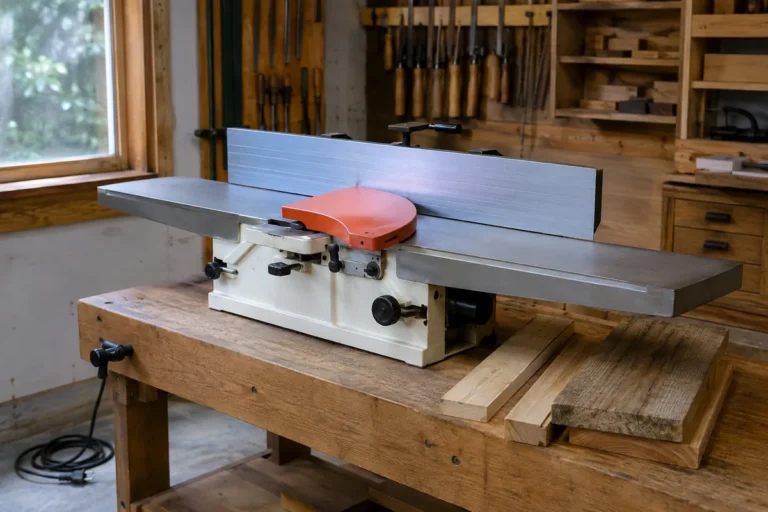
For a planer, weak airflow often shows up as chips accumulating inside the hood, blowing back toward the cutterhead, or spilling beneath the machine. On a jointer, chips can clog around the cutterhead or pack into the base. Fine dust escaping around the hood is a separate concern: better chip pickup does not automatically mean better filtration of airborne dust.
Size the duct to the machine port
A 4-inch duct has more than twice the cross-sectional area of a 2½-inch hose. Reducing a 4-inch machine port to a small shop-vac hose can sharply restrict airflow, even if the vacuum sounds powerful. Keep the main run as large and smooth as the machine connection allows, then use a short reducer only where necessary.
Use rigid metal duct or smooth-bore hose for long runs. Flexible hose is convenient at the machine, but its corrugations add resistance; keep it short and avoid unnecessary loops. Each tight bend, blast gate, wye, and clogged filter adds more resistance. A long, small-diameter hose may perform worse than a shorter, larger one even when both connect to the same collector.
For a single machine with a 4-inch port, a 4-inch dust-collection hose is a sensible starting point. Match fittings to the machine’s actual port; nominal sizes vary, and improvised gaps can leak chips and air.
Compare the common setups
| Setup | Good fit | Typical limitation |
|---|---|---|
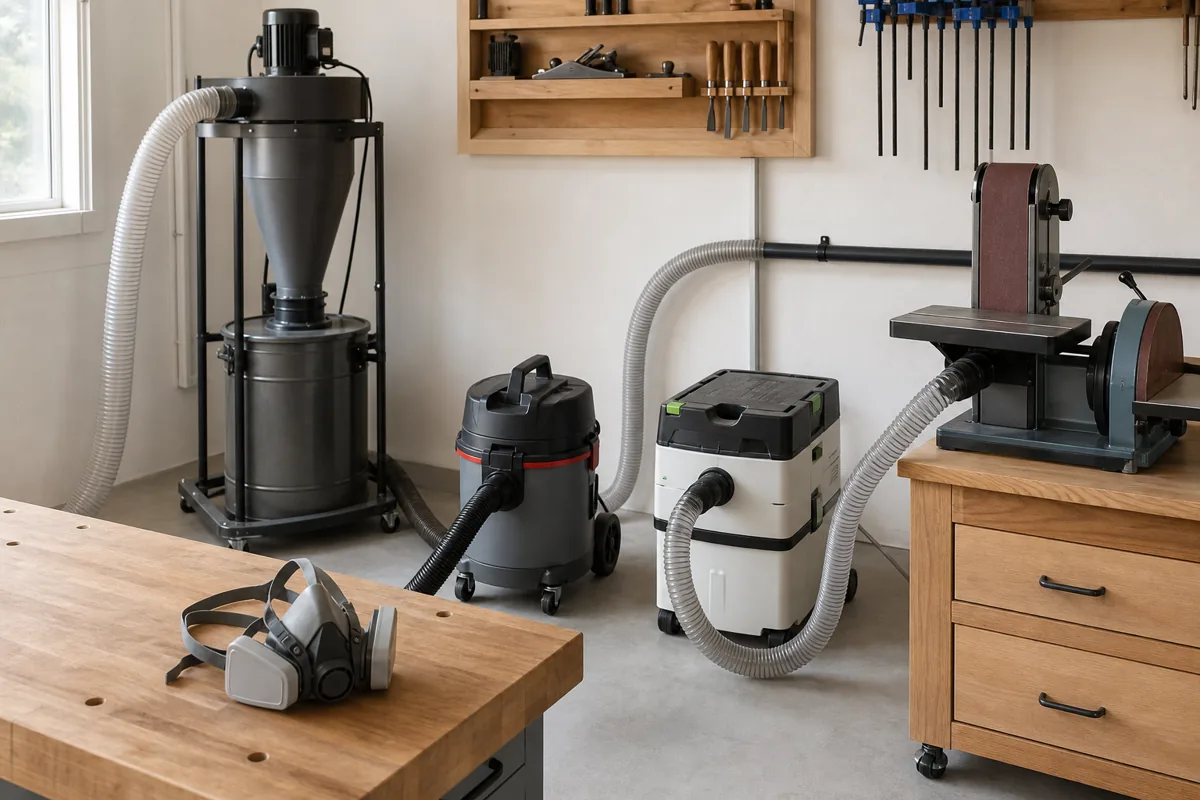
| Shop vacuum with small hose | Benchtop machines with small ports and short runs | May restrict a 4-inch port; filters can clog quickly with heavy chips |
| Single-stage collector with 4-inch inlet | One stationary planer or jointer, used one at a time | Advertised CFM may exceed delivered airflow; filtration and bag capacity vary |
| Collector with larger main duct and branch drops | Several stationary machines in a shop | Costs more and needs correctly sized duct, gates, and a layout that limits losses |
A single-stage collector for 4-inch ports can be an economical choice if it serves one machine at a time and the duct run is short. It is not automatically inadequate because it is inexpensive; it is inadequate when its delivered airflow cannot clear chips at the machine.
Size for one machine at a time—or simultaneous use
If you close blast gates and run only the planer or jointer, size the system for the more demanding machine and its longest branch. Do not add the machines’ airflow requirements together unless you intend to run them simultaneously. If both will run at once, add their required airflow, then account for the main duct and fittings; a small collector that handles either machine alone may struggle with both.
Planers often produce a heavier chip stream than jointers, especially when taking deep cuts or working with wide stock. Check the manual’s recommended airflow if available. If it gives only a port diameter, use that as a clue, not a complete specification. A 4-inch port does not guarantee that any 4-inch collector will work well.
Account for filters, bags, and chip volume
As the filter loads, airflow falls. A collector that performs acceptably with a clean filter may begin leaving chips behind after a few boards. Empty the bag before it is packed tight, clean filters as directed, and inspect the hood and duct for compacted shavings. If pickup declines suddenly, look for a clogged filter, full bag, closed gate, loose connection, or blockage before replacing the collector.
Bag capacity matters with a planer: a small bag can fill during a session, and changing it interrupts work. A larger bag or drum makes cleanup less frequent, but does not increase airflow by itself. For finer airborne dust, consider a collector with finer filtration or a separate air cleaner; a basic fabric bag may capture chips while letting fine dust escape. Check the filter’s stated rating and maintain it properly.
Test the setup under real cuts
Before buying solely on a CFM claim, compare the collector’s performance specifications with the machine manual and your planned duct layout. After installation, run a typical cut through the planer and inspect the hood and discharge area. Then try a heavier cut that you routinely make. A collector that clears light passes but leaves piles during normal work is undersized, restricted, or due for filter maintenance.
Keep the duct grounded and installed according to its manufacturer’s guidance, especially with plastic components, and do not use a dust collector to pick up hot embers or sparks. If chips back up despite a clean filter and clear duct, shorten the flexible section, remove needless bends or reductions, and check whether the collector can maintain useful airflow at the machine. Those fixes often help more than buying a larger motor with no improvement in the duct system.