Best Table Saws for Milling Narrow Hardwood Boards
What's inside
As an Amazon Associate I earn from qualifying purchases. This post may contain affiliate links at no extra cost to you.
Contents
Start with the board, not the saw
A table saw can rip narrow hardwood, but it is not a jointer and it cannot make a twisted board safe by itself. Before shopping, decide what “narrow” means in your work. Ripping a 2-inch strip from a flat, straight board is a routine table-saw cut. Ripping a 2-inch strip from a bowed, cupped, or twisted board can pinch the blade or kick the stock back.
For straight, parallel rips, a good fence and a stable outfeed setup matter more than extra motor power. For stock that needs heavy flattening or repeated resawing, a jointer, planer, or bandsaw may be the better first purchase. A table saw is most useful after one face and one edge are already straight.
What to look for in a table saw
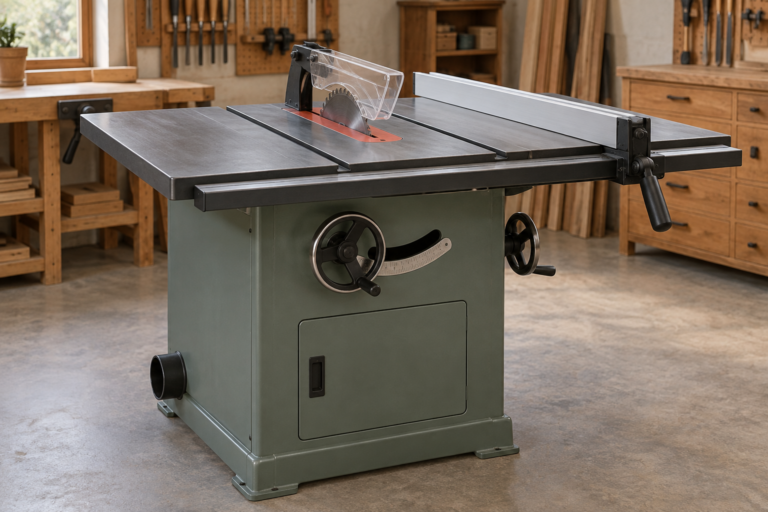
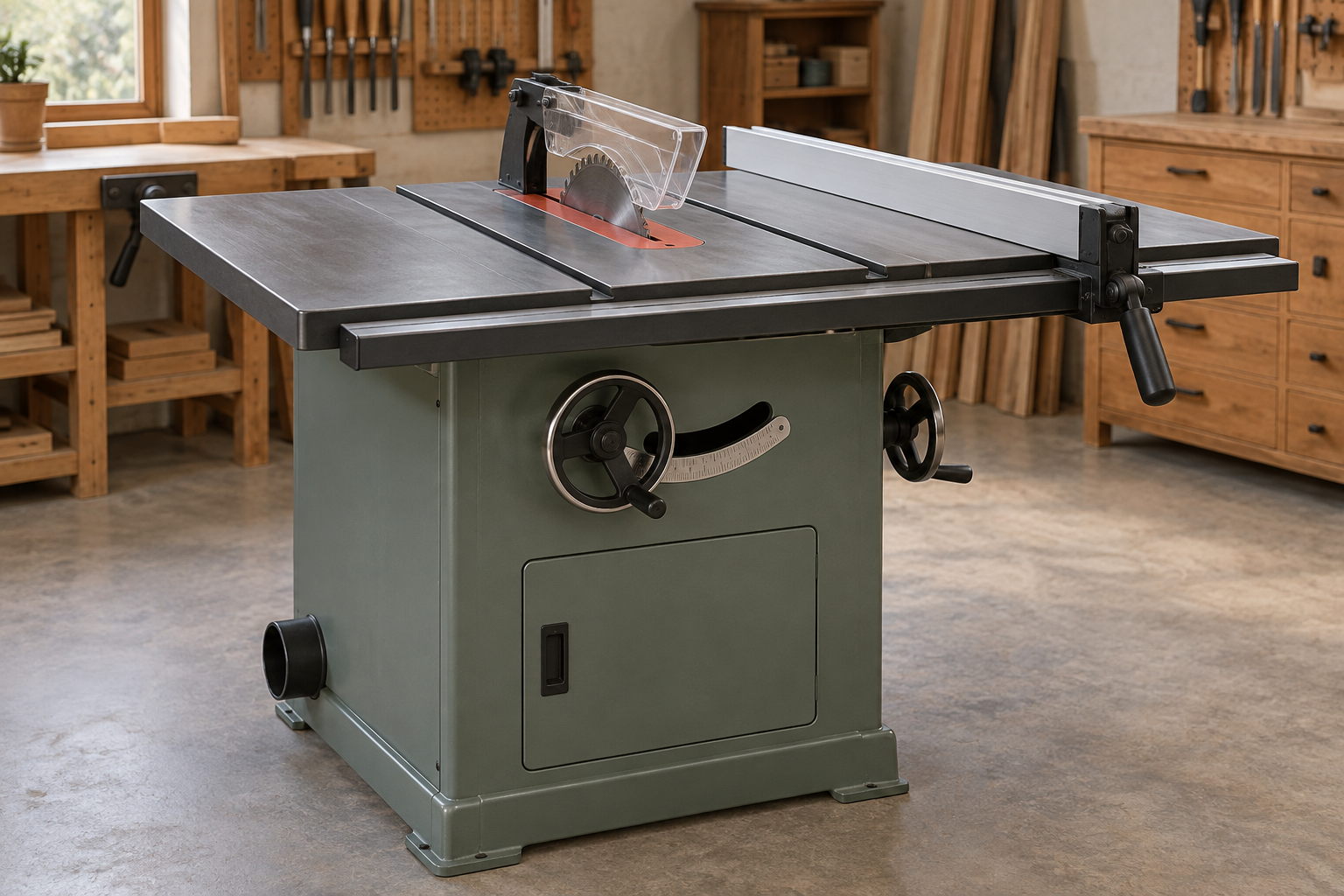
Fence alignment and repeatability are critical. Check that the fence locks firmly and stays parallel to the blade; a fence that shifts between cuts can leave tapered strips or trap the workpiece. A reliable rack-and-pinion fence is convenient, but a well-made locking fence can also do the job. The fence should move smoothly without being so loose that it racks when pushed.
For hardwood, a 10-inch blade and a 1.75-horsepower saw are adequate for ordinary ripping when the blade is sharp and the cut is controlled. A 3-horsepower cabinet saw offers more reserve under sustained load, but it usually needs a 240-volt circuit and costs more to buy and install. Motor power will not compensate for a dull blade, poor alignment, or feeding too quickly.
Look for a riving knife that moves with the blade, a blade guard that is easy to use, and a usable miter gauge or compatible aftermarket options. Narrow strips are often too small to guide safely by hand. A push block, push stick, and featherboard help keep the board against the fence while keeping hands away from the blade. Do not remove safety equipment just to make a cut easier.
Compare the main saw types
| Saw type | Best fit | Trade-off for hardwood ripping |
|---|---|---|
| Portable jobsite saw | Small shops, limited space, occasional milling | Compact and relatively affordable; shorter tables and lighter fences need careful support and setup. |
| Contractor-style saw | Frequent woodworking with moderate shop space | More stable than most jobsite saws, but the exact fence, motor, and dust collection vary by design. |
| Cabinet saw | Regular production work and a permanent shop | Heavy, stable, and often powerful; costs more, takes space, and may require 240-volt service. |
A portable saw is not automatically unsafe or unsuitable. If you cut a few straight boards each month, a well-set-up jobsite saw with solid support can be enough. Consider a portable jobsite table saw with a riving knife if storage and budget matter more than long-term production capacity.
Set up narrow rips safely
First inspect the board for bow, twist, loose knots, metal, and other defects. If the edge riding against the fence is not straight, joint it or use a suitable straight-line ripping method before relying on the fence. A curved edge can steer the board into the blade even if the fence is perfectly aligned.
Support long stock before cutting. An outfeed table or roller stand should be level with the saw table and positioned so it does not push the board sideways. Use a featherboard to hold the stock against the fence where appropriate, but do not place one where it could trap the offcut between the blade and fence. Keep the offcut free to move.
Set the blade only high enough for the work, commonly about 1/8 to 1/4 inch above the board. Feed steadily without forcing the saw. If the motor bogs, the board burns, or the cut begins to close on the blade, stop and investigate; do not push harder. Burning often points to a dull blade, poor alignment, or a feed rate that is too slow. A pinching cut can cause kickback, which can launch the board toward the operator.
For very narrow strips, use a purpose-built push block or a shop-made push shoe that keeps the work controlled through the full cut. Never reach over or behind a moving blade to retrieve an offcut. Wait for the blade to stop, then clear the table. Read the saw manual and use the guard and riving knife as intended.
Choose the blade and plan for cleanup
A sharp rip blade, typically with 24 to 30 teeth on a 10-inch blade, removes hardwood efficiently and produces less heat than a fine crosscut blade. A 40-tooth general-purpose blade is a reasonable compromise for a mixed-use saw, though it may feed more slowly in thick hardwood. If you need a clean glue edge, test the blade and setup on scrap; a table-saw edge may still need jointing.
Dust collection affects visibility and maintenance, but a saw’s dust port does not guarantee effective collection. Check the port size and whether your collector can maintain airflow through the hose and fittings. A 10-inch, 24-tooth rip blade is a practical upgrade for repeated hardwood work if the saw accepts that blade and its arbor size.
Make the buying decision
Buy a jobsite saw if it will be used occasionally, moved often, and fed boards that are already manageable. Pay attention to fence adjustment, table support, and how the saw handles a test cut—not just advertised rip capacity. A wide rip capacity is of limited value if long stock is difficult to control.
Choose a heavier contractor-style or cabinet saw for frequent ripping, long stock, and a shop where the machine can stay set up. A cabinet saw is the better investment when the work is sustained and the electrical service is available; for an occasional batch of narrow boards, the extra expense is hard to justify. If your stock is badly bowed or you need to turn thick boards into thin pieces, price a bandsaw and board-flattening equipment as well. The right table saw makes straight, repeatable rips; it does not replace those machines.