How to Improve Dust Collection Below a Stationary Table Saw
What's inside
As an Amazon Associate I earn from qualifying purchases. This post may contain affiliate links at no extra cost to you.
Contents
Why dust escapes below a table saw
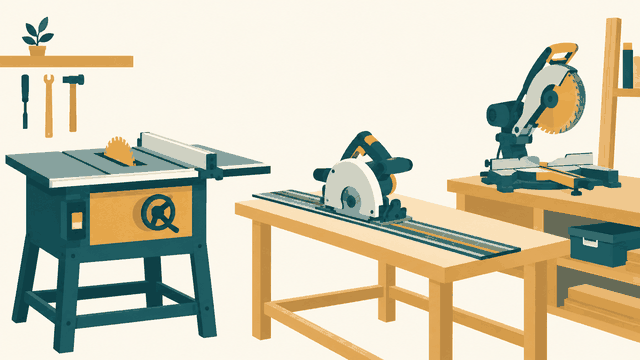
A stationary table saw makes two kinds of mess: chips and coarse dust that fall into the cabinet, and fine dust thrown around the blade. The built-in port usually captures some of what drops below the table, but it may miss material that exits through cabinet openings, the elevation and tilt mechanisms, or gaps around the insert. A small port connected to a weak extractor can also clog or leave the cabinet full of chips.
Start by checking what your saw has. Look for the port diameter, the cabinet’s open seams, and the path chips take as they fall. Run the saw briefly with scrap wood, then switch it off and inspect the cabinet and floor. Don’t reach inside while the blade is moving. This simple test helps distinguish a poor connection from a cabinet that needs better containment.
Fix the basic airflow problems first
Use a hose that fits the saw’s dust port without a loose adapter or sharp bend. A 4-inch connection is common on stationary saws; smaller ports may need a reducer. Keep the hose short and avoid crushing it behind the saw. A long, corrugated run with several tight elbows can reduce airflow enough that chips collect inside the cabinet.
Seal large, unintended cabinet gaps with foam weatherstripping or magnetic covers, but don’t make the cabinet airtight. The dust collector needs replacement air to move dust toward the port. If the saw has a lower vent or opening designed for cooling, leave it clear. After each change, check that the blade tilts and raises through its full range without catching the hose or seal.
Clean the port and hose regularly. A wad of damp sawdust, a screw, or a buildup at a reducer can cut airflow. If the hose seems clear but suction is weak, check the collector filter and bin too. A full bin or clogged filter often causes a problem that looks like a saw-cabinet design issue.
Choose a collection setup that suits the saw
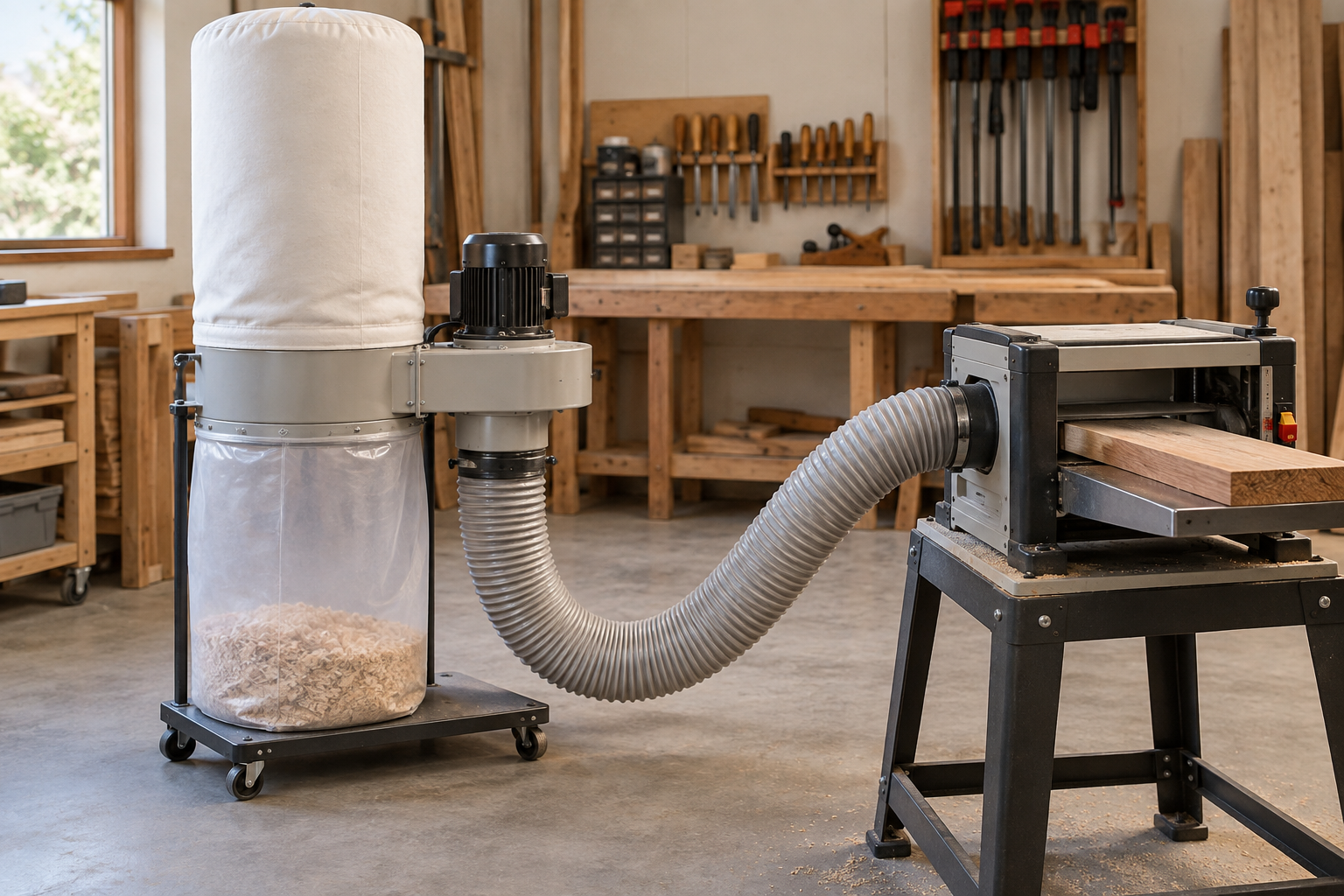
A shop vacuum can work for occasional cutting, especially when the saw has a small port and the cuts are brief. It is compact and inexpensive, but its narrow hose can clog on chips, and its filter may need frequent cleaning. For regular use, a dust collector with a larger hose generally moves chips more reliably. Match the collector’s inlet to the saw and consider the entire hose run, not just the collector’s advertised airflow.
| Setup | Works well for | Main trade-off |
|---|---|---|
| Shop vacuum and port adapter | Small shops, intermittent cuts, and saws with modest ports | Can clog on chips; often louder and less effective on a long, narrow hose |
| Dust collector with a 4-inch hose | Frequent use and larger cabinet ports | Takes more floor space; duct restrictions still reduce performance |
| Collector plus a lower cabinet pickup | Saws that retain chips despite good port airflow | More fittings and adjustment; extra openings can weaken capture if poorly placed |
If you need a collector, compare woodworking dust collectors with a 4-inch port. For an existing shop vacuum, a properly sized table-saw dust-port adapter may be the cheaper fix. Avoid buying a collector based only on a high free-air CFM rating; restrictions from filters, hoses, and fittings reduce the airflow available at the saw.
Add a lower pickup only if the port misses debris
Some saw cabinets have enough internal space to benefit from a second pickup near the bottom, where heavy chips settle. A small hood or short branch can help guide debris toward the existing port. Keep it clear of the blade, belts, motor, and tilt mechanism. With the saw unplugged, move the blade through its full height and bevel range before fastening anything in place.
Do not simply add a second hose to a collector and assume both ports will pull well. Air takes the easier route, so one branch may dominate while the other barely moves dust. A blast gate lets you close the unused branch, but then you must remember to open the correct one. For a simple cabinet, improving the existing port and sealing major gaps is often more effective than adding a complicated manifold.
Check the result and keep the saw safe
Test with the same material and cut that caused trouble. Look for chip buildup inside the cabinet and dust escaping near the base. A strip of tissue held near a cabinet gap, with the saw running but not cutting, can show whether air is being drawn inward or blown out. Don’t use smoke or loose paper near the blade. Make one change at a time so you can tell what helped.
Keep electrical parts, motor vents, and moving linkages free of dust. Don’t block ventilation openings to improve collection, and don’t attach a hood where it can interfere with blade movement. Unplug the saw before cleaning inside the cabinet or adjusting a pickup. Even a well-tuned lower system will not capture all airborne fine dust, so use suitable respiratory protection and general shop filtration when cutting produces visible haze.