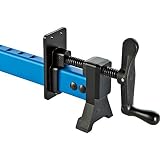
6 Best Bar Clamps for Woodworking Glue Ups (October 2026) Reviews & Picks
Our Top Picks

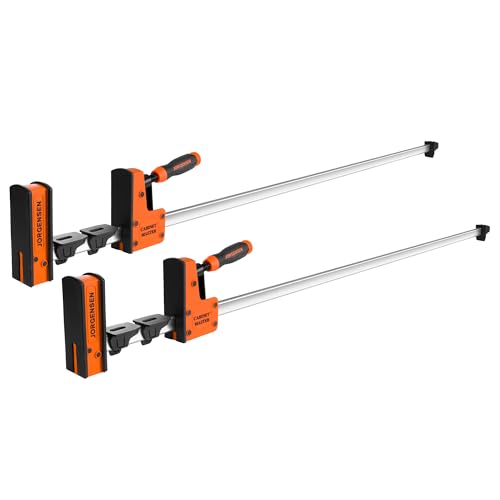
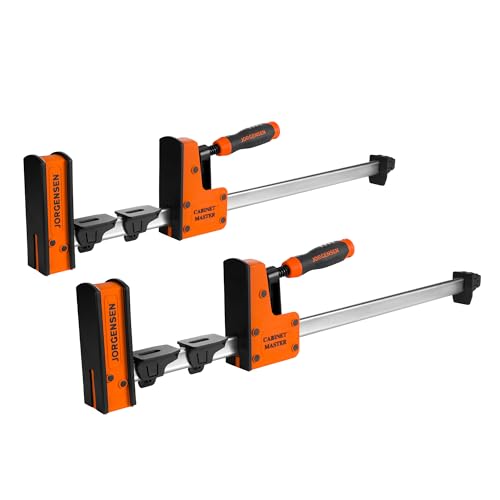
What's inside
As an Amazon Associate I earn from qualifying purchases. This post may contain affiliate links at no extra cost to you.
For panel and cabinet glue-ups, the JORGENSEN 36-inch parallel bar clamp 2-pack is the best overall pick here: its parallel jaws are designed to stay square under load, and the listing states a 2200 lb load limit, which is plenty for gluing boards edge to edge. A bar clamp is a long rail with a fixed head and a sliding head that pulls the glue joint tight across the width of a panel, and for glue-ups the key trait is even, flat pressure. The Rockler Sure-Foot aluminum bars are lighter, easier to handle alone and good for light-to-medium work. One listing in the group is a set of trigger-style F-clamps, which we treat as a helper for small jobs rather than a primary glue-up clamp.
Contents
Quick List
- Rockler Sure-Foot 48 in Aluminum Bar Clamp – best for wide panels and long tabletops with a lightweight single clamp
- Rockler Sure-Foot 36 in Aluminum Bar Clamp – best for mid-size panels and benchtop work you move around
- JORGENSEN 36-Inch Parallel Bar Clamps, 2-Pack – best for cabinet doors, face frames and panel glue-ups
- 300LB Trigger F-Clamp Set (4 x 6 in, 2 x 12 in) – best as a runner-up helper for small parts, not main glue-up clamping
- JORGENSEN 50-Inch Parallel Bar Clamps, 2-Pack – best for large tabletops and wide casework
- JORGENSEN 24-Inch Parallel Clamps, 2-Pack – best for small cabinets, drawer boxes and narrow panels
Which One Is Right for You?
| If you… | Choose |
|---|---|
| Glue up cabinet boxes and want jaws that stay square | JORGENSEN 36-Inch 2-Pack |
| Build wide tabletops or desk tops | JORGENSEN 50-Inch 2-Pack |
| Make drawer boxes, small frames and narrow panels | JORGENSEN 24-Inch 2-Pack |
| Want a lighter clamp that stands up on its own at the bench | Rockler Sure-Foot 36 in |
| Need extra length for a wide panel and prefer aluminum | Rockler Sure-Foot 48 in |
| Need quick helpers for small parts, jigs and alignment | 300LB Trigger F-Clamp Set |
Most shops end up with a mix: a few long parallel clamps for panels and cabinets plus lighter bars for general holding. If you only buy one set, the 36-inch Jorgensen pair covers the widest range of common projects. Add the longer set when you start building tabletops, and the shorter set when you build small boxes.
All 6 Picks in Detail
1. Rockler Sure-Foot 48 in Aluminum Bar Clamp – Best for Wide Panels with a Light Clamp
As an Amazon Associate we earn from qualifying purchases at no extra cost to you.
Rockler’s Sure-Foot aluminum bar clamp is built around a wide foot that lets the clamp stand upright on the bench while you set up the glue joint. This 48-inch version offers long reach for wide tabletops, and the aluminum bar keeps weight down so you can move it around a glue-up without straining. It suits the hobbyist who glues up a panel alone and values a clamp that does not fall over.
The maker describes the line as suited to light-to-medium duty tasks such as positioning parts and clamping well-jointed panels. That means it is a good partner for flat, well-fitted boards, but not the first choice when you need very high pressure or when jaw alignment is critical. Throat depth and exact capacity are not stated in the listing name, so confirm them on the product page.
- 48-inch aluminum bar, per the listing
- Wide foot for standing upright, per the maker
- Raised base lifts the bar above the bench for handle clearance, per the maker
- Built-in hook for hanging storage, per the maker
- Throat depth and clamping force: confirm on listing
- Screw-type handle, per the maker
A practical note on aluminum bars: they are forgiving to carry, but they can flex when you apply a lot of pressure at one end, so tighten gradually and work back and forth along the panel. Stand the clamps on their feet before you spread glue, test the sliding head for smooth travel, and wipe the bar clean of old glue so the head does not drag. Preparing all of this ahead of time is what makes a solo glue-up calm instead of frantic.
Pros:
- Lightweight and easy to handle alone
- Stands up on its own at the bench
Cons:
- Not a parallel-jaw design, so panel flatness depends on your technique
- Light-to-medium duty rather than heavy production use
Choose it over the 50-inch Jorgensen pair if weight and a single clamp matter more than parallel jaws.
2. Rockler Sure-Foot 36 in Aluminum Bar Clamp – Best for Mid-Size Panels

This is the 36-inch version of the Sure-Foot aluminum bar clamp. At that length, it handles the most common glue-ups in a home shop: a 24-inch-wide cutting board, a small tabletop, a shelf or a cabinet side. The lightweight aluminum bar and wide foot make it a friendly clamp for one-person glue-ups, when you are juggling boards, glue and a roller at the same time.
Because the listing sells a single clamp, you will want to buy several to cover a panel. A common approach is one clamp every eight to twelve inches along the glue line, alternating above and below the panel. A set of three or four of these, mixed with a few heavier clamps, can be enough for small projects.
- 36-inch aluminum bar, per the listing
- Single clamp per listing
- Wide foot and raised base design, per the maker
- Throat depth: confirm on listing
- Clamping force rating: confirm on listing
- Weight: confirm on listing
Because it is sold as a single clamp, think of this as a building block. Many woodworkers add one or two clamps per project until they have a set, which spreads the cost over time and lets you learn what you really use. Keep one near the assembly table for quick fixes, since a clamp that is already within reach tends to get used more often than one stored in a distant rack.
Pros:
- Easy to carry and set up
- Suitable length for many common panels
Cons:
- Single clamp, so a full glue-up needs several
- Less rigid than heavy steel parallel clamps
It is the same design as the 48-inch bar, in a length that suits more everyday projects.
3. JORGENSEN 36-Inch Parallel Bar Clamps, 2-Pack – Best for Cabinets and Panels

The Jorgensen Cabinet Master line is a classic of the parallel-jaw bar clamp world. The listing describes a 2-pack of 36-inch heavy-duty clamps with a 2200 lb load limit for cabinet making and woodworking glue-ups. Parallel jaws stay square to the bar as pressure builds, which keeps a cabinet box from racking and helps panels stay flat. This is the pair we would buy first for general woodworking.
The maker lists a reach of about 3-7/8 inches for the heavy-duty Cabinet Master line, which is deep enough to reach in from the edge of a panel to apply pressure over a glue line, though you should confirm that figure for this exact listing. The maker also notes tool-free conversion to a spreader, which is handy for pushing out a tight corner during assembly.
- 36-inch bars, two clamps per pack, per the listing
- 2200 lb load limit, per the listing
- Parallel jaw design for square, flat pressure
- Deep reach, around 3-7/8 inches on the maker’s heavy-duty line; confirm on listing
- Spreader conversion, per the maker
- Bar profile and jaw pad material: confirm on listing
The maker describes a soft-landing sliding jaw on its Cabinet Master line (confirm it on this listing), which keeps the head from dropping when you stand a clamp upright and matters when you are working alone. Because the jaws sit square, you can also use two clamps as a simple frame for a cabinet side: set the work between them and check diagonals before the glue grabs. Take care to wax or tape the bar where glue could drip onto it.
Pros:
- Parallel jaws keep assemblies square
- Two clamps per pack at a handy length
Cons:
- Heavier than aluminum bars
- Steel bars can stain some woods if glue squeeze-out contacts them, so use cauls or tape
It is the best fit against the Rockler bars when squareness matters more than light weight.
4. 300LB Trigger F-Clamp Set – Runner-Up Helper for Small Jobs

This listing is a set of quick-grip, trigger-style F-clamps: four at six inches and two at twelve inches, with a 2.75-inch deep reach and a 300 lb rating in the title. These are not the same tool as the long bar clamps in the rest of this list. They are great for holding small parts, clamping a fence, tacking a jig or applying light pressure on a small glue joint, but they are not meant to pull a wide panel tight. We list it as a runner-up helper for that reason.
Light-duty clamps like these are useful beside the heavy bars. Use them to hold cauls, align a face frame while the main clamps go on, or pin a thin edge band. For real glue-up pressure on boards, use parallel or aluminum bar clamps, and keep these for supporting jobs.
- Set of six quick-grip F-clamps: four at 6 inches, two at 12 inches, per the listing
- 300 lb rating in the title
- 2.75-inch deep reach, per the listing
- Trigger-style quick release, per the listing
- Pad material and bar thickness: confirm on listing
- Not intended for wide panel glue-ups
Use these where they shine. A quick-grip clamp can hold a stop block, keep a story pole in place, secure a router template or pin a small repair while the main clamps do the heavy lifting. Do not rely on them to close a gap between two warped boards, since the pressure is far lower than a bar clamp can provide. If a joint needs force to close, fix the joint first instead.
Pros:
- One-handed operation for quick setups
- Six clamps in a single set
Cons:
- Lighter duty than true bar clamps
- Too short for wide panels
Pair it with the Jorgensen set instead of using it as a replacement.
5. JORGENSEN 50-Inch Parallel Bar Clamps, 2-Pack – Best for Large Tabletops
The 50-inch Cabinet Master pair extends the same parallel-jaw design into the sizes needed for dining tables, desktops and big casework. The listing describes heavy-duty wood clamps for glue-ups with a 2200 lb load limit. For a table wider than 40 inches, this is the pair that gets you across the width with room for cauls or clamping pads at each end.
Longer bars are heavier and can sag at the middle, so support them with a flat bench or clamping rack. Lay boards on a pair of straight sacrificial supports and set the bars on the bench so they do not bow the glue line. Because a pair is only two clamps, a large tabletop glue-up will typically need several packs or a mix with shorter clamps.
- 50-inch bars, two clamps per pack, per the listing
- Parallel jaw design, per the listing
- 2200 lb load limit, per the listing
- Deep reach: confirm on listing
- Spreader conversion: confirm on listing
- Total pack weight: confirm on listing
Pairs of long clamps are best used with a plan. Before opening the glue, dry-fit the whole panel, mark the board order with a cabinetmaker’s triangle, and set the bars on a flat surface so they will support the boards from below. Put clamping pads or scrap strips under the jaws if the stock is soft. Having everything staged lets you finish the glue-up within the open time, which is short for standard wood glues.
Pros:
- Long enough for wide tabletops
- Same dependable jaw design as the shorter sizes
Cons:
- Heavy and long to store
- Overkill for small projects
Choose it over the 36-inch pair only when your panels are wide enough to need it.
6. JORGENSEN 24-Inch Parallel Clamps, 2-Pack – Best for Small Cabinets and Boxes

The 24-inch Jorgensen pair is the smallest of the group. It suits drawer boxes, small cabinets, jewelry boxes, narrow panels and face frames. Short clamps are easier to handle and quicker to adjust, and they give the same parallel-jaw accuracy as the longer sizes. The listing also states a 2200 lb load limit.
If you build furniture, you will probably want a few clamps at this length even if you also own longer ones. A short clamp used on a drawer box does not have to be dragged across the full length of a long bar, and it leaves the bench uncluttered. For glue-ups of larger panels, the 24-inch pair serves as an add-on.
- 24-inch bars, two clamps per pack, per the listing
- 2200 lb load limit, per the listing
- Parallel jaw design
- Reach and throat depth: confirm on listing
- Jaw pads: confirm on listing
- Weight: confirm on listing
For small casework, shorter clamps also give you better control over alignment. When you glue a drawer box, you can pull the box square by clamping across the corners and then measuring both diagonals. A pair of 24-inch bars can do this on a box up to about 18 inches wide with room for pads. Keep a couple of spare pairs of jaw pads around, because small boxes show dents from hard clamp faces more easily.
Pros:
- Handy for boxes, drawers and frames
- Square pressure in a compact size
Cons:
- Too short for wide panels
- Not enough on its own for larger projects
It is the smaller sibling of the 36-inch pair, and buying both gives good coverage.
Specs Compared
| Product | Length | Material / style | Count | Stated load or rating |
|---|---|---|---|---|
| Rockler Sure-Foot 48 in | 48 in | Aluminum bar clamp | 1 clamp | Confirm on listing |
| Rockler Sure-Foot 36 in | 36 in | Aluminum bar clamp | 1 clamp | Confirm on listing |
| JORGENSEN 36-Inch Parallel | 36 in | Parallel jaw bar clamp | 2-pack | 2200 lb load limit |
| 300LB Trigger F-Clamp Set | 6 in x 4, 12 in x 2 | Quick-grip F-clamp, 2.75 in reach | 6 clamps | 300 lb in title |
| JORGENSEN 50-Inch Parallel | 50 in | Parallel jaw bar clamp | 2-pack | 2200 lb per listing |
| JORGENSEN 24-Inch Parallel | 24 in | Parallel jaw bar clamp | 2-pack | 2200 lb load limit |
How We Chose These
We looked at the current catalog of woodworking bar clamps and compared each listing’s length, pack count, clamp style and any stated load limit. We prioritized clamps that suit edge-to-edge panel and cabinet glue-ups, and we placed a quick-grip F-clamp set as a helper, because its size and style differ from bar clamps. We also read manufacturer product pages for the Jorgensen Cabinet Master and Rockler Sure-Foot lines, plus woodworking guidance on glue-up practice. Where a listing leaves out a specification, we say to confirm it on the product page. This is research-based guidance, not a ranking from shop trials.
What to Look For
Bar clamp styles for glue-ups
Three styles dominate. Parallel-jaw clamps have thick jaws that stay square to the bar, which helps keep cabinet boxes square and panels flat. Aluminum bar clamps with a wide foot are lighter and cheaper, but their jaws can lean under high pressure. Pipe clamps use black iron pipe as the bar and are economical for long spans, though they need pipe purchased separately. Quick-grip and F-style clamps are quick to use but apply less force. For glue-ups, parallel clamps are the premium choice, aluminum clamps are a sensible light-duty option, and F-clamps are helpers.
Length and quantity
Choose clamps that exceed your panel width by at least four to six inches, so you can fit clamping pads or cauls at each end. A 36-inch clamp handles panels up to about 30 inches wide, and a 50-inch clamp handles panels up to about 44 inches. Quantity matters as much as length: a common guideline is a clamp every six to twelve inches along the glue line, alternating above and below the panel so the boards do not bow. Hardwood panels with long glue lines benefit from the tighter spacing. Buying in pairs makes it easy to build a collection one project at a time.
Pressure, glue and squeeze-out
More pressure is not always better. Glue makers generally recommend roughly 100 to 150 psi for softwoods and 175 to 250 psi for hardwoods, though you should read the bottle. You are looking for a small, even bead of squeeze-out along the whole joint. If you see glue running out in streams, you may have over-tightened, which can starve the joint. Aim for snug, even pressure rather than cranking each clamp as hard as possible. Also watch open time: standard yellow wood glues give you only a few minutes after spreading before the film starts to skin, so lay out your clamps before you open the bottle.
Jaw design, reach and accessories
Deeper reach helps you apply pressure further from the edge, which matters when clamping wide face frames or adding a cleat. Soft jaw pads protect the wood from dents, and a thin piece of wax paper or painter’s tape keeps steel bars from staining the wood where they touch wet glue. Clamping cauls, which are straight scrap boards placed above and below the panel, help keep the glue-up flat when you use a curved-bar clamp. A flat bench and a pair of clamp supports keep long bars from sagging.
A worked example
Say you want to glue a 24-inch-wide, 48-inch-long tabletop from six 4-inch boards. The glue lines run 48 inches long and the panel is 24 inches wide, so you need bars at least 30 inches long. Plan one clamp every ten inches along the 48-inch length: about five clamps, alternating above and below. Two packs of 36-inch Jorgensen clamps plus one Rockler 36-inch bar gives you exactly five. Add scrap cauls across the top and bottom, tighten gradually from the center outward, and check for an even bead of squeeze-out before you walk away.
Questions
How many bar clamps do I need for a panel glue-up?
A common guideline is one clamp every six to twelve inches along the glue line, alternating above and below the panel. For a four-foot panel, that usually means four to six clamps.
Are parallel clamps worth it over aluminum bar clamps?
For cabinet assemblies and flat panels, parallel jaws help keep everything square, which saves time later. Aluminum bars are fine for lighter work and for people who want a lighter clamp.
How tight should I tighten the clamps?
Tight enough to close the joint and produce a thin, even bead of squeeze-out, but not so tight that glue is forced out in streams. Overtightening can starve the joint and bow the boards.
How long should I leave clamps on?
Follow your glue’s instructions. Many yellow glues need around thirty minutes to an hour of clamping and a longer time before heavy stress, so check the bottle for the exact time.
Can quick-grip F-clamps replace bar clamps?
Not for wide panel glue-ups. They are helpful for holding small parts and aligning joints, but they do not provide the long reach and pressure of true bar clamps.
How should I store long bar clamps?
Hang them on a wall rack or lay them flat on a shelf so the bars do not bend. Wipe off dried glue and apply a light coat of wax to the bars and screws.
Update History
- October 20, 2026 – Initial publication; product set drawn from current catalog listings.
- Check the product page for current specifications and availability before buying.
Sources
- Manufacturer product and specification pages for JORGENSEN (Pony Jorgensen) and Rockler
- Retailer listing titles and specification fields
- Woodworking glue-up guidance and wood-glue maker clamping-pressure recommendations