6 Best Wood Glues for Outdoor Projects (October 2026) Reviews & Picks
Our Top Picks


What's inside
As an Amazon Associate I earn from qualifying purchases. This post may contain affiliate links at no extra cost to you.
For most outdoor woodworking, Gorilla Ultimate Waterproof Wood Glue in the 8 oz bottle is the best overall pick: it is a PVA glue that passes the ANSI/HPVA Type I water-resistance classification, gives you a relaxed assembly window, and comes in a size that suits benches, planters and gates. Titebond III Ultimate is the closest rival and a fine choice for the same jobs. The rest of this list is the standard Gorilla Wood Glue in several sizes, which is water resistant rather than waterproof and belongs under cover. “Outdoor” in glue terms means resisting moisture and temperature swings, not surviving permanent submersion.
Contents
Quick List
- Gorilla Wood Glue Fast Clamp 8 oz – best for covered outdoor projects and repairs where a quick clamp time helps
- Gorilla Ultimate Waterproof Wood Glue 8 oz – best for exposed outdoor joints that need the higher waterproof rating
- Titebond III Ultimate Wood Glue 4 oz – best for small waterproof jobs and trying the glue before buying a bigger bottle
- Gorilla Wood Glue 1 Gallon – best for shops that glue up a lot of covered outdoor furniture
- Gorilla Wood Glue 18 oz – best for regular weekend builders who want a mid-size bottle
- Gorilla Wood Glue 4 oz, Pack of 12 – best for stocking several job boxes, classrooms or a build crew
Which Glue Is Right for You?
| If you… | Choose |
|---|---|
| build furniture or planters that will sit in rain and sun | Gorilla Ultimate Waterproof 8 oz |
| want a waterproof PVA with a long track record in a small bottle | Titebond III Ultimate 4 oz |
| fix or build things on a covered porch or under an eave | Gorilla Wood Glue Fast Clamp 8 oz |
| glue up large quantities of covered outdoor furniture | Gorilla Wood Glue 1 Gallon |
| do a few projects a month and do not want to refill often | Gorilla Wood Glue 18 oz |
| supply several people or tool kits with their own bottle | Gorilla Wood Glue 4 oz, Pack of 12 |
The key question is exposure. If the finished piece will be rained on, pick one of the two Type I glues. If it stays under a roof, the standard Gorilla formula is a reasonable and widely available option. Size then comes down to how often you glue.
All 6 Picks in Detail
1. Gorilla Wood Glue Fast Clamp 8 oz – Best for Covered Outdoor Repairs
As an Amazon Associate we earn from qualifying purchases at no extra cost to you.

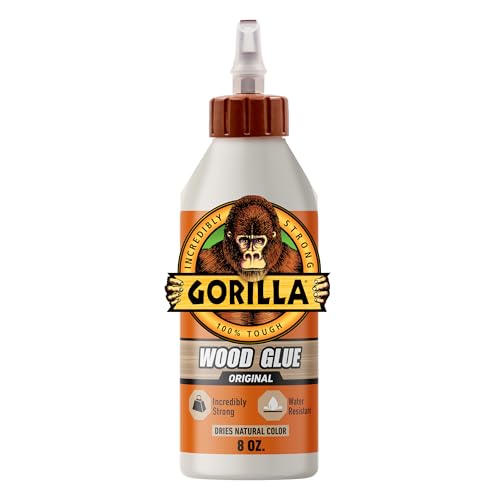
This is the standard Gorilla Wood Glue in an 8 oz bottle, marketed with a fast clamp time and described as water resistant PVA for indoor and outdoor projects. It suits porch rockers, garden benches kept under cover and general repair work. It is water resistant, not waterproof, so it is best on pieces protected from direct rain.
- 8 oz bottle of PVA wood glue
- Water resistant formula; Gorilla classifies the original as ANSI/HPVA Type II
- Clamp time of roughly 20 to 30 minutes per Gorilla’s guidance
- Natural color, paintable and sandable once cured
- Indoor and outdoor use; keep outdoor pieces sheltered
The practical advantage is speed. A shorter clamp time means you can free your clamps for the next joint sooner, which matters when you are building a set of chairs or a fence gate. Cured PVA sands well and accepts paint or stain, although stains can look blotchy where glue squeeze-out was not cleaned off. Wipe the excess with a damp cloth before it skins over. In cool weather, check the label for the minimum application temperature, since PVA glues stop curing properly in a cold garage.
Pros
- Fast clamp time speeds up repeat glue-ups
- Sands and paints after curing
Cons
- Type II, so not for fully exposed joints
- Not recommended for continuous water contact
Compared with Gorilla Ultimate Waterproof, it is the more economical and simpler formula, but gives up the higher water rating.
2. Gorilla Ultimate Waterproof Wood Glue 8 oz – Best for Exposed Outdoor Joints

This is the top pick for the topic. The listing calls it an ultimate waterproof PVA glue with tough bond strength that bonds hardwoods and softwoods, and Gorilla states it meets ANSI/HPVA Type I. It suits cedar benches, Adirondack chairs, planters, mailbox posts and any build where rain will reach the joint.
- 8 oz bottle of waterproof PVA glue
- Passes ANSI/HPVA Type I water resistance per Gorilla
- Extended open assembly time of up to about 15 minutes per Gorilla
- Clamp time around 20 to 30 minutes; full cure in about 24 hours
- Service temperature range of roughly 0 to 150 degrees Fahrenheit per Gorilla
A longer open time is the biggest practical difference between this and the standard formula. On a complex outdoor glue-up, such as a slatted bench with multiple tenons, you need time to spread glue on every joint and position the clamps before the surface skins. This glue gives you that breathing room. Gorilla notes that it is not intended for continuous submersion or below-the-waterline use, so keep it off dock posts and anything that will live in water. For rot-prone ground contact, treat the wood itself.
Pros
- Type I water resistance for exposed joints
- Longer assembly window for complex glue-ups
Cons
- Not for permanent submersion
- Needs the full cure time before heavy use
Versus Titebond III, it offers a longer open time, while Titebond has a longer record in woodshops and an FDA indirect food contact rating.
3. Titebond III Ultimate Wood Glue 4 oz – Best for Small Waterproof Jobs

Titebond III is the other waterproof option here, sold in a 4 oz bottle listed as part 1412. It suits small repairs, birdhouses, cutting boards and test builds, and it is well known among woodworkers for outdoor furniture. It is a good first purchase if you want to try it before buying a larger container.
- 4 oz bottle of waterproof wood glue
- Passes ANSI/HPVA Type I water resistance per Titebond
- Open assembly time of roughly 8 to 10 minutes; total assembly around 20 to 25 minutes at room temperature
- Apply above about 47 degrees Fahrenheit
- FDA approved for indirect food contact per Titebond
The short open time rewards preparation. Dry fit every joint, lay out your clamps and have a damp rag ready before you open the bottle. Titebond III is not meant for continuous submersion either, so apply the same exposure rules as the other Type I option. The 4 oz size is small enough for a few projects; per Titebond’s stated minimum spread, it covers on the order of eight square feet of glue line, which makes it tight for a large gate. Storage life is stated at about 24 months when kept below 75 degrees.
Pros
- Type I waterproof formula with a long reputation
- Food-contact rating helps with cutting boards and picnic items
Cons
- Shorter open time than Gorilla Ultimate
- Small bottle runs out quickly on large builds
Compared with Gorilla Ultimate, it is the smaller, shorter-window option; pick it for small, quick builds.
4. Gorilla Wood Glue 1 Gallon – Best for High-Volume Covered Projects
This listing is the same Gorilla Wood Glue in a one-gallon bottle, described as water resistant for indoor or outdoor projects and repairs. It suits small shops, furniture makers, school workshops and anyone gluing up dozens of panels or parts. Because it is the standard formula, treat it as a covered-use glue.
- 1 gallon bottle, a single pack
- Natural wood color, water resistant PVA
- Covers indoor and outdoor projects when protected from direct rain
- Clamp time of roughly 20 to 30 minutes per Gorilla
- Best decanted into smaller bottles for use
A gallon makes sense only if you will use it before it dries out or thickens. Pour a working amount into a squeeze bottle or glue pot, and keep the main container sealed to limit skinning. Do not leave PVA to freeze, since repeated freeze and thaw can ruin it, and watch the stated storage life on the label. For exposed outdoor builds, this standard formula is not the right tool; use it for covered pergola panels, shed shelving and indoor-outdoor furniture.
Pros
- Large supply for repeated glue-ups
- Lower cost per ounce than small bottles, in general
Cons
- Bulky and heavy to store
- Standard Type II formula, so not for fully exposed joints
Next to the 18 oz bottle, it only makes sense if you glue weekly; otherwise the smaller bottle is easier to manage.
5. Gorilla Wood Glue 18 oz – Best for Regular Weekend Builders
The 18 oz bottle is a middle size of the standard Gorilla formula, described as a water resistant PVA adhesive that dries natural, paintable and sandable. It suits hobbyists who build benches, shelves and garden boxes several times a month. It is another water-resistant, not waterproof, option.
- 18 oz bottle
- Water resistant PVA adhesive
- Dries to a natural color and can be sanded and painted
- Marketed as Fast Clamp for woodworking
- Gorilla classifies the standard formula as ANSI/HPVA Type II
The bottle design makes it easy to bead glue along a long edge, which helps when edge-gluing boards for a tabletop. Because the standard glue is rated for covered outdoor use, plan to protect the finished piece with a sealer or exterior finish and keep it off the ground. Keep the cap clean to prevent the nozzle from clogging, and wipe squeeze-out while still wet.
Pros
- Comfortable size for regular projects
- Sands and paints after cure
Cons
- Type II only, so avoid direct rain exposure
- Nozzle can clog if stored uncleaned
Compared with the 8 oz Fast Clamp, it offers more volume for little extra effort, with no change in performance.
6. Gorilla Wood Glue 4 oz, Pack of 12 – Best for Stocking Multiple Kits

This is a multi-pack of twelve 4 oz bottles of the standard Gorilla Wood Glue. It suits teachers, contractors, makerspaces and hobbyists who want a bottle in every toolbox. Because it is the standard formula, keep it for covered or lightly exposed outdoor work.
- Twelve 4 oz bottles in one pack
- Standard water resistant PVA formula
- Natural wood color
- Same clamp time and cure behavior as other standard Gorilla bottles
- Confirm the exact formula wording on the product page
The benefit of small bottles is freshness: each one is used up before the glue thickens or contaminates. The drawback is volume, since twelve small bottles hold the same total as a single larger container but cost more storage space. For a class project or a crew that builds identical birdhouses, they are ideal. Date the bottles when you open them, and discard any that have gone stringy or lumpy.
Pros
- Fresh, portable bottles for every kit
- Easy to share across several users
Cons
- Large pack to store
- Same Type II limits as other standard bottles
Compared with the gallon, it trades bulk volume for convenience and freshness.
Specs Compared
| Product | Size | Formula | Water rating | Clamp time | Outdoor use |
|---|---|---|---|---|---|
| Gorilla Wood Glue Fast Clamp | 8 oz | PVA, water resistant | Type II per Gorilla | About 20-30 minutes | Covered |
| Gorilla Ultimate Waterproof | 8 oz | PVA, waterproof | Type I per Gorilla | About 20-30 minutes | Exposed |
| Titebond III Ultimate | 4 oz | PVA, waterproof | Type I per Titebond | Confirm on listing | Exposed |
| Gorilla Wood Glue (1 Gallon) | 1 gallon | PVA, water resistant | Type II per Gorilla | About 20-30 minutes | Covered |
| Gorilla Wood Glue (18 oz) | 18 oz | PVA, water resistant | Type II per Gorilla | About 20-30 minutes | Covered |
| Gorilla Wood Glue (4 oz x 12) | 12 bottles, 4 oz each | PVA | Confirm on listing | Confirm on listing | Confirm on listing |
How We Chose These
We started from the six listings and compared what each states about formula, bottle size and water resistance. We then checked the manufacturers’ published information for the ANSI/HPVA Type I and Type II classifications, open times and clamp times, and used it to sort the glues into waterproof and water-resistant groups. A glue that bonds well indoors is not automatically right outside, so we weighted water rating first and size second. This guide is research-based and does not rely on our own use of the products, and where a listing does not say something, such as the exact formula of a multi-pack, we say to confirm on the product page.
What to Look For
Water Resistance Ratings: Type I vs. Type II
PVA wood glues are often sorted by ANSI/HPVA water-resistance classifications. Type I glues survive more demanding cyclic water exposure and are the appropriate choice for exterior joints. Type II glues handle moisture and humidity but are intended for protected or occasionally damp conditions. Gorilla describes its original wood glue as Type II and its Ultimate Waterproof as Type I, and Titebond III is a Type I glue.
Neither type is meant for permanent submersion or below-the-waterline use. If a joint will sit in standing water, such as a dock or a boat part, step up to epoxy or a marine-grade adhesive, and use fasteners in addition to glue.
Open Time, Clamp Time and Temperature
Open time is how long you can spread the glue and assemble before the surface starts to set. Gorilla Ultimate lists up to about 15 minutes, while Titebond III lists roughly 8 to 10 minutes. Clamp time for Gorilla bottles is around 20 to 30 minutes, and full strength takes about 24 hours. Applying glue below the label’s temperature limit, commonly in the high 40s to mid 50s Fahrenheit, leads to weak joints, so avoid glue-ups in a cold garage and keep the wood and glue at room temperature.
Rule of thumb: apply glue, assemble and clamp within the open time, then leave the clamps on for at least the stated clamp time and wait a full day before loading the piece.
Joint Design and Wood Choice
Glue is only as good as the joint. Long-grain to long-grain surfaces bond strongest; end grain absorbs glue and makes weak joints unless you reinforce it with dowels, biscuits, splines or mortise-and-tenon construction. Outdoor wood expands and contracts with moisture, so plan joints that allow movement and add screws or pegs where strength matters. Oily woods such as teak and ipe resist glue, so wipe the surface with acetone just before gluing. Fresh planed or lightly sanded surfaces bond best, while burnished or very rough faces weaken the joint, so wipe off dust and avoid pre-finishing the glue surfaces.
Use properly dried lumber; wood above roughly 12 to 15 percent moisture can fail to bond well. Rot-resistant species such as cedar, white oak and redwood last longer than pine unless the pine is treated and sealed.
Bottle Size and Coverage
Size matters because PVA thickens over time. A stated minimum spread of 250 square feet per gallon, as Titebond gives, works out to roughly eight square feet of glue line from a 4 oz bottle. A bench with four 1.5-inch by 20-inch joints uses a fraction of that, so a small bottle can cover several builds. Buy the smallest size you will finish within the storage period, which Titebond lists as around 24 months.
Worked example: an Adirondack chair has about 30 glue joints, each near 2 square inches of surface. That is about 60 square inches, or less than half a square foot, so a single 8 oz bottle will cover many chairs even with generous spreading.
Glue does not protect wood from the weather. Seal the finished piece with an exterior stain, paint or spar varnish, and re-coat on schedule. Sand off dried squeeze-out before finishing, because stain will not penetrate dried glue and leaves visible patches.
Wet PVA cleans up with water, which is one of its biggest conveniences. Wipe squeeze-out with a damp rag within a few minutes, but avoid smearing it across bare grain, because the thin film left behind can resist stain. Once cured, glue must be scraped or sanded away. Keep bottles capped tightly, store them upright at room temperature and away from freezing, and discard glue that has turned lumpy or stringy. Wear gloves if you have sensitive skin, work with ventilation, and keep bottles out of reach of children and pets, since the product is not food. Titebond III carries an FDA approval for indirect food contact once cured, which is useful for outdoor serving boards, but check each label before using any glue on items that touch food.
Questions
Is Gorilla Wood Glue waterproof?
The standard Gorilla Wood Glue is described as water resistant and is classified as ANSI/HPVA Type II. For waterproof Type I performance, choose Gorilla Ultimate Waterproof or Titebond III.
What is the difference between Titebond III and Gorilla Ultimate?
Both are Type I waterproof PVA glues. Gorilla Ultimate lists a longer open time, while Titebond III has a shorter assembly window and an FDA indirect food contact approval.
Can I use wood glue on outdoor furniture without screws?
For light-duty pieces, a well-fitted joint with a waterproof glue can hold, but outdoor wood moves with moisture. Adding dowels, tenons or stainless screws gives the joint a backup if the glue line weakens.
How long should I clamp an outdoor glue joint?
Gorilla suggests about 20 to 30 minutes of clamping, and the glue reaches full strength after roughly 24 hours. Cold or damp conditions can lengthen both times.
Can wood glue be used below freezing?
Most PVA glues need to be applied above roughly 47 to 55 degrees Fahrenheit, depending on the product. Cured joints can withstand cold, but fresh glue applied in freezing temperatures will not cure correctly.
Is a gallon of wood glue worth buying?
Only if you use it steadily, since open containers thicken and can spoil. Decant into a small bottle for daily use and keep the gallon sealed and out of freezing temperatures.
Update History
- October 20, 2026 – Initial publication; product set drawn from current catalog listings.
- Check the product page for current specifications and availability before buying.
Sources
- Manufacturer product pages for Gorilla wood glue and Gorilla Ultimate Waterproof wood glue
- Manufacturer product and technical information for Titebond III Ultimate wood glue
- Retailer listing titles and specification fields for all six products
- ANSI/HPVA water-resistance classifications as described on the manufacturer pages