6 Best Workbench Vises for Woodworking (October 2026) Buying Guide
Our Top Picks
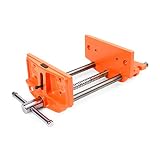
 Pony Jorgensen 27091 Medium Duty Woodworker's VisePack 116.25 x 8.25 x 6 inches11.8 poundsCheck on Amazon
 O'SKOOL 9 Inch Quick Release Workbench Front Vise9.28 x 2.75 x 17.25 inches13.2 PoundsCheck on Amazon


What's inside
As an Amazon Associate I earn from qualifying purchases. This post may contain affiliate links at no extra cost to you.
For most woodworkers who want a permanent vise on a real bench, the O’SKOOL 9 Inch Quick Release Front Vise is the best overall pick: a cast iron body, a long travel of about nine inches, and a quick-release lead screw that saves time on every board. If you want a proven medium-duty classic, the Pony Jorgensen 27091 is the closest rival. A woodworking vise is a screw-driven clamp mounted to the bench that holds a workpiece at a comfortable height, usually with wooden faces on the jaws. Several listings here are portable or clamp-on designs, so pick based on how you mount and use a bench.
Contents
Quick List
- Pony Jorgensen 27091 Medium Duty Vise – best for a classic cast-iron face vise at a medium-duty size
- Portable Hard Wood Vise with 4 Bench Dogs and 2 Clips – best for a portable clamp-on setup for carving and small projects
- IRWIN 6-1/2″ Woodworker’s Vise (226361) – best for a compact under-bench vise on a small bench
- OCASAMI Portable Hard Woodworking Vise Desktop Workbench – best for a desktop work surface with G-type clips and limit blocks
- 33302 Heavy-Duty Adjustable Alloy Steel Vise – best for fitting a bench up to about 23 inches wide with a wide adjustable jaw
- O’SKOOL 9 Inch Quick Release Front Vise – best for fast adjustments and a wide opening on a permanent bench
Which Vise Is Right for You?
| If you… | Choose |
|---|---|
| plan to bolt a vise permanently to a full-size bench and change stock often | O’SKOOL 9 Inch Quick Release |
| want a dependable medium-duty vise with a long history in home shops | Pony Jorgensen 27091 |
| have a small or compact bench and light-to-medium tasks | IRWIN 6-1/2″ Woodworker’s Vise |
| carve, sand or shape small pieces on a kitchen or garage table | Portable Hard Wood Vise with Bench Dogs |
| need a desktop unit that clips to a table and can be put away | OCASAMI Portable Woodworking Vise |
| want a heavy-duty adjustable unit with a wide jaw range for bench fitting | 33302 Heavy-Duty Adjustable Alloy Steel Vise |
The split in this list is permanent bolt-on vises versus portable ones. Bolt-on models are stiffer and last longer, but they require a thick bench top and drilling. Portable models are easier to start with and move, yet they cannot match the clamping force or rigidity of a vise fastened to heavy timber.
All 6 Picks in Detail
1. Pony Jorgensen 27091 Medium Duty Vise – Best for a Classic Medium-Duty Face Vise
As an Amazon Associate we earn from qualifying purchases at no extra cost to you.

This is a traditional cast-iron woodworker’s vise, labeled medium duty and listed as 9-inch by 7-inch. It suits hobbyists and small shops that want a quick, dependable face vise bolted to the front of a bench. Retailers differ on which of the two numbers is the jaw width and which is the opening, so confirm that on the product page before you plan your bench.
- Medium-duty woodworker’s vise, grey and orange finish
- Listing size of 9 inches by 7 inches; verify jaw width versus opening
- Double guide bars and a continuous-action screw per retailer descriptions
- Jaws drilled for attaching wooden faces
- Mounts to the face of a bench with the jaws flush to the top
A vise of this class does most of the jobs a home woodworker needs: holding a board on edge for planing, gripping a leg for sawing a tenon, or clamping a drawer front while you fit it. Fasten hardwood jaw liners to protect the work, and flush the liners with the bench top so boards lie flat. Because the listing’s size notation is ambiguous, measure the thickest boards you plan to clamp and compare them to the opening stated on the page.
Pros
- Traditional cast-iron design with guide bars
- Jaws ready for wooden faces
Cons
- Specs differ between retailers
- Standard screw action is slower than quick release
Compared with the O’SKOOL, it is the more established medium-duty design, while the O’SKOOL adds quick release and a larger stated travel.
2. Portable Hard Wood Vise with 4 Bench Dogs and 2 Clips – Best for a Portable Carving Setup

This listing is a portable wood vise and workbench top that comes with four bench dogs and two clips, aimed at wood carving and small projects. It suits hobbyists in apartments, kids’ workshop spaces and anyone who does detailed work on a table. It is a lighter-duty, clamp-on style tool, so it does not replace a heavy bench vise for chopping mortises.
- Portable hard wood vise for a bench or table
- Includes 4 bench dogs and 2 clips
- Stable clamping surface per the listing
- Meant for carving and small woodworking projects
- Material, jaw capacity and weight: confirm on the listing
Bench dogs are small pegs that fit holes in a bench top and, with the vise, hold boards for planing or sanding. A set of four means you can pin a workpiece at both ends or use a dog to stop a board against planing forces. For best results, clamp the base to a thick, stable table and keep forces light, since a portable unit will move more under heavy planing. Check that the clips seat firmly and that the bench dog holes match the pegs you plan to use.
Pros
- Portable and easy to store
- Includes dogs and clips to start working
Cons
- Less rigid than a bolted vise
- Details such as capacity are not visible in the title
Next to the OCASAMI, it is the one with the bench dog and clip kit named in the title, so choose by which accessories you will use.
3. IRWIN 6-1/2″ Woodworker’s Vise (226361) – Best for a Compact Under-Bench Vise

The IRWIN 226361 is a small cast woodworking vise with a 6-1/2 inch jaw width. Retailer data lists a jaw opening near 4-1/2 inches, so confirm that on the page. It suits small benches, hobby shops and quick tasks like holding a small board for chiseling or sanding. None of the sources we checked confirms a quick-release feature, so assume a standard screw.
- 6-1/2 inch jaw width
- Jaw opening about 4-1/2 inches per retailer data
- Toe-in toward the top of the jaws helps grip
- Provision for wooden cheeks to protect the work
- Material and throat depth differ by retailer; confirm on the listing
The smaller body is the trade-off. A 4-1/2 inch opening is fine for 2×4 lumber and thin hardwood, but wide table legs or thick glue-ups will not fit. For furniture-scale work, a larger vise gives you room to clamp assemblies. For hand-tool beginners with a modest bench and limited space, it is a reasonable tool that fits within a typical apron or leg area.
Pros
- Compact footprint for small benches
- Square body design for easy mounting
Cons
- Limited opening for thick work
- No confirmed quick release
Versus the Pony 27091, it is smaller and lighter duty, suiting lighter tasks.
4. OCASAMI Portable Hard Woodworking Vise Desktop Workbench – Best for a Clip-On Desktop Setup

This is a desktop portable workbench and vise, listed with G-type fixing clips and limit blocks for home woodworking. It suits beginners, hobbyists, model makers and anyone who wants a small work surface that clamps onto a table. Treat it as a light-duty option rather than a replacement for a heavy bench.
- Portable workbench and hard woodworking vise in one
- Includes G-type fixing clips
- Limit blocks for positioning workpieces
- Desktop footprint for home use
- Size, material and capacity: confirm on the listing
Limit blocks act as stops that keep the work from sliding, which helps when planing or sanding a small board. The G-type clips lock the unit to a table edge, so check the thickness range they accept before relying on them. Because the base is portable, it is wise to keep cuts and force modest. For heavy hand planing, a fixed bench is better, but for sanding a small box or shaping a knife handle this kind of setup is handy and easy to put away.
Pros
- Easy to store and set up
- Clips and limit blocks are included
Cons
- Lower stiffness than a bolted vise
- Specifics such as jaw opening are not in the title
Compared with the other portable listing, it emphasizes clips and limit blocks over a bench dog set.
5. 33302 Heavy-Duty Adjustable Alloy Steel Vise – Best for Wide Adjustable Jaw Range

The listing calls this a heavy-duty adjustable alloy steel woodworking vise that fits workbenches up to 23 inches, with an adjustable jaw width from 12-1/2 to 17 inches. That range is unusual, so it is a hybrid rather than a classic front vise. It suits woodworkers who want a clamp-style vise that adapts to different bench sizes, but verify the mounting method on the page.
- Alloy steel construction
- Fits workbenches up to about 23 inches
- Adjustable jaw width of roughly 12-1/2 to 17 inches
- Marketed as a heavy-duty woodworking vise
- Weight and mounting hardware: confirm on the listing
Alloy steel is stronger than cast iron in tension, but a jaw this wide also means long leverage, so check for flex when clamping a narrow piece far from the screw. Because the title does not give a brand or model name beyond the number, read the product page closely for what is included and for the warranty. Make sure your bench thickness and layout match the specifications before committing.
Pros
- Steel construction aimed at heavy use
- Wide adjustment for different bench sizes
Cons
- Brand and detailed specs are hard to verify from the title
- Different mounting from a standard front vise
Versus the O’SKOOL, it is more adjustable but less proven as a conventional front vise.
6. O’SKOOL 9 Inch Quick Release Front Vise – Best for Fast Adjustments on a Permanent Bench

The O’SKOOL WBA002 is a 9-inch quick-release front vise with a cast iron body and a beechwood handle, and it leads the list for permanent benches. It suits hand-tool woodworkers, furniture builders and anyone who changes board sizes frequently. The manufacturer lists about 9-1/8 inches of travel without wooden jaw faces.
- Cast iron base and front plate
- Quick-release lead screw: reversing the handle engages or releases it
- About 9-1/8 inch travel without wooden faces, per the maker
- Two 3/4 inch steel guide rods and a 3/4 inch steel lead screw per the maker
- 10 inch beechwood handle; drilling template provided per the maker
Quick release changes the pace of work. Instead of spinning the handle through nine inches of screw, you flip the mechanism and slide the jaw to the board, then tighten. Over a day of changing stock, that saves real time and wrist strain. Fit wooden jaw faces, which reduce the usable opening, and measure your widest board with the faces installed. It can also be used as an end vise, although the mounting setup differs.
Pros
- Quick release speeds up stock changes
- Wide travel and stout guide rods
Cons
- Needs a thick bench top and drilling
- Adding wooden faces reduces the opening
Compared with the Pony 27091, it adds quick release and a larger stated travel, while the Pony has a longer reputation.
Specs Compared
| Product | Type | Jaw width / size | Opening | Material | Quick release |
|---|---|---|---|---|---|
| Pony Jorgensen 27091 | Bolt-on face vise | Listed 9″ by 7″; confirm | Confirm on listing | Cast iron per retailers | Confirm on listing |
| Portable Hard Wood Vise with Bench Dogs | Portable clamp-on | Confirm on listing | Confirm on listing | Confirm on listing | Confirm on listing |
| IRWIN 6-1/2″ (226361) | Bolt-on vise | 6-1/2″ | About 4-1/2″ per retailers | Iron per retailers; confirm | Not confirmed |
| OCASAMI Portable Vise Desktop | Portable clip-on | Confirm on listing | Confirm on listing | Confirm on listing | Confirm on listing |
| 33302 Heavy-Duty Adjustable | Adjustable bench vise | 12-1/2″ to 17″ adjustable | Confirm on listing | Alloy steel | Confirm on listing |
| O’SKOOL 9″ Quick Release | Bolt-on front vise | 9″ | About 9-1/8″ travel | Cast iron, beechwood handle | Yes |
How We Chose These
We built this guide from the six catalog listings: the names, stated sizes, materials and the extras each includes. We prioritized clear jaw dimensions, a rigid construction such as cast iron or alloy steel, and features that help real bench work, such as quick release, guide rods and wooden-face provisions. We cross-checked published manufacturer and retailer specifications where they existed and marked disagreements, such as the Pony size notation, rather than choosing a number. This guide is research-based and does not rely on our own use of the products. Where the listing does not state a value, we tell you to confirm it before buying.
What to Look For
Jaw Width, Opening and Depth
Three dimensions matter: jaw width, which is how wide a board you can grip; opening, the maximum distance between open jaws; and throat depth, how far the jaw reaches down from the top. Common bolt-on woodworking vises run from 6-1/2 to 10 inches of jaw width and from 4 to 10 inches of opening. For furniture, a 9-inch width and opening near 9 inches handle table legs and thick glue-ups comfortably.
Remember that wooden jaw liners reduce the opening. If you glue two three-quarter-inch liners to the jaws, you lose roughly 1.5 inches of capacity. Worked example: to clamp a 3-inch-thick leg with 3/4 inch liners, you need an opening of at least 4-1/2 inches, and more for easy handling.
Quick Release Versus Standard Screw
A standard screw vise needs many handle turns to open and close. A quick-release system lets you slide the jaw and then tighten with a partial turn. Quick release is faster for varied stock; a standard screw is simpler and often a little cheaper to repair. If you rarely change board sizes, the extra feature matters less. If you switch between narrow rails and wide panels all day, it is worth having.
Construction and Rigidity
Cast iron and alloy steel resist flex, but the vise is only as stiff as its guide rods, screw and mounting. Look for twin guide bars, a thick lead screw (3/4 inch is common on higher-quality units) and a rear jaw that stays parallel when you tighten. Racking, where the jaw tilts, is the usual complaint with cheaper units. Check any new vise with a board clamped at one end of the jaw to see how much it moves.
Portable vises and clamp-on units give up some of this stiffness, so reserve them for light planing, carving and sanding.
Mounting and Bench Requirements
A bolt-on vise needs a bench top at least about 1-1/2 to 2 inches thick, or a built-up apron, to avoid flexing. Most come with a drilling template; use bolts or lag screws that match the holes and a washer under each. The top edge of the vise jaws should sit flush with or just below the bench top once liners are attached, so boards lie flat for planing. Keep the vise near a leg so clamping forces transfer to the floor rather than twisting the top.
If your bench is thin, add a doubled layer of plywood under the mounting area. For portable units, confirm the maximum table thickness the clips can accept.
Bench dogs are pegs that fit holes in the bench top, commonly three-quarter inch in diameter, and work with the vise to hold boards flat for planing. If you plan to use them, check the vise’s dog hole alignment and whether the listing includes dogs. Leather or cork on the jaw faces protects fine work, while wooden liners are the standard choice.
After mounting, open and close the vise through its full travel to check for binding, then tighten on a scrap board and look for gaps between the jaw faces. Add a thin film of grease or paste wax to the screw and guide rods, and wipe away sawdust that can gum up the threads. Avoid hammering on the jaws or using a pipe extension on the handle, because over-tightening can crack cast iron. When you clamp a narrow piece, keep it near the screw or use a spacer on the opposite side so the jaws stay parallel. Wear eye protection when chiseling or sawing in the vise, and keep fingers clear of the jaws as they close.
Questions
What size woodworking vise do I need?
A 7 to 9 inch jaw with an opening near 9 inches handles most furniture work. Smaller vises are fine for light tasks, while larger ones suit heavy joinery.
Is a quick-release vise worth it?
If you change board widths often, yes, because it saves many turns of the handle. If you mostly clamp the same stock, a standard screw works fine.
Can I use a portable vise instead of a bench vise?
For carving, sanding and light assembly, a portable vise is a reasonable choice. For hard planing or chopping, a bolted bench vise holds the work more firmly.
Do I need wooden jaw liners?
Yes. Hardwood liners protect the workpiece and add grip, and they let you true up the jaw faces. Remember they reduce the opening, so choose a vise with extra capacity.
How thick should my bench top be for a vise?
Aim for at least 1-1/2 to 2 inches of solid material where the vise bolts on. Thin tops flex under clamping pressure and can crack around the bolts.
Where should the vise go on the bench?
Right-handed woodworkers usually mount it at the front left corner, near a leg. The corner position stiffens the top and lets you clamp long boards along the front edge.
Update History
- October 20, 2026 – Initial publication; product set drawn from current catalog listings.
- Check the product page for current specifications and availability before buying.
Sources
- Manufacturer product page for the O’SKOOL 9 inch quick release vise
- Retailer and distributor specification pages for the Pony Jorgensen 27091 and the IRWIN 226361
- Retailer listing titles and specification fields for all six products