Stanley Sweetheart Bench Plane Review: Which Model Should You Buy?
What's inside
As an Amazon Associate I earn from qualifying purchases. This post may contain affiliate links at no extra cost to you.
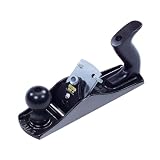
Buy the Stanley Sweetheart No. 4 for general smoothing, the No. 5 for stock removal and everyday dimensioning, and the No. 62 only if you specifically want a low-angle jack plane for end grain and difficult grain. The Stanley Sweetheart bench plane range offers attractive handles, replaceable A2 blades, and a more carefully prepared sole than basic entry-level planes, but each model suits a different job.
As an Amazon Associate we earn from qualifying purchases at no extra cost to you.

Contents
Stanley Sweetheart bench planes compared
The most useful comparison is not “which plane is best?” but “how much wood do you normally remove, and how much control do you need?” A shorter plane is easier to steer and excels at smoothing. A longer or more heavily built plane bridges hollows better and removes stock faster.
| Model | Typical size | Approx. weight | Blade width | Blade steel | Best use |
|---|---|---|---|---|---|
| No. 4 smoothing plane | About 9.75 in long | About 4 lb | 2 in | A2 tool steel | Final smoothing and general furniture work |
| No. 5 jack plane | About 14 in long | About 5.5–6 lb | 2 in | A2 tool steel | Flattening, jointing shorter boards, and general preparation |
| No. 62 low-angle jack plane | About 22 in long | About 6 lb | 2 in | A2 tool steel | End grain, shooting, and difficult grain |
Dimensions and weights can vary slightly by production run and whether the blade, lever cap, and packaging are included. The No. 62 is often grouped with Stanley Sweetheart hand planes, but it is a low-angle jack plane rather than a conventional bevel-down bench plane. That difference matters more than its model number.
Which model should you buy?
Choose the Sweetheart No. 4 if you want one finishing plane
The No. 4 is the safest choice for a first bench plane when your work is mostly cabinets, boxes, tables, and small furniture. Its roughly 10-inch sole is long enough for normal panel work but short enough to follow modest changes in surface direction. With a finely adjusted mouth and a shaving around 0.001–0.002 inch thick, it can produce a clean finishing cut on straight-grained timber.
Its limitation is capacity. A No. 4 is not an efficient scrub plane, and its short sole will not reliably flatten a long, twisted board. It can remove a moderate amount of material with a wider setting, but the work becomes slower and more tiring than with a No. 5.
Choose the Sweetheart No. 5 for the most versatile single plane
The No. 5 is the strongest all-round choice for someone who prepares rough-sawn boards as well as finishes projects. At about 14 inches long, it bridges small hollows better than the No. 4 and carries enough mass to maintain momentum through a cut. It can be set up with a cambered iron for fast stock removal, a lightly cambered iron for general work, or a nearly straight edge for jointing.
A No. 5 is still manageable on small work, though it is less nimble than the No. 4. If your workshop has room for only one Stanley Sweetheart bench plane, this is usually the most capable compromise. It will not replace a dedicated jointer on long boards, but it handles more stages of preparation than the No. 4.
Choose the No. 62 for low-angle work, not as a default smoothing plane
The No. 62 uses a low bedding angle, commonly around 12 degrees, with the blade bevel facing upward. With a 25-degree bevel, the resulting cutting angle is approximately 37 degrees; a 38- or 40-degree bevel raises that angle and can improve control in difficult grain. The blade is also quick to remove and sharpen compared with many traditional bevel-down designs.
This makes the No. 62 particularly useful for end grain, shooting board work, short-grain tear-out, and figured timber. It is not automatically better for ordinary finishing cuts. Its long sole can be awkward on small parts, and its low-angle geometry does not eliminate tear-out when the grain direction, mouth opening, and cut depth are wrong.
Blade steel and sharpening reality
The Sweetheart blades are generally supplied in A2 steel. A2 holds an edge well in normal furniture work and is a sensible choice for users who dislike frequent sharpening. The trade-off is that it is slower to sharpen than softer carbon steel, especially if you use inexpensive coarse stones or a small honing guide.
Do not confuse edge life with immunity from damage. A plane iron can be nicked by a hidden nail, silica-rich abrasive dust, or a workpiece knocked onto a concrete floor. A practical maintenance setup is a coarse abrasive for repairs, a medium stone for establishing the bevel, and a fine stone or strop for refining the edge. Hone only the secondary bevel rather than repeatedly regrinding the entire primary bevel.
Sole preparation and adjustability
Sweetheart planes are marketed with machined soles and improved fit over Stanley’s most basic bench planes. That is useful, but “machined” does not mean perfectly flat or ready for every demanding operation. Before tuning, clean the sole and inspect it against a straightedge. Lightly mark it with a pencil, rub it on fine abrasive adhered to a known-flat surface, and check where the marks disappear.
Do not remove large amounts of metal merely to chase absolute flatness. The important areas are the mouth, toe, heel, and the regions immediately in front of and behind the blade. Flattening the entire sole aggressively can waste time and make the plane lighter without improving its performance.
The frog and lateral adjustment provide useful control, but the adjustment range is not a substitute for correct assembly. Seat the blade firmly, ensure the cap iron or lever cap is secure, and confirm that the iron edge projects evenly across the mouth. A skewed blade makes a plane appear poorly machined when the problem is often uneven projection or a cap that is not seated squarely.
Rough cuts versus finishing cuts
| Task | Recommended setup | Best choice | Why |
|---|---|---|---|
| Remove saw marks from rough stock | Moderate projection; cambered edge | No. 5 | More mass and sole length improve speed and control |
| Flatten a small panel | Light camber; overlapping strokes | No. 5 | Bridges minor hollows without feeling oversized |
| Final smoothing | Fine projection; nearly straight edge | No. 4 | Short sole is easier to steer and stop accurately |
| End grain or shooting | Low-angle blade; fine projection | No. 62 | Low cutting angle reduces resistance in end grain |
| Figured or reversing grain | Very fine cut; tight mouth; sharp blade | No. 62 or No. 4 | Cut direction and mouth control matter more than model alone |
For a rough cut, adjust the iron until it produces a continuous shaving without forcing the plane. For a finishing cut, reduce projection gradually; a shaving that is too thick often causes tear-out before a different plane is needed. On reversing grain, plane downhill with the grain where possible, reduce the cut, and support the fibers with a tighter mouth.
Decision matrix: the right Stanley Sweetheart plane for your situation
| Your situation | Recommended model | Reason |
|---|---|---|
| Beginner making small furniture and boxes | No. 4 | Easier to control and simpler to learn as a finishing plane |
| One plane for rough and dressed boards | No. 5 | Wider working range and better stock-removal ability |
| Frequent end-grain work or shooting boards | No. 62 | Low-angle blade geometry is purpose-built for those cuts |
| Small workshop with limited bench space | No. 4 | Shorter sole needs less clearance and storage space |
| Regular restoration or rough-sawn timber | No. 5 | More useful mass and capacity before a dedicated jointer is needed |
| Occasional use on difficult figured wood | No. 62 | Flexible bevel-up blade setup, provided sharpening is consistent |
Ownership costs and common mistakes
Expect general market pricing to vary from roughly $70–$120 for a No. 4 or No. 5, with the No. 62 commonly costing about $120–$200 depending on availability and seller. Replacement A2 irons, flattening abrasives, and sharpening stones add to the ownership cost. A replacement blade is often the first meaningful consumable; the body itself can last for decades if stored dry and protected from rust.
The parts most likely to need attention are the cutting edge, sole surface, adjustment threads, and the blade-clamping components. Brush off shavings, wipe the sole with a light rust-preventive film, and never store the plane with a heavily projecting blade. Avoid leaving it on a damp bench or resting it on its sole in wet conditions.
Common errors include taking too heavy a cut with a smoothing plane, flattening a sole unnecessarily, sharpening without removing the wire edge, and assuming a low-angle plane always prevents tear-out. Buy the No. 4 for finishing control, the No. 5 for maximum versatility, and the No. 62 for specialist low-angle work. For most woodworkers choosing only one, the Sweetheart No. 5 offers the broadest practical range.


