How to Cut Accurate Rabbets on a Table Saw
What's inside
As an Amazon Associate I earn from qualifying purchases. This post may contain affiliate links at no extra cost to you.
A rabbet is a step-shaped cut along the edge or end of a board. It is simple in profile, but accuracy depends on controlling two dimensions: the rabbet’s width and its depth. On a table saw, the cut is usually made with the workpiece held flat against the table and guided along the fence. With a careful setup, a standard blade can cut clean, consistent rabbets; a dado set makes the job faster and often produces a flatter bottom.
Contents
Choose the Right Cutting Method
There are three practical table-saw methods. A stacked dado set removes the full rabbet width in one pass. A regular combination or rip blade can remove the waste in several overlapping passes. A single blade can also cut the rabbet with one pass if the required width is narrow enough, but that leaves a curved, blade-width bottom and usually requires a second setup for the shoulder.
| Method | Best for | Trade-off |
|---|---|---|
| Stacked dado set | Repeated rabbets and wide cuts | Fast and flat-bottomed, but costs more and requires compatible saw hardware |
| Standard blade, multiple passes | Occasional work and narrow rabbets | Cheaper, but setup and cleanup take longer |
| Single blade, one pass | Very narrow rabbets or a rough back edge | Fast, but the rabbet width is limited by the blade kerf |
If you cut rabbets only a few times per year, a standard blade is often the sensible choice. For cabinet backs, shelving, and production-style work, a stacked dado blade set saves time. Confirm that your table saw accepts the set: some compact saws cannot safely use dado blades, and the arbor may not be long enough.
Prepare the Saw and Workpiece
Use straight, flat stock. A board that rocks on the table can produce a rabbet with inconsistent depth, and a bowed edge can change the width as the cut progresses. Joint one reference edge if necessary, then use that edge against the fence. If the board is twisted or badly cupped, correct it before making the rabbet.
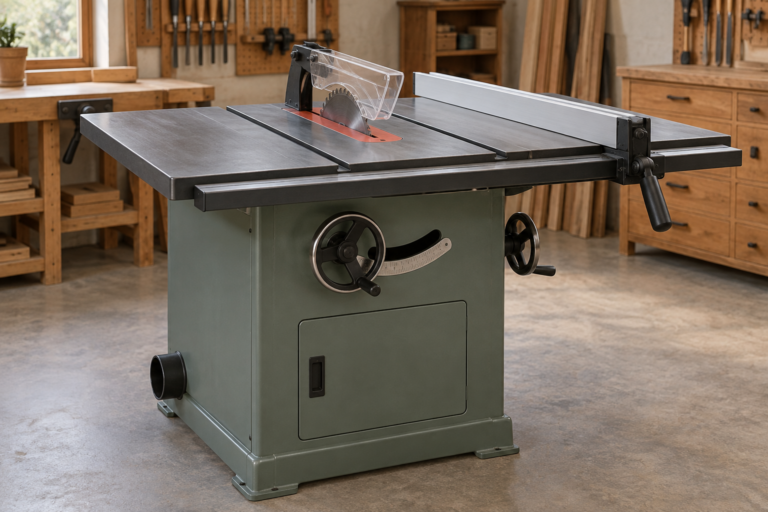
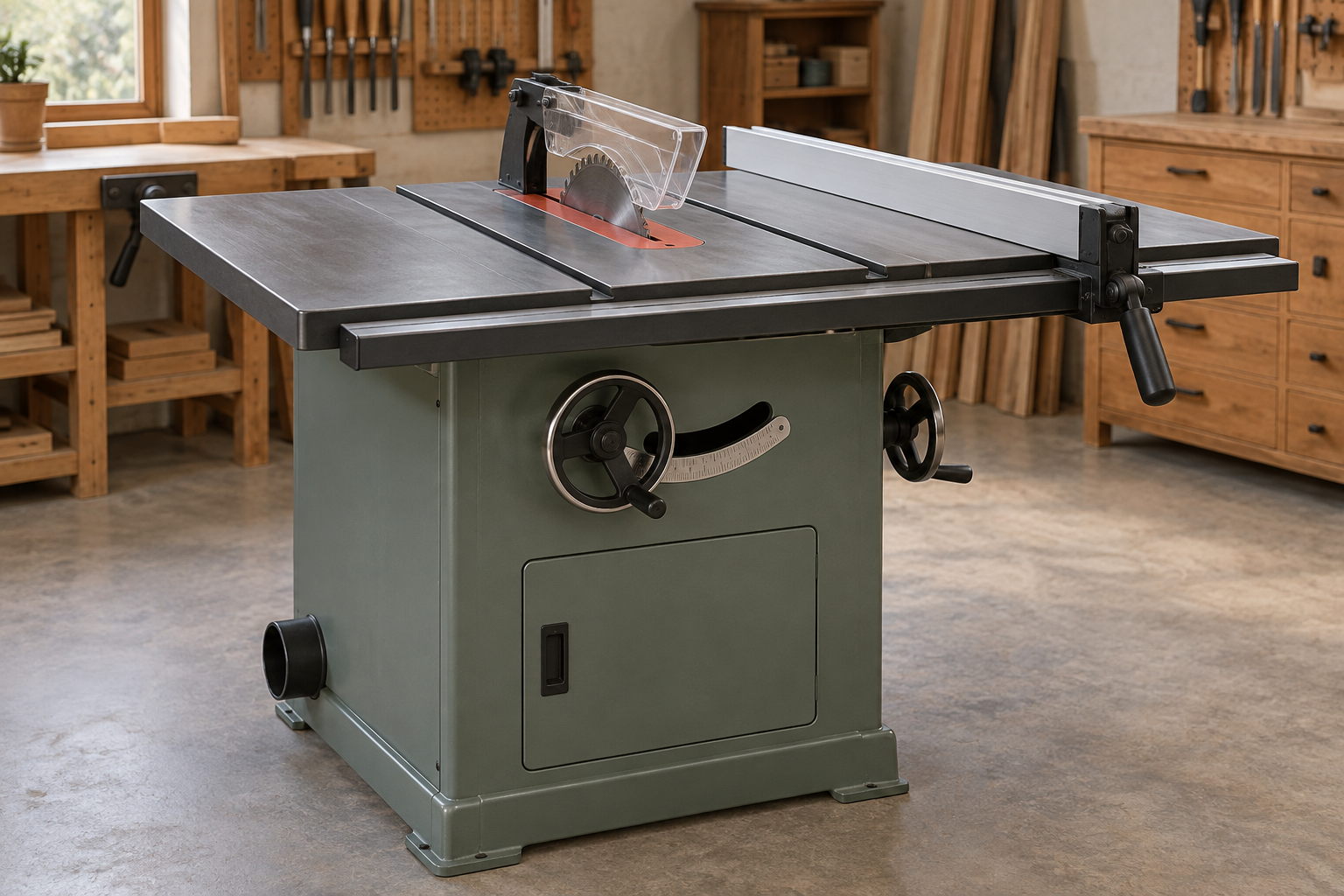
Install a proper throat plate for the blade or dado set. The opening should be as narrow as practical without touching the teeth. Check that the blade is parallel to the miter slot and that the fence is parallel to the blade. A fence that pinches the workpiece against the rear of the blade can cause burning or kickback.
Set the blade height for the rabbet depth. Measure from the table surface to the highest tooth, not from the blade plate. For a 1/4-inch-deep rabbet, use a reliable rule or setup block and set the blade slightly under 1/4 inch on the first test. It is easy to remove more material; adding it back requires replacing the workpiece.
For the rabbet width, measure from the reference edge to the fence. If the rabbet is 3/8 inch wide, the fence should be 3/8 inch from the side of the blade that cuts the shoulder. The exact reference point depends on the cut direction and blade tooth geometry, so always verify it with a test piece.
Use a Test Piece Before the Project Stock
Make the test piece from stock of the same thickness as the project boards. This matters because a different thickness can change how the workpiece rides against the fence or support. Mark the intended rabbet width and depth on the end of the test piece, then make the cut.
Check the result with the part that will fit into the rabbet. For a panel or cabinet back, test the actual panel material. A nominal 1/4-inch plywood sheet may be closer to 3/16 inch, while solid wood dimensions vary with milling. The fit should be snug enough to stay seated without hammering it into place.
For a dado set, install only the required chippers and spacers, then measure the actual cutting width. Dado sets rarely cut exactly their marked dimension on every saw and material. For a standard blade, make overlapping passes, moving the fence a small amount between cuts. Keep the final pass light; a heavy last cut can leave a rough shoulder or tear-out.
Cut the Rabbet Safely
For an edge rabbet, keep the workpiece flat on the table and firmly against the fence. Use a push block or push handle once your hands would approach the blade. A table saw push block gives better control than a narrow stick when the cut removes a substantial portion of the edge.
For a rabbet across the end of a board, do not simply balance the workpiece against the rip fence. The offcut can become trapped between the fence and blade. Use a crosscut sled or miter gauge with a tall auxiliary fence, and clamp or firmly register the board against it. A sacrificial fence attached to the rip fence is useful when the blade must be raised into the fence or when the cut needs support close to the blade.
Never use a stop block on the outfeed side of the rip fence for a through cut. The workpiece can bind after the cut begins. If a stop is needed for repeated parts, place it on the infeed side, or use a sled designed for the operation.
Prevent Tear-Out and Common Errors
Rabbets cut across end grain are more likely to chip than edge rabbets. A sharp blade, a zero-clearance insert, and a sacrificial backing board help. On veneered plywood, score the shoulder with a sharp knife or make a shallow first pass before removing the full depth. Feed steadily; forcing the board increases burning, while hesitating can leave a visible ridge.
The most common mistake is measuring to the wrong side of the blade. Tooth set can make the cut slightly wider than the blade body, and dado stacks may have a small amount of runout. The second common mistake is failing to account for the saw kerf when making multiple passes. Mark the waste area clearly and sneak up on the final dimension rather than trying to hit it in one adjustment.
After cutting, inspect the shoulder with a square and check the bottom for high spots. A rabbet that is accurate at one end but shallow at the other usually indicates a warped board, inadequate downward pressure, or a blade that is not parallel to the table. Correct the cause before cutting the remaining parts.
When Accessories Are Worth Buying
A dado set is worthwhile when you regularly cut rabbets, dados, or tenons and your saw is rated for it. For occasional repairs, buy a zero-clearance table saw insert and use the blade you already own. A crosscut sled is a better investment than a dado set if your work mainly involves safe, repeatable end cuts.
If your saw has a short table or a small fence, prioritize support. An outfeed table, roller support, or a longer auxiliary fence can improve accuracy more than an expensive blade. The best rabbet setup is the one that keeps the workpiece flat, prevents binding, and lets you make a test cut before committing to the finished part.