How to Maintain Table Saw Elevation and Tilt Mechanisms
What's inside
As an Amazon Associate I earn from qualifying purchases. This post may contain affiliate links at no extra cost to you.
Contents
Why the mechanisms need care
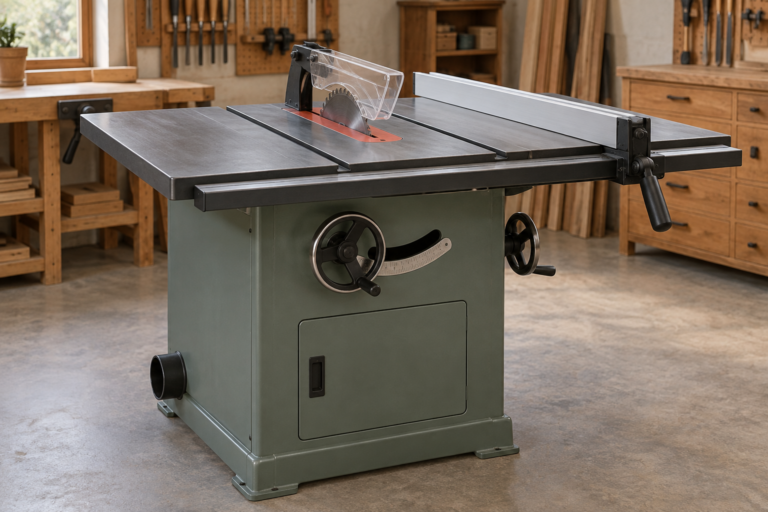
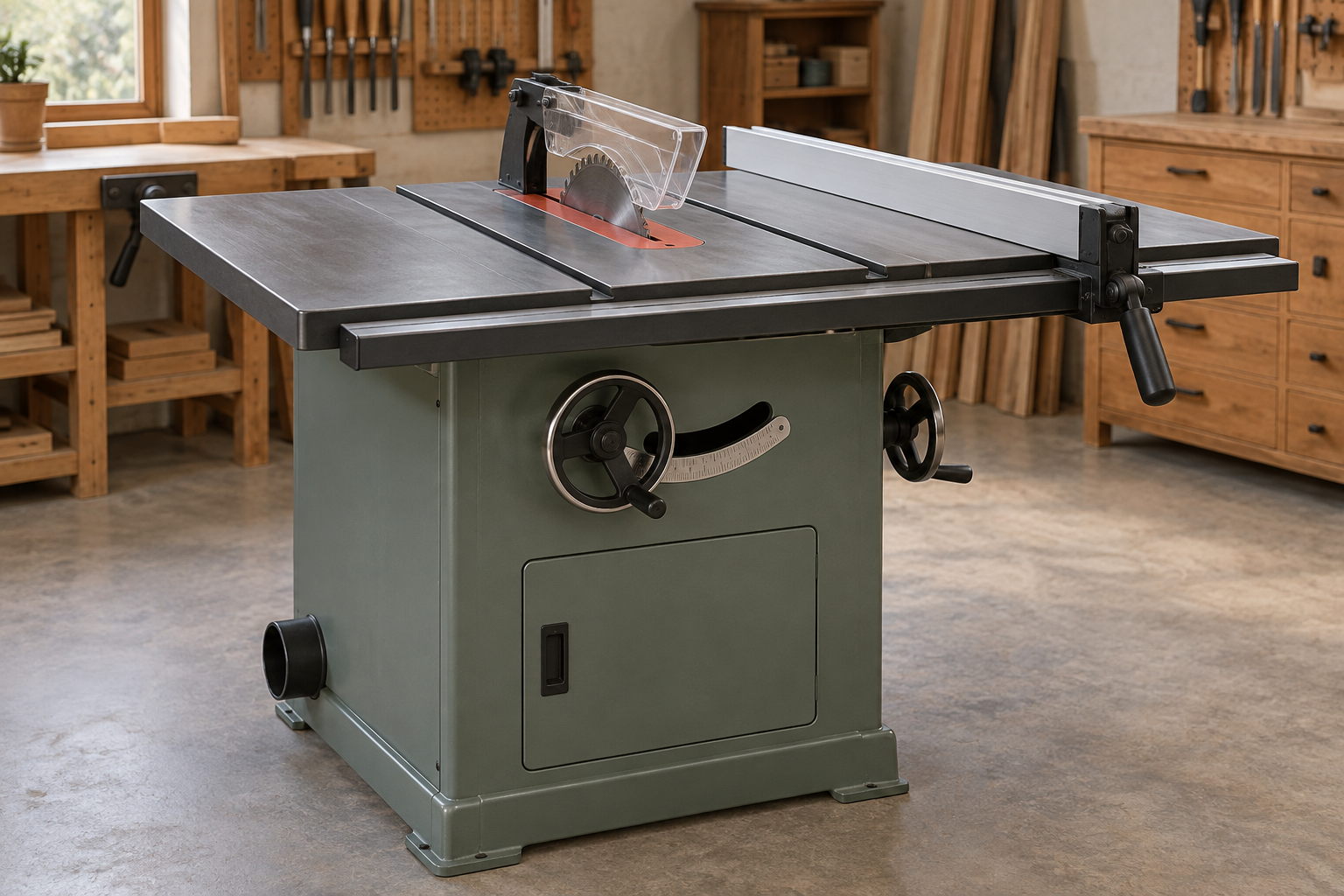
A table saw’s handwheels move the arbor assembly up and down for blade height and side to side for bevel angle. On many saws, the assembly travels on threaded screws and pivots through trunnions. Dust, resin and dried lubricant can make that movement stiff; corrosion or wear can add play. The result may be a handwheel that takes too much force, a blade that does not return to 90 degrees, or an angle setting that shifts while cutting.
Routine cleaning and a suitable dry lubricant usually solve sluggish movement. They will not fix bent parts, damaged threads or a loose trunnion. Avoid forcing a wheel: extra leverage can strip gears or damage the mechanism.
Check the saw before lubricating
Unplug the saw before reaching beneath the table or removing a panel. Raise and tilt the blade through its full travel using the handwheels, noting any tight spots, scraping, backlash or sudden changes in resistance. If the saw has a lock for the bevel setting, release it before adjusting and engage it afterward. Do not lubricate belts, pulleys, the motor, the blade, or the tabletop.
Use the manual to identify the elevation screw, tilt screw, trunnions and lubrication points. Cabinet saws and contractor-style saws differ, and some manufacturers specify particular lubricants or prohibit oil on certain parts. If the manual is missing, look up the manufacturer’s documentation before applying anything.
Clean before lubricating
Dust packed around a screw or trunnion can turn lubricant into an abrasive paste. Vacuum loose dust first, using a brush attachment rather than blowing it deeper into the cabinet. Brush away stubborn buildup with a nylon brush or an old toothbrush. A plastic scraper can lift resin without scratching finished surfaces.
For sticky residue, use a small amount of mineral spirits on a cloth if the manual permits it, then let the part dry completely. Keep solvents away from painted surfaces, plastic, wiring and bearings unless the manufacturer says they are safe there. Do not soak the assembly or spray cleaner indiscriminately into the cabinet. If you find rust, remove only light surface rust carefully; deep pitting or flaking metal calls for repair, not more lubricant.
Choose a lubricant that will not collect sawdust
For exposed threaded screws and sliding or pivoting metal surfaces, a dry-film lubricant is usually a practical choice. It leaves less sticky residue than general-purpose grease and is less likely to trap dust. Apply a thin film, work the mechanism through its travel, and wipe away excess. If the manual calls for a specific grease or oil, follow that instruction instead.
Silicone spray is not a universal solution: overspray can contaminate wood and interfere with finishes or glue. Heavy grease can hold dust, while penetrating oil may run into places where it does not belong. A simple dry-film PTFE lubricant is a reasonable purchase when the manual allows it. For a one-time service on a lightly used saw, the manufacturer-approved lubricant you already own is often enough.
Compare common lubricant choices
| Option | Best use | Trade-off |
|---|---|---|
| Dry-film lubricant | Exposed screws and pivots where dust buildup is a concern | Needs correct application; overspray must be controlled |
| Manufacturer-specified grease or oil | Lubrication points listed in the saw manual | May attract more dust if applied heavily |
| General-purpose penetrating oil | Limited use when the manual specifically permits it | Can migrate, leave residue or reach unsuitable parts |
The cheapest option is not always the wrong one: if your saw moves smoothly and its manual specifies ordinary machine oil at a particular point, there is no reason to buy a specialty product instead. What matters is using the right lubricant in the right place and in a small amount.
Lubricate and test the full travel
Apply lubricant sparingly to the elevation screw, tilt screw and designated trunnion contact points. Avoid spraying near the blade, arbor bearings or belt. Turn each handwheel from minimum to maximum travel several times so the film spreads, then wipe off visible excess. A clean rag and a nylon detail brush can help reach dusty corners without gouging the mechanism.
After cleaning and lubrication, the wheels should move consistently, without a sudden catch or grinding sound. Some resistance is normal, especially when moving a heavy arbor assembly; a wheel that binds at one point is not. Test elevation at several blade heights and tilt at several angles, including the stops. Never use a wrench or extension bar on a handwheel to overcome resistance.
Check alignment, stops and locks
Lubrication does not establish blade alignment. After servicing, check that the blade returns to 90 degrees and that the bevel scale and stops agree with a reliable square or bevel gauge. Confirm the blade is parallel to the miter slot according to the saw manual. If the blade is out of alignment, adjust the trunnions only using the manufacturer’s procedure; careless adjustment can make cuts less accurate or create a safety hazard.
Set the blade to a common bevel angle, lock it, and apply light hand pressure to check for movement. If the angle changes, inspect the lock, linkage and trunnion fasteners. A loose lock or fastener needs correction; adding more lubricant will not help. Consult a qualified service technician if the mechanism has cracked parts, damaged threads, severe corrosion, or persistent binding after cleaning.
Set a practical maintenance interval
Check movement and clean visible dust every few weeks if the saw is used regularly in a dusty shop. A full clean and lubrication may be needed every few months, but use the mechanism’s feel and the manual’s schedule rather than a rigid calendar. Heavy use, resinous wood and poor dust collection shorten the interval. Light hobby use may require less frequent service.
Improving dust collection can matter more than applying lubricant more often. Keep the cabinet clear, inspect hoses for blockages, and avoid storing the saw where moisture encourages rust. If the handwheels remain smooth and the blade holds its settings, leave the mechanism alone until inspection shows it needs attention.