How to Choose a Table Saw Blade for Clean Melamine Cuts
What's inside
As an Amazon Associate I earn from qualifying purchases. This post may contain affiliate links at no extra cost to you.
Contents
Why melamine chips
Melamine-faced particleboard and MDF have a hard, brittle coating over a softer core. When a tooth exits the panel, it can lift or fracture that coating, leaving chips along the cut. A general-purpose blade may cut the core quickly but often leaves a ragged edge in the face. Blade choice helps, but so do a sharp tooth edge, a stable setup, and the right feed rate.
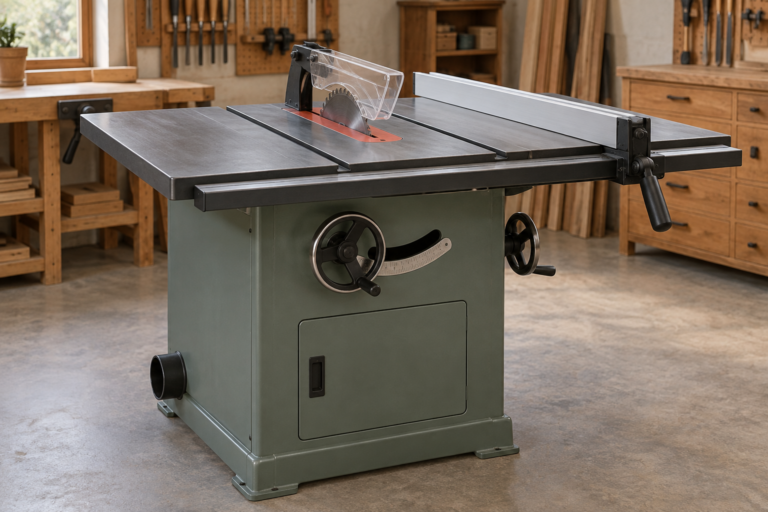
Before buying, check the saw’s manual for its permitted blade diameter, arbor size, and maximum speed. A common cabinet saw takes a 10-inch blade with a 5/8-inch arbor, but that is not universal. Never fit a blade that exceeds the saw’s rated speed or use a dado blade setting as a substitute for a proper scoring cut.
Tooth count and tooth geometry
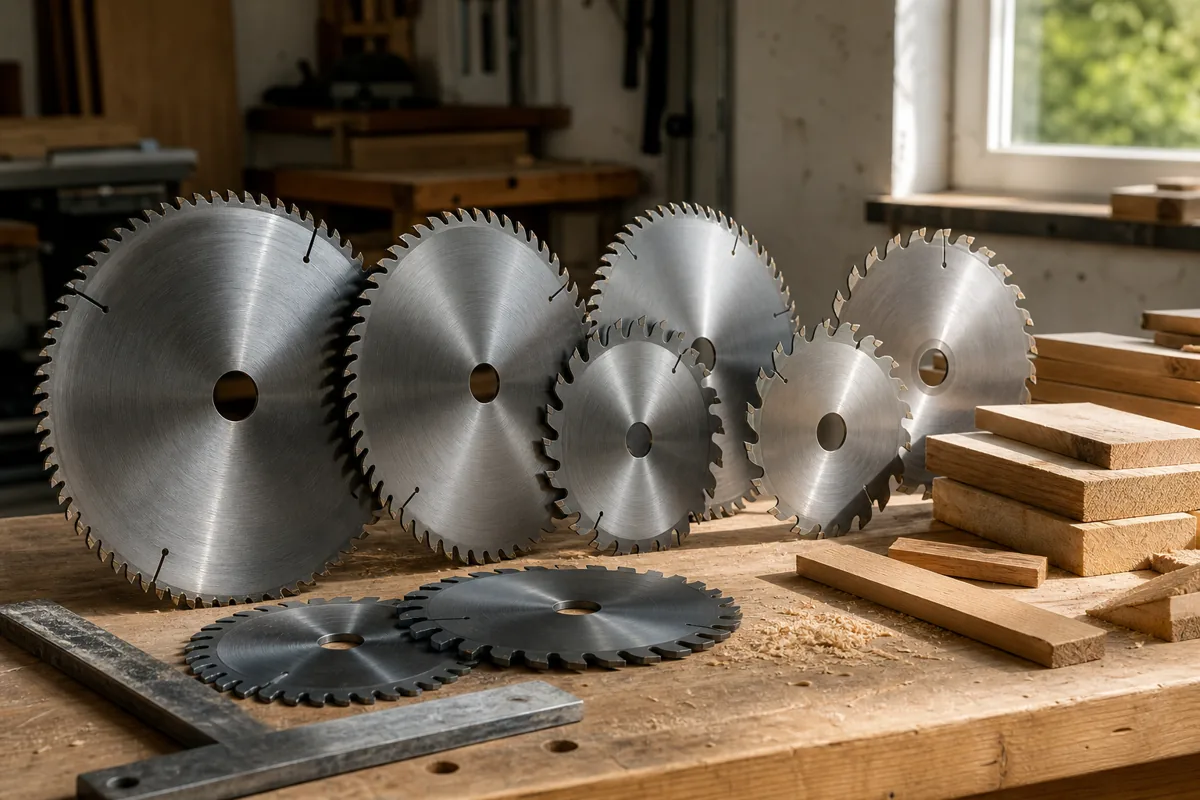
For a 10-inch table saw, a 60- to 80-tooth blade is a practical starting point for clean crosscuts and general melamine work. More teeth mean smaller gullets and less room for chips, so the blade can run hotter if you push it too fast. A 40-tooth combination blade can be adequate for occasional cuts, especially if the edges will be hidden or covered, but it is less forgiving on exposed faces.
Look for an ATB (alternate top bevel) tooth pattern or a high-ATB pattern intended for sheet goods and laminates. The alternating bevels slice the face fibers rather than hitting them squarely. A triple-chip grind, often marked TCG, is durable on abrasive materials and can work well on laminate, but it may not leave as fine an edge on the brittle face as a suitable high-ATB blade.
For frequent cutting of melamine, a 10-inch, 80-tooth high-ATB blade for melamine is often a sensible dedicated choice. It usually costs more than a general-purpose blade, and its finer tooth count can mean slower feed and more heat. It is not automatically better if the blade is dull, dirty, or poorly matched to your saw.
Blade options at a glance
| Blade type | Best use | Trade-off |
|---|---|---|
| 40-tooth combination | Occasional cuts; hidden or edge-banded edges | More face chipping; less clean finish than a fine-tooth blade |
| 60-tooth ATB | Mixed sheet goods and cleaner crosscuts | Good compromise, but not as clean as a dedicated melamine blade on difficult panels |
| 80-tooth high-ATB | Exposed melamine edges and finish work | Slower feed; can burn or load up if pushed or left dirty |
| Scoring blade and main blade | Repeat production cuts, especially with a slider | Requires compatible equipment and careful alignment; higher cost and setup effort |
For a small number of cuts, a sharp 60-tooth ATB blade may be enough. If you regularly cut cabinet parts with visible edges, the dedicated 80-tooth category is easier to justify. A scoring blade makes a shallow cut from the underside before the main blade completes the cut, reducing breakout on both faces. It is most useful on a sliding table saw built to accept a scoring unit; it is not a simple add-on for every contractor or cabinet saw.
Kerf, plate, and blade quality
Choose a full-kerf blade, typically around 1/8 inch, if the saw has enough power and the manufacturer allows it. A full-kerf plate is generally stiffer and less prone to deflection. Thin-kerf blades, often around 3/32 inch, remove less material and can be easier on a modest motor, but they may flex more if the stock is pushed sideways or the fence is misaligned. Follow the saw and blade makers’ requirements rather than assuming either kerf will fit.
Carbide quality and the ability to resharpen matter more than a flashy tooth-count claim. Melamine and its mineral-filled coatings are abrasive; a blade that starts cleanly can lose its edge with repeated work. Resin buildup also makes a blade cut hotter and can mimic dullness. Clean the blade with a product intended for saw blades, and have carbide teeth sharpened before they become badly worn or chipped.
Setup that prevents chipping
Put the finished face up when cutting on a table saw. The teeth enter the top face and exit through the bottom, so the top usually gets the cleaner edge. Use a zero-clearance insert to support the panel close to the blade; a wide throat opening leaves the underside more vulnerable to breakout.
Support large panels on both sides of the cut with an outfeed table, roller support, or a helper positioned safely. Keep the panel flat against the table and fence, and use a push stick or push block near the end of the cut. A bowed panel that rocks or lifts can chip even with a premium blade. Do not reach over the blade or stand directly behind the workpiece, where kickback can travel.
Feed at a steady pace. Stopping in the cut can leave burn marks, while forcing a fine-tooth blade can overheat it and worsen the edge. If the saw struggles, the motor bogs, or the cut begins to burn, reduce feed pressure and check for a dirty or dull blade, poor alignment, or an unsuitable thin-kerf/full-kerf choice. A zero-clearance insert matched to your saw is a modest purchase that often improves the underside finish.
A practical buying checklist
For occasional melamine cuts, start with a sharp 60-tooth ATB blade if you already own one; buying a dedicated blade may not pay off when the edge will be hidden or banded. For frequent cabinet work, choose an 80-tooth high-ATB blade that matches the saw’s diameter, arbor, speed rating, and kerf requirements. Check that the blade’s plate is flat and its carbide teeth are intact before blaming the saw for chipping.
Make a test cut on scrap from the same panel, with the finished face in the intended orientation. If the top is clean but the underside chips, improve support with a zero-clearance insert or use a scoring setup for repeated production. If both faces chip, inspect blade sharpness, alignment, and feed technique before spending more on tooth count alone.