How to Protect Jointer Tables During Long-Term Storage
What's inside
As an Amazon Associate I earn from qualifying purchases. This post may contain affiliate links at no extra cost to you.
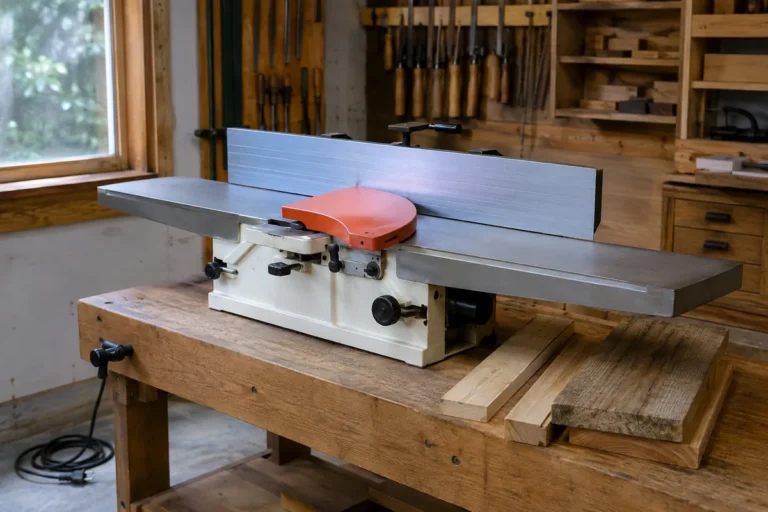
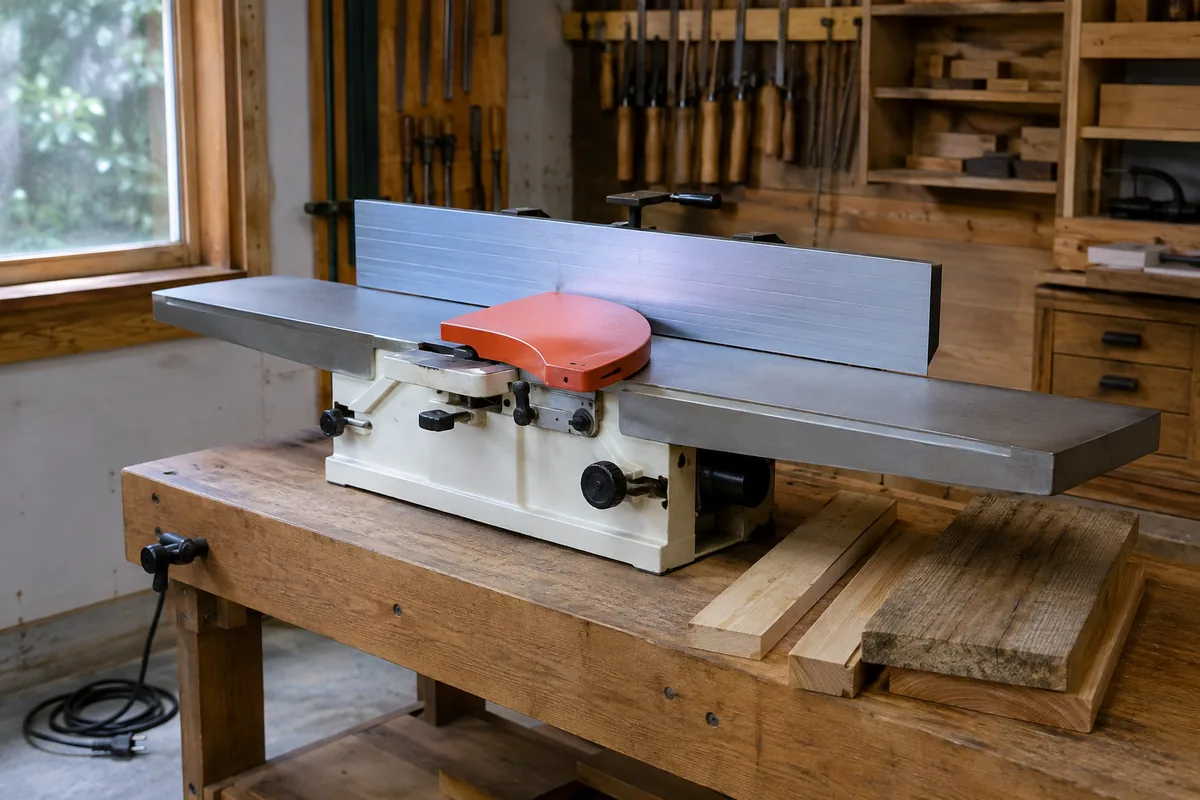
A jointer table can rust while the machine sits unused, even in a dry-looking garage. Bare cast iron is vulnerable to humidity, condensation, dust and fingerprints. The goal of long-term storage is to leave the tables clean and dry, protect them with a suitable barrier, and keep that barrier from causing trouble when you put the jointer back to work.
Contents
Clean and inspect the tables first
Unplug the jointer before working around the cutterhead. Remove dust and chips from the beds, fence, and exposed metal with a vacuum or soft brush. Then wipe the tables with a clean cloth. If you find pitch or adhesive residue, use a cleaner that is safe for the machine’s finish and follow its label; avoid soaking areas near bearings, the cutterhead, or electrical parts.
Inspect the iron under good light. Orange specks or a rough patch may indicate early rust. Deal with it before storage: apply a small amount of light machine oil or rust remover intended for metal surfaces, then work gently with a nonwoven abrasive pad. Keep the pad flat and use light pressure. Aggressive sanding or a powered abrasive can dish or scratch a precision table. Wipe away all residue and dry the surface thoroughly.
Also check the machine for leaks, loose covers, and places where damp sawdust has collected. A protective coating will not fix existing corrosion or stop moisture trapped under debris from doing damage.
Choose a protection method
For most home shops, a thin coat of paste wax or a purpose-made rust-preventive product is enough. Apply only what the product instructions call for, then buff or wipe off excess. A thick, sticky layer attracts dust and can transfer to wood. Wax is inexpensive and easy to remove, but it may need renewal if storage lasts many months or the shop has wide humidity swings.
For a damp garage, seasonal cabin, or storage period of a year or longer, consider a corrosion-inhibiting oil or film made for machine tools. Some products leave a more persistent coating than wax; others are intended to be removed before use. Check the label for compatibility with cast iron and for removal instructions. Do not assume an automotive spray or household lubricant is suitable for a precision table.
Paste wax for cast-iron tables is a reasonable low-cost choice for a dry, climate-controlled shop. If your storage area is humid, a machine-tool rust-preventive oil may offer longer protection, though it usually takes more cleanup before jointing.
| Protection | Best fit | Trade-off |
|---|---|---|
| Paste wax | Dry shop; storage over a few weeks or months | Simple and inexpensive, but may need reapplication |
| Rust-preventive oil or film | Humid conditions or longer storage | More persistent protection, but requires careful removal |
| Desiccant with a loose cover | Enclosed storage where humidity can be managed | Helps control moisture but needs monitoring and replacement |
Cover the machine without trapping moisture
Once the coating is applied, use a breathable cover that keeps off dust without sealing the jointer in a damp pocket. A fitted cloth machine cover is more useful than a plastic sheet draped directly over the beds. Plastic can work as an outer dust shield, but avoid wrapping the machine tightly, especially if it is going into storage while cold or damp. Trapped condensation can rust the iron faster than an uncovered machine in a stable, dry room.
Position the jointer away from exterior walls, concrete floors, and windows where temperature changes can cause condensation. If practical, raise the machine slightly on a stable base and keep it clear of water heaters, sinks, and doors exposed to rain or snow. A small hygrometer helps you spot a problem: sustained shop humidity above about 60% increases rust risk. A dehumidifier is often a better investment than repeatedly removing rust, but it needs a drain or regular emptying.
For an enclosed cabinet or storage room, a reusable desiccant unit can help, provided you check and recharge it as directed. Do not place loose desiccant where it can spill into the cutterhead or motor. A reusable desiccant dehumidifier is most useful in a relatively enclosed space; it will not control humidity in an open garage.
Avoid common storage mistakes
Do not leave a damp board, oily rag, or wet cover on the tables. Do not spray lubricant into the cutterhead or bearings as a substitute for protecting the beds. Avoid silicone-containing products: residue can transfer to wood and cause finishing defects such as fisheyes. If you use an oil-based protectant, keep it off belts, rubber parts, and surfaces that contact workpieces unless the product specifically allows it.
Do not tighten the jointer’s knives or adjust the beds just for storage. Those settings should remain undisturbed unless maintenance is needed. If the machine has a fence that can be removed safely, store it where it will not press against or scratch the table. Keep the cutterhead guard in place and make sure the machine cannot be started accidentally while covered.
Prepare the jointer before use
After storage, uncover the machine and inspect the tables for rust, moisture, and dust before plugging it in. Remove wax with a clean cloth if it has collected grime. For an oil or film coating, follow the manufacturer’s removal directions and wipe until the surface is clean and dry. Run a scrap board over the beds by hand, with the machine unplugged, to check for residue or snags.
Then check the fence, guard, cutterhead area, and dust port, and confirm the tables and knives are still properly set. Make a test cut on scrap before working on valuable stock. If you find fresh rust, address it promptly rather than jointing through it: rust can stain wood, add friction, and create uneven support. Reapply a light, compatible protective coat after the test cut if the jointer will return to storage.
Match the method to the storage period
For a jointer kept in a heated, dry shop, clean iron plus a light coat of wax and a dust cover is usually sufficient. For several months in an unheated garage, add humidity monitoring and inspect the tables monthly at first; if rust appears, improve the room conditions rather than simply applying a thicker coating. For a year or more in a damp location, use a rust-preventive product rated for machine tools, a loose cover, and active moisture control. The right combination depends more on the storage environment than on the price of the jointer.