How to Remove Pitch from Jointer Knives and Tables
What's inside
As an Amazon Associate I earn from qualifying purchases. This post may contain affiliate links at no extra cost to you.
Pitch is the sticky residue left by resinous wood, especially pine, spruce, and other softwoods. On a jointer it builds up on both the knives and the tables. Dirty knives can leave rough, dark streaks; dirty tables make stock harder to feed and can affect how consistently it contacts the cutterhead. Cleaning is straightforward, but the knives are sharp, and a careless scrape or solvent choice can damage an edge or finish.
Contents
Make the jointer safe before cleaning
Unplug the jointer, or switch off and lock out its breaker if it is hardwired. Do not rely on the paddle switch. Remove the fence only if it blocks access, and note its position before taking it off. Wear eye protection and cut-resistant gloves while handling knife inserts or working near exposed edges. Gloves do not make it safe to run a blade across a knife: keep your hands clear of the cutting edge and avoid wiping along it.
Lower the tables or move the cutterhead by hand only if your machine’s manual allows it. Never turn the cutterhead with power connected. If the jointer has disposable carbide inserts, do not assume they can be sharpened like traditional straight knives; clean them in place or remove them according to the manual.
Choose a cleaner that suits the surface
For pitch on cast-iron tables, use a woodworking machine-table cleaner or a small amount of mineral spirits on a cloth. For steel or carbide knives, mineral spirits or a residue-free pitch remover made for tool blades is usually suitable. Check the product label and jointer manual first. Avoid soaking the cutterhead, bearings, or nearby plastic parts.
A plastic scraper or a hardwood stick can lift thick deposits without gouging cast iron. Do not use a screwdriver, chisel, or coarse abrasive pad on the table: scratches can catch dust and interfere with smooth stock movement. Avoid oven cleaner, bleach, and strong caustic cleaners. They can attack metal, coatings, or painted parts.
Cleaner choice is a trade-off between cost and convenience. Mineral spirits are inexpensive and work well for ordinary pitch, but they are flammable and need ventilation. A dedicated cleaner may be easier to apply and may leave less residue, but costs more. For light deposits, a cloth and mineral spirits are usually enough.
| Cleaning option | Best for | Trade-off |
|---|---|---|
| Mineral spirits | Routine pitch on tables and steel knives | Low cost; flammable, so use ventilation and keep it away from sparks |
| Dedicated pitch remover | Thicker or stubborn resin deposits | Convenient, but check compatibility and expect a higher price |
| Plastic scraper and cloth | Softening or lifting heavy buildup without scratching | May take more effort; avoid metal scrapers on table surfaces |
Clean the knives without dulling them
Brush away loose dust first. Apply cleaner to a cloth or a small brush rather than pouring it onto the cutterhead. Work on one exposed knife at a time, wiping from the back of the blade toward the cutting edge so the cloth does not drag across the sharp edge. For stubborn pitch, let the cleaner sit for the label’s stated dwell time, then use a nylon brush or plastic scraper. Repeat rather than forcing residue off with a hard tool.
If the knives are removable, follow the manual’s removal and reinstallation procedure. Keep each knife in its original position when the design calls for it, and do not loosen adjustment screws just to make cleaning easier. With carbide inserts, clean each accessible face and pocket as directed; pitch under an insert can affect seating. If an insert is chipped or no longer seats flat, replace it rather than trying to compensate with extra torque.
Before reconnecting power, wipe off cleaner and let the area dry fully. If the cleaner leaves an oily film, remove it with a clean, dry cloth. A coating on the knife edge can transfer to wood or attract dust.
Remove pitch from the tables
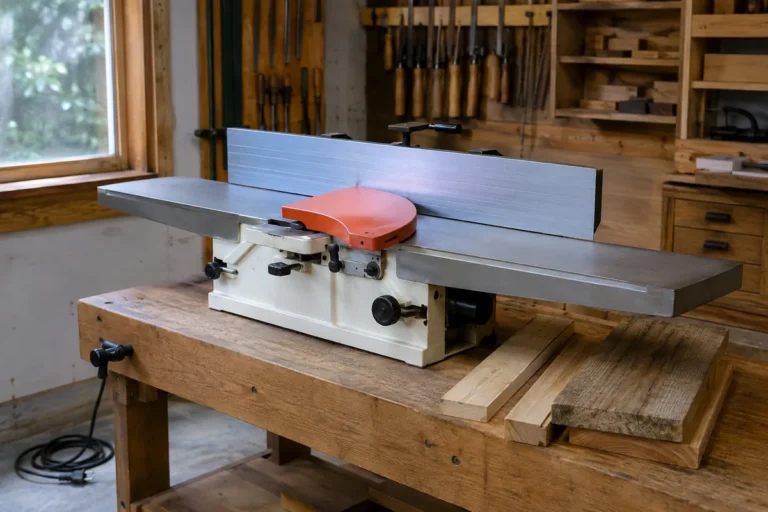
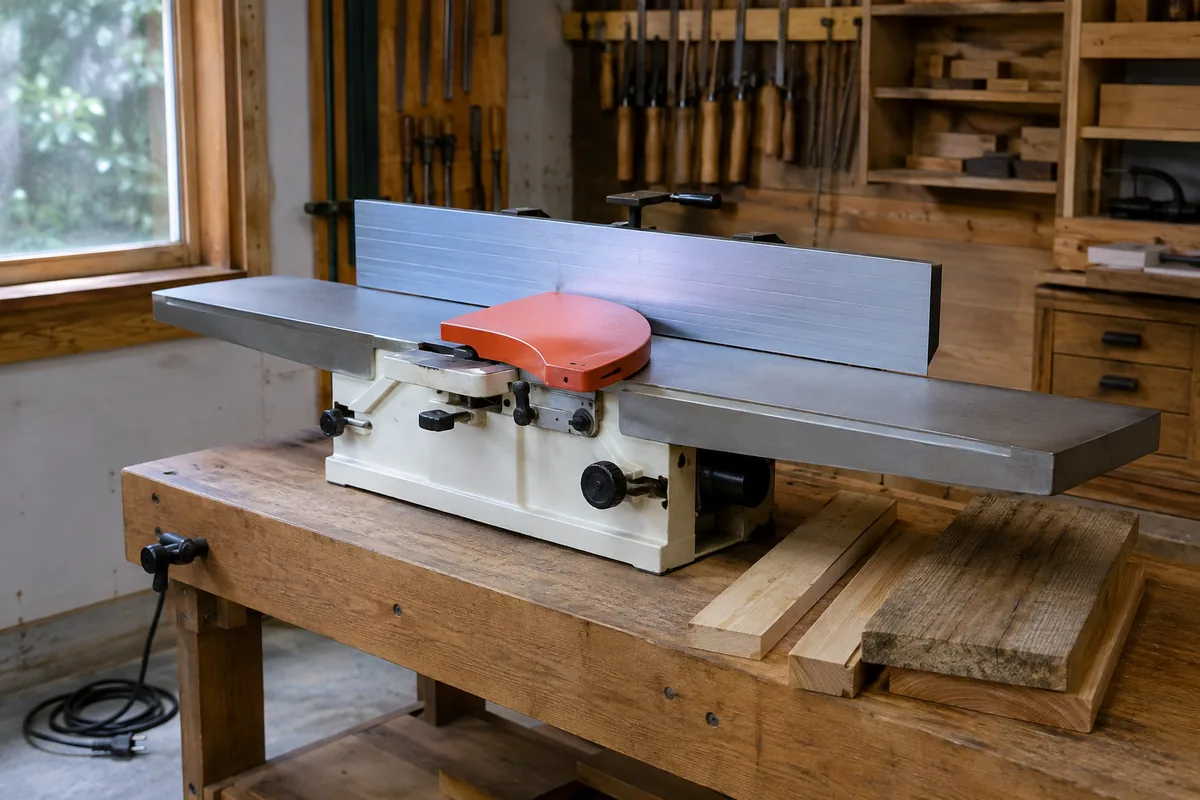
Apply a little cleaner to a cloth and wipe the infeed and outfeed tables. Use a plastic scraper for softened clumps, keeping it flat against the surface. Clean the fence face and the area around the cutterhead as well; residue there can make stock drift or catch. Do not flood the table, particularly around seams, handwheels, or lift mechanisms.
After the surface is clean and dry, apply a thin coat of paste wax made for woodworking machine tables, if permitted by the manual. Buff it until no visible wax remains. A heavy coat can transfer to lumber and interfere with glue or finish. Silicone sprays are a poor choice: silicone contamination can cause fisheye defects in paint and some finishes.
For a table that still feels rough after cleaning, check for rust or pitting rather than repeatedly adding wax. Fine rust may need careful treatment, but aggressive sanding can change the table’s flatness. If rust is extensive, consult the manual or a machine-service professional before using abrasives.
What to buy—and what you can skip
A basic kit is a lint-free cloth, nylon brush, plastic scraper, and a suitable solvent. If you clean pitch often, a woodworking pitch remover saves some effort on stubborn residue. For tables, paste wax for cast-iron machine tables is useful when the manual permits it. You do not need a premium kit for occasional cleaning; ordinary mineral spirits, used carefully, are adequate for most light buildup.
Dispose of solvent-soaked rags safely. Keep them away from heat and flames, and follow local rules for hazardous waste; oily or solvent-bearing rags can be a fire risk if left crumpled in a pile.
Know when cleaning is not enough
If the jointer still leaves burn marks or rough tracks after cleaning, inspect the knives for nicks and dullness. A sharp blade should cut cleanly without requiring excessive feed pressure. Pitch can hide damage, but cleaning will not fix a chipped edge, incorrect knife height, or a cutterhead alignment problem. Check knife setting and fence alignment against the manual before adjusting anything.
As a practical routine, clean when pitch becomes visible or when stock starts feeding unevenly—not only when the machine is already struggling. Resinous lumber can require cleaning after a single long session, while clean, dry hardwood may leave little residue over several uses. The right interval depends on the wood, not a fixed calendar.