
Key takeaways
- Compare five neodymium magnets for woodworking: adhesive discs, countersunk discs, bars, a ring and small discs, with pull ratings and safety guidance.
What's inside
As an Amazon Associate I earn from qualifying purchases. This post may contain affiliate links at no extra cost to you.
Loose neodymium magnets earn their keep in a woodworking shop in places where no housing or bracket fits: pressed into a bored hole to close a box lid with an invisible click, sunk into a cabinet door opposite a steel strike plate, or bedded into a shop-made jig to hold a stop block against a cast iron table. Because the magnet itself is the whole product, the buying decision comes down to shape, mounting style, grade and the pull figure the maker publishes, and this roundup covers loose magnets only, not finished magnetic tools.
The five picks below span the forms woodworkers reach for most: adhesive-backed discs for general closure work, a countersunk disc that screws into jigs, a slim bar for edge closures, a single heavy ring that slips over a bolt, and a bulk pack of small discs for jewelry boxes and case lids. Every figure quoted comes from the maker’s published listing data.
As an Amazon Associate, we earn from qualifying purchases.
Contents
Quick answer
For most shops, the LOVIMAG 1.26 by 1/8 inch twelve-pack is the best all-round buy: N52 discs with an 18 lb maker-rated pull and adhesive pads for closures and catches. The DIYMAG countersunk discs screw into jigs, the FINDMAG bars suit slim edge closures, the CMS ring is the strongest single piece, and the AplysiaTech 6 mm discs cover small boxes.
The 5 best neodymium magnets for woodworking
LOVIMAG Strong Neodymium Disc Magnets, 1.26 x 1/8 in (12 Pack)
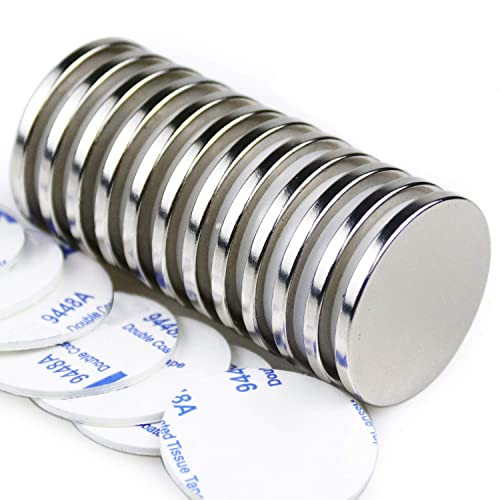
This is the general-purpose pick, and the one to buy first if a shop has no loose magnets at all. LOVIMAG builds the disc from grade N52 neodymium iron boron, the highest grade in common retail sale, and publishes a pull figure of 18 lb against steel. The triple-layer nickel-copper-nickel coating resists knocks and damp shop air better than a single plating, and each disc arrives with a double-sided adhesive pad, so a magnet can close a cabinet door or hold a lightweight jig fence within minutes. In wood, the usual method is to bore a hole, bed the disc on epoxy, and pair it with a second disc or a steel disc in the mating part. Twelve discs cover a run of boxes or doors, and the set sits in the budget tier.
Specs
- :
- Shape: Disc, magnetized through the thickness
- Size: 1.26 in diameter x 1/8 in (3 mm) thick
- Grade: N52 neodymium iron boron, as published by the maker
- Pull force: 18 lb, maker rating against steel
- Coating: Triple-layer nickel-copper-nickel
- Mounting: Double-sided adhesive pads included
- Pack contents: 12 discs with adhesive pads
DIYMAG Neodymium Disc Magnets with Countersunk Hole, 1.26 x 0.2 in (10 Pack)

Where an adhesive pad is not enough, this is the pick. Each DIYMAG disc has a countersunk center hole, and the pack includes ten screws, so the magnet bolts flat to a jig base, a sled, or a fixture and stays put under knocks that would peel a pad loose. The maker publishes a pull figure of 30 lb, the highest disc rating in this group, helped by the thicker 0.2 inch body. A flat-head screw sits flush in the countersink, and screw mounting makes the magnet removable, so one set can move between fixtures as projects change. It is the mid-range pick for jig builders.
Specs
- :
- Shape: Disc with countersunk center hole
- Size: 1.26 in diameter x 0.2 in (5 mm) thick
- Pull force: 30 lb, maker rating against steel
- Mounting: Screw mount, 10 screws included
- Pack contents: 10 magnets with 10 screws
FINDMAG Neodymium Bar Magnets, 60 x 10 x 3 mm (6 Pack)
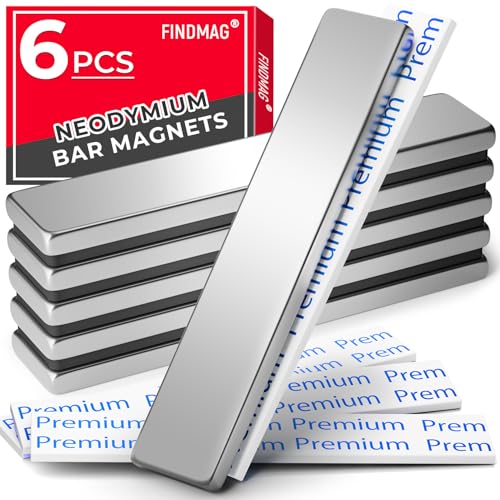
Bars solve a different problem: a closure that runs along an edge rather than at a single point. At 60 mm long and only 3 mm thick, a FINDMAG bar drops into a shallow routed groove along a door edge or the rim of a keepsake box, and spreads its hold along the seam so the lid closes evenly instead of clicking at one corner. The listing rates pull force at 10 lb per bar, and double-sided adhesive is included for surface mounting when routing a groove is not worth the setup. Six bars handle three paired closures. This is the budget-tier pick for slim work.
Specs
- :
- Shape: Bar (rectangular), magnetized through the thickness
- Size: 60 x 10 x 3 mm (2.36 x 0.39 x 0.12 in)
- Pull force: 10 lb, as published in the listing
- Mounting: Double-sided adhesive included
- Pack contents: 6 bars
CMS Magnetics Neodymium Ring Magnet, 1.26 in OD x 1/2 in ID x 3/8 in (1 Piece)

The ring is the specialist of the group and the strongest single piece here. CMS Magnetics rates this ring at 69 lb of pull, and the 1/2 inch center hole is what makes it useful in a shop: the ring slips over a bolt, a dowel, or a threaded rod, so it can anchor a hold-down or center itself on a jig stud without adhesive or screws. It is sold as a single piece and lands in the premium tier. That strength cuts both ways: keep fingers clear as it approaches steel, and slide it sideways off a surface rather than pulling straight up. Buy it when one powerful, self-centering magnet does a job a cluster of small discs cannot.
Specs
- :
- Shape: Ring, 1/2 in center hole
- Size: 1.26 in outside diameter x 1/2 in inside diameter x 3/8 in thick
- Pull force: 69 lb, as published in the listing
- Weight: 1.7 oz
- Pack contents: 1 ring magnet
AplysiaTech N52 Small Disc Magnets, 6 x 2 mm (200 Pack)

Small work needs small magnets, and a 1.26 inch disc would blow out the wall of a jewelry box or a pen case. These AplysiaTech discs measure 6 mm across and 2 mm thick, press into a 6 mm drilled hole, and disappear under a shaving of veneer or a coat of finish. The maker grades them N52 and publishes a pull figure of 1.6 lb per disc, plenty to hold a light lid shut when two pairs are fitted. Two hundred discs per pack make this the bulk budget pick for production box making and small casework. At this size, count discs out onto a steel tray so none wander into the sawdust, and keep the pack away from children.
Specs
- :
- Shape: Disc, magnetized through the thickness
- Size: 6 mm diameter x 2 mm thick
- Grade: N52, as published by the maker
- Pull force: 1.6 lb, as published in the listing
- Model: D600H200
- Pack contents: 200 discs
How to choose
Match the form to the mounting first. Adhesive-backed discs and bars are the fastest route to a working closure, but adhesive creeps under load and lets go in hot shops; for anything that takes daily knocks, a countersunk disc on a screw, or a plain disc bedded in epoxy inside a bored hole, holds for the life of the piece. Rings earn their place when a magnet must center on a bolt or rod; small discs belong in small work, where the wood around the hole is too thin for anything larger.
Read pull figures with care. Every rating in this roundup is the maker’s figure for direct contact with thick, flat steel, pulled straight apart. Real holding drops fast with any gap: a layer of wood, veneer, or finish between the magnet and its strike surface can cut the grip to a fraction of the published number, and a sideways shear load holds far less than a straight pull. Closure design therefore uses pairs, fitted as close to the surface as the wood allows. If a lid must hold against a spring or a warped door, step up a size rather than trusting the headline figure.
Grade and coating come next. N52 is the strongest common grade and the right default for closures, where space is tight. The standard grades in these listings carry a maximum working temperature of 176 °F (80 °C), so keep magnets out of parts that bake in a hot car or sit against a motor housing. A chipped nickel-copper-nickel coating is where corrosion begins, so handle magnets with dry hands and store them dry.
Handling and storage are part of the purchase. Published maker guidance is consistent across these listings: separate stacked magnets by sliding them sideways, never by prying them straight apart, and keep fingers out of the closing gap, because larger discs and the CMS ring can pinch hard enough to injure. Neodymium is brittle, so never let two magnets snap together from a distance; sweep up and throw away a chipped or shattered magnet, since the shards stay magnetic. Keep loose magnets away from pacemakers and medical devices, away from magnetic media and delicate electronics, and stored where children cannot reach them, because swallowed magnets can join across internal tissue and cause grave injury.
Who should skip
Skip loose magnets if what you need is a finished tool: a magnetic tool bar, a parts tray, a floor sweeper, or a switchable featherboard is a separate product built around its magnets, and no pack here replaces one. Skip them if the mating parts are entirely non-ferrous with no room to embed a magnet or a steel strike, since a magnet alone has nothing to grip. Skip the large, high-pull pieces if children have free run of the shop and storage cannot be secured, and skip standard grades for any fitting that will live above 176 °F (80 °C); that job calls for a heat-rated grade from a specialist supplier.
FAQ
How much holding power remains once a magnet is buried in wood?
Far less than the published figure, which assumes bare contact with thick steel. Even a thin skin of wood or veneer over the magnet acts as a gap and cuts the grip sharply, so fit magnets close to the surface, use mating pairs, and size up when a lid must resist a spring or a warp.
Can these magnets be glued into a drilled hole?
Yes, and it is the standard shop method. Bore a hole a hair wider than the magnet, bed it on epoxy with the pole face flush or just below the surface, and mark the polarity before the lid and body magnets go in, because two magnets fitted pole-to-pole will push the lid open instead of closing it.
Why do makers publish different pull figures for magnets of the same size?
Pull depends on grade, thickness, coating, and the steel used for the measurement, and makers do not all publish under identical conditions. Treat the figure as a comparison within one maker’s range rather than an absolute promise; a thicker magnet of the same diameter usually outpulls a thin one.
How should loose neodymium magnets be stored in the shop?
Keep them stacked in their pairs on a steel plate or strip, inside a closed box, dry and out of reach of children. The foam from the pack keeps strong discs apart so they can be slid off one at a time.
Final verdict
Buy the LOVIMAG twelve-pack for everyday closures and catches: N52 discs, an 18 lb maker rating, and adhesive pads make it the most flexible first purchase. Choose the DIYMAG countersunk set when a magnet must screw into a jig and stay there, the FINDMAG bars for slim edge closures, the CMS ring when one strong self-centering magnet anchors a fixture, and the AplysiaTech bulk pack when small boxes need small magnets in quantity.
Product and ASIN Reference
| Name | ASIN |
|---|---|
| LOVIMAG Strong Neodymium Disc Magnets, 1.26 x 1/8 in (12 Pack) | B072KDBJWC |
| DIYMAG Neodymium Disc Magnets with Countersunk Hole (10 Pack) | B071ZKQ2X5 |
| FINDMAG Neodymium Bar Magnets, 60 x 10 x 3 mm (6 Pack) | B09QFWKLTS |
| CMS Magnetics Neodymium Ring Magnet, 1.26 in OD (1 Piece) | B01N8S12GM |
| AplysiaTech N52 Small Disc Magnets, 6 x 2 mm (200 Pack) | B0F4CV1847 |
Related guides
More from Amazon
Programs that pair well with the guide above. Offers and eligibility are set by Amazon and may change.
A free business account with business pricing and bulk-buying tools for work, shop or home office.
Create a business accountFree shipping on eligible items, Prime Video and more. Eligible new members can start with a free trial.
Start a Prime free trialAudiobooks and podcasts to listen to on the go. Eligible new members can start with a free trial.
Try Audible freeAd-free music streaming. Eligible new subscribers can start with a free trial.
Try Music Unlimited freeAs an Amazon Associate we earn from qualifying purchases.
Write Your Review
No reviews yet. Be the first to share your experience!