How to Choose a Table Saw Fence Length for a Furniture Shop
What's inside
As an Amazon Associate I earn from qualifying purchases. This post may contain affiliate links at no extra cost to you.
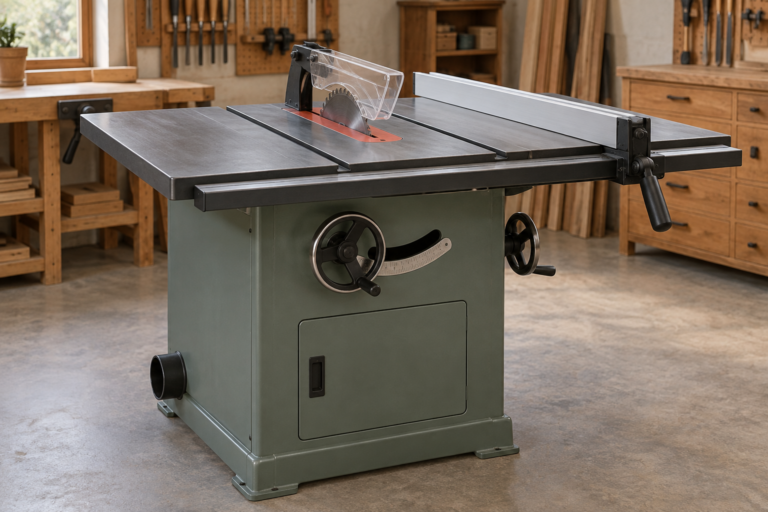
Fence length is not the same as rip capacity. A long fence does not let you cut a wider board unless the saw’s rails and table support that distance. For a furniture shop, choose a fence system that covers the cuts you make regularly, fits the saw and shop, and stays parallel to the blade without getting in the way.
Contents
Start with your work, not the catalog
List the widest parts you actually rip: cabinet sides, shelves, table leaves, glue-up stock, or sheet goods. Measure the material before cutting, and note whether you’ll rip it on the table saw or break it down first with a track saw or circular saw. A common furniture-shop split is to rough-cut 4-by-8-foot plywood with a portable saw, then use the table saw for narrower, more manageable pieces.
For solid stock, the maximum rip is often far less than the fence’s advertised capacity. If your typical parts are 4 to 12 inches wide, a fence that comfortably handles cuts up to 24 inches may be more useful than a very long rail system. If you routinely rip 24-inch panels, you need the rails, table support, and floor space to match—not just a fence that slides that far.
Understand fence length and rip capacity
“Fence length” can refer to the fence body, the rail length, or the maximum rip capacity. These are different measurements. The fence body is the bar that contacts the workpiece. The rails attach to the saw and let the fence travel across the table. Rip capacity is the greatest distance from the blade to the fence when set for a cut.
Check the manufacturer’s specification for rip capacity to the right of the blade, and verify it against the saw you own. Some systems are designed to extend beyond the saw table; that can work well for ripping wide panels, but only if the extension is properly supported and secured. A longer fence body does not automatically improve accuracy. A straight, rigid fence that locks consistently matters more than extra inches of contact surface.
Match capacity to the shop
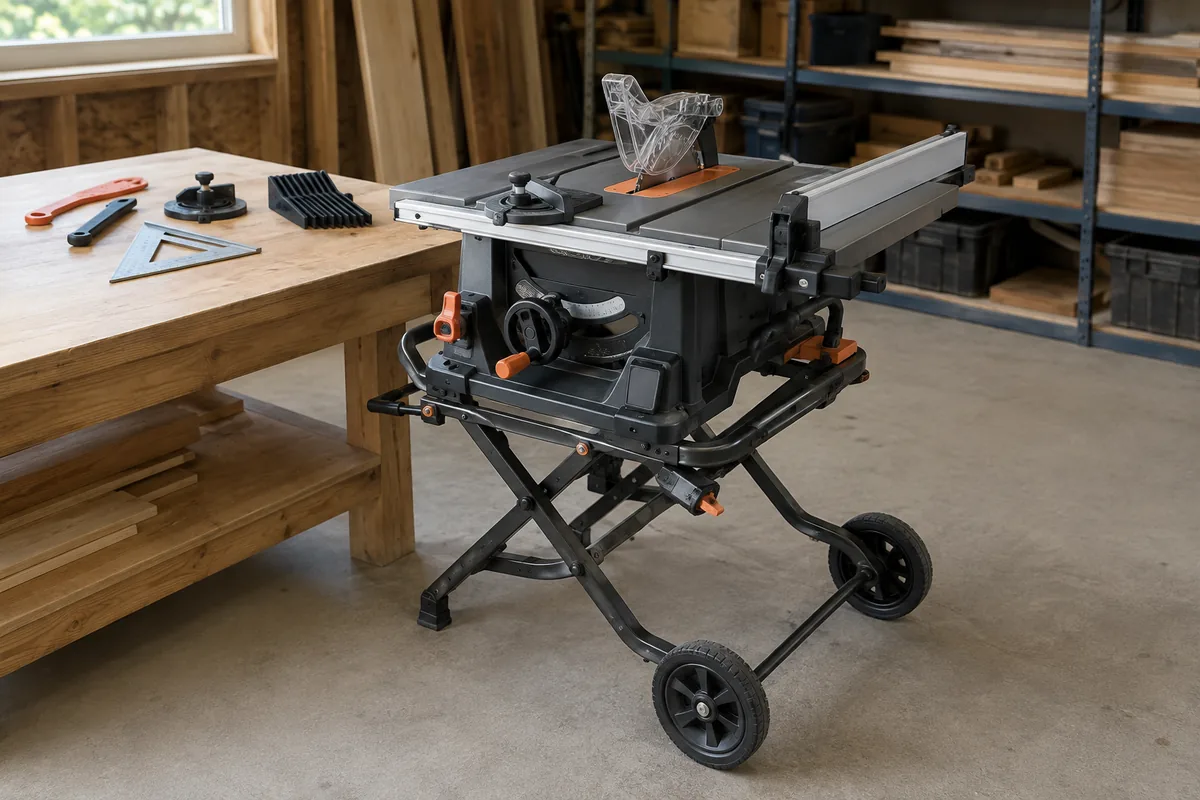
Long rails take up space even when the fence is parked. Measure the saw’s footprint with the rails installed, including room for the fence to travel and for stock to pass the blade. In a compact shop, an extended rail can block a doorway, interfere with a jointer, or make it harder to move sheet goods. A shorter system may be the better choice if you rarely need the extra capacity.
For many furniture shops, a 30-inch rip capacity is a practical middle ground: it covers many cabinet and furniture parts while avoiding the footprint of larger systems. A 50-inch capacity is useful for frequent wide-panel work, but it needs more floor space and often a substantial outfeed and side-support plan. Treat these as buying categories, not universal requirements; saw models and rail layouts differ.
| Fence-system size | Fits best | Main trade-off |
|---|---|---|
| Compact, about 24–30 inches | Small shops and furniture parts usually under 24 inches wide | Less room for wide panels; easier to fit around other machines |
| Medium, about 30–36 inches | Mixed furniture work and occasional wider ripping | More rail footprint; may require extra support at full extension |
| Extended, about 50 inches or more | Frequent wide-panel ripping and sheet-goods work | Needs substantial space, support, and careful setup |
Check fit, support, and compatibility
Before buying, confirm the rail system fits your saw’s table, cabinet, and mounting holes. Fence kits are not automatically interchangeable. Check whether the package includes rails, brackets, a measuring scale, and any needed hardware, and whether the fence can be installed without covering controls or interfering with a mobile base.
At maximum extension, the rails and table must resist deflection. A long piece of plywood can sag or twist if its weight hangs unsupported, pulling the cut off line or pinching the blade. Use a properly positioned outfeed table and, when needed, a side support or roller stand that does not push the work sideways. For large sheet goods, a second person or a panel-handling setup may be safer than trying to manage the load alone.
Look for a fence that locks firmly at both ends and can be aligned parallel to the blade. After installation, check alignment with a reliable measuring method at the front and rear of the blade. If the fence toes inward, it can bind the work and increase kickback risk; if it is badly out of parallel, cuts may vary in width. Follow the saw and fence manufacturers’ setup instructions, and use the blade guard, riving knife, and push devices appropriate to the cut.
Choose a system for the way you work
If you need a replacement for a compatible saw and mostly rip furniture-size parts, a 30-inch table saw fence system is a sensible starting point. Confirm the exact saw compatibility and included rails before ordering; the advertised capacity alone is not enough.
For a shop that regularly cuts wide panels, consider an extended-capacity table saw fence system. The extra range is useful only when the saw can support the stock and the longer rails fit the shop. If wide panels are occasional, rough-cutting them with a track saw and finishing on the table saw can cost less and take up less room.
A shorter or less expensive fence can be perfectly adequate for a shop that mainly rips narrow solid stock. Spend the difference on a sharp blade, accurate setup tools, or outfeed support if those are the actual bottlenecks. A longer fence cannot compensate for a loose lock, bent rail, poor alignment, or unsupported workpiece.
Avoid common buying mistakes
Do not buy by maximum capacity alone. A fence that reaches 50 inches may still be a poor fit if its rails obstruct your workflow or your saw’s mounting points are incompatible. Nor should you assume that the longest fence body is the most accurate: excessive length can add weight and make adjustment awkward without improving the cut.
Before committing, compare your widest routine cut with the saw’s capacity, measure the available rail space, and decide how the work will be supported. If a wide cut happens only once or twice a year, a compact fence plus a separate panel breakdown method is often the more practical setup. If wide ripping is daily work, buy the capacity and support system for it—not just the longest fence you can find.