Best Dust Collector for a One-Car Garage Shop: Wall-Mount and Portable Picks Compared
Our Top Picks
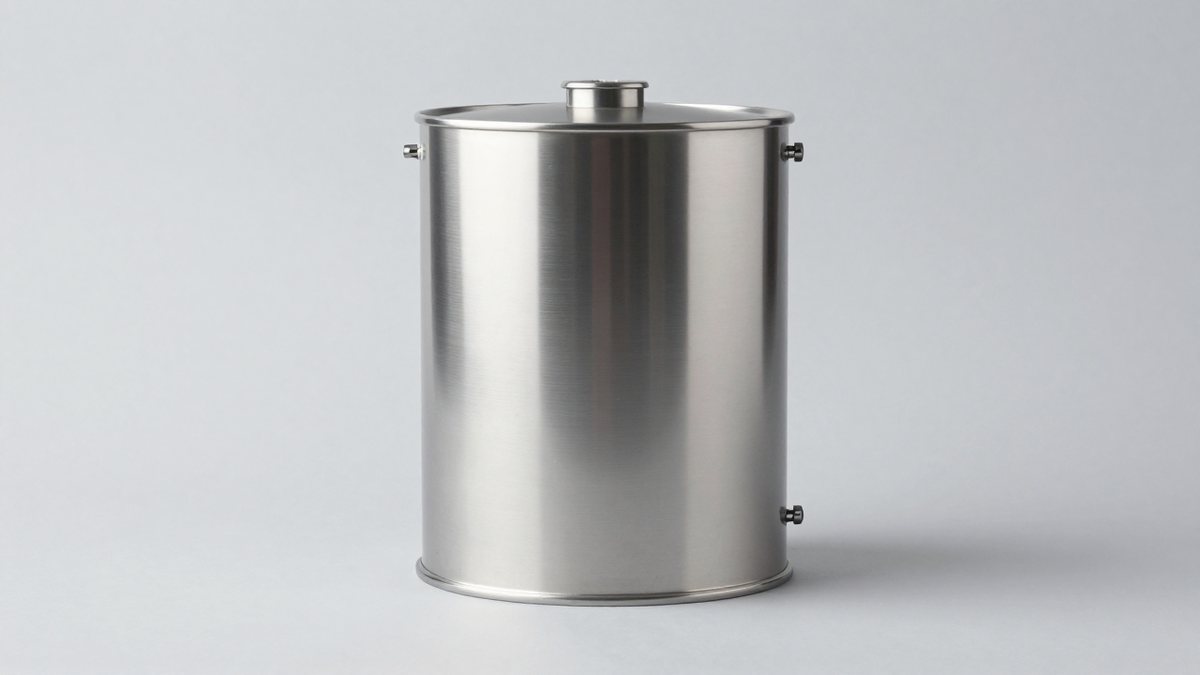
 WEN 1-Micron Canister Filter Cartridge with Cleaning Paddles19-5/8” x 24”19.63 x 19.63 x 24 inchesCheck on Amazon
What's inside
As an Amazon Associate I earn from qualifying purchases. This post may contain affiliate links at no extra cost to you.
The best dust collector for a one-car garage shop is a wall-mount unit in roughly the 650 CFM class that runs on a standard 120 V circuit, because it frees the floor for a car or a workbench and still reaches the 4 inch ports on a table saw or planer. In this set of eight listings, the Rockler Dust Right 650 CFM and the BUCKTOOL 1.2HP 660 CFM are the two that match that description most directly, while the SHOP FOX W1727 1 HP is the portable alternative for shops that cannot spare wall space. Seven of the eight are full collectors; the WEN canister cartridge is a replacement filter, not a machine, and it is flagged that way below. This page gives a comparison table, one section per listing, and the sizing arithmetic for a 12 by 22 foot bay: airflow versus static pressure, port area, circuit load and floor space. Every figure comes from the listing titles or from general engineering arithmetic, and anything a title does not state is marked “check the listing.”
Contents
Top picks at a glance
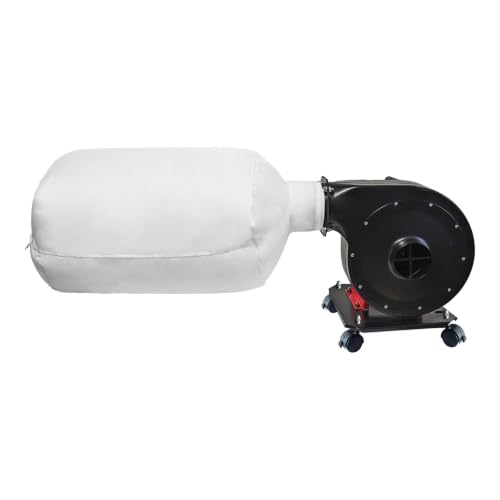
BUCKTOOL 1.2HP Wall Mount Dust Collector for Woodworking, 660 CFM Airflow


As an Amazon Associate we earn from qualifying purchases. Product prices and availability are accurate as of the date/time indicated.

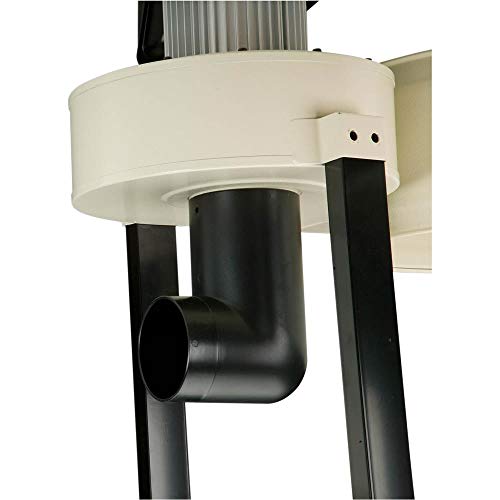
SHOP FOX Portable W1727 1 HP Dust Collector




As an Amazon Associate we earn from qualifying purchases. Product prices and availability are accurate as of the date/time indicated.

Rockler Dust Right 650 CFM Wall Mount Dust Collector for Woodworking Shops


As an Amazon Associate we earn from qualifying purchases. Product prices and availability are accurate as of the date/time indicated.

Abestorm Tabletop Dust Collector with Ionizer for Woodworking Shops


As an Amazon Associate we earn from qualifying purchases. Product prices and availability are accurate as of the date/time indicated.
WEN 1-Micron Canister Filter Cartridge with Cleaning Paddles for Woodworking Dust Collectors (DC1300-AF1)


As an Amazon Associate we earn from qualifying purchases. Product prices and availability are accurate as of the date/time indicated.

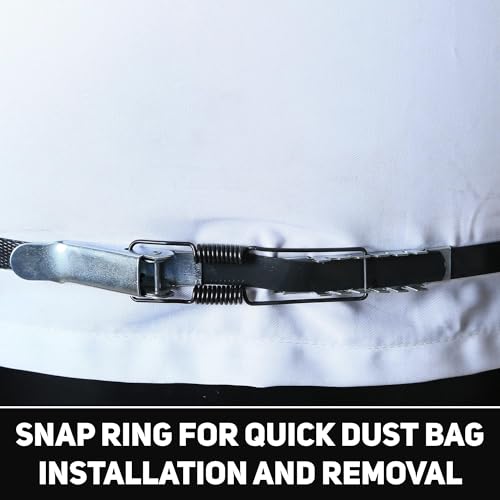
BUCKTOOL 1-1/2 HP Dust Collector, Internal Dust Baffle, 1100 CFM Airflow




As an Amazon Associate we earn from qualifying purchases. Product prices and availability are accurate as of the date/time indicated.

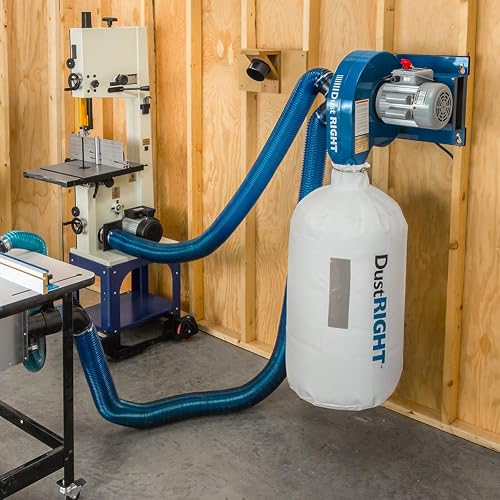
Rockler Dust Right 1250 CFM Wall Mount Dust Collector with Remote Control


As an Amazon Associate we earn from qualifying purchases. Product prices and availability are accurate as of the date/time indicated.
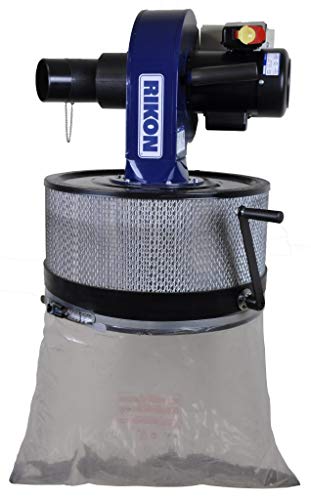
RIKON 60-101, 1 HP Wall Mount Dust Collector

As an Amazon Associate we earn from qualifying purchases. Product prices and availability are accurate as of the date/time indicated.
Price tiers are relative inside this set of eight. “Budget” means among the lowest here, “Premium” among the highest; none of it is a statement about quality. The “Title states” column repeats only what each listing title says.
| Listing | Title states | Mount | Price tier | Best for |
|---|---|---|---|---|
| BUCKTOOL 1.2HP Wall Mount | 1.2 HP, 660 CFM | Wall | Budget | Tight bays on a tight budget |
| SHOP FOX W1727 1 HP | 1 HP, portable | Portable | Mid-range | Rolling between machines |
| Rockler Dust Right 650 CFM | 650 CFM | Wall | Mid-range | Balanced wall-mount shop |
| Abestorm Tabletop with Ionizer | Tabletop, ionizer | Tabletop | Budget | Small bench-top tools |
| WEN 1-Micron Canister Filter (DC1300-AF1) | 1-micron cartridge, cleaning paddles | Accessory | Budget | Owners of a compatible collector |
| BUCKTOOL 1-1/2 HP, Internal Baffle | 1.5 HP, 1100 CFM, baffle | Check the listing | Mid-range | Longer hose runs, if the circuit allows |
| Rockler Dust Right 1250 CFM | 1250 CFM, remote control | Wall | Premium | Maximum airflow, remote start |
| RIKON 60-101 1 HP Wall Mount | 1 HP | Wall | Premium | Brand-name 1 HP wall unit |
The eight listings, in detail
BUCKTOOL 1.2HP Wall Mount Dust Collector, 660 CFM: the budget wall unit
The title gives four facts: the Bucktool brand, 1.2 HP, wall mount, and 660 CFM of airflow, sold for woodworking. Those four are enough to place it. Wall mounting means the body hangs on studs and the floor stays clear, which in a 12 by 22 foot bay is worth more than almost any convenience feature. The 660 CFM figure is a manufacturer rating, and CFM ratings are normally quoted with little resistance in the air path, so read it as a ceiling, not as what arrives at a saw.
Electrical estimate, not a listing claim: 1.2 HP is about 900 W of motor output, since 1 HP equals 746 W. After motor losses, input power plausibly lands near 1,100 to 1,400 W, or roughly 9 to 12 A at 120 V, with a higher surge at start-up. That fits a 15 A circuit when little else is running, but a table saw on the same circuit changes the picture. Check the nameplate and whether the unit is 120 V only.
The title does not state port diameter, filter type, micron rating, bag capacity, weight or noise level, so check the listing for each. Port size decides how it connects: a 4 inch inlet matches a common saw port, while a 5 or 6 inch inlet may need a reducer. As arithmetic, 660 CFM through a 4 inch opening is about 7,500 feet per minute of theoretical air speed, a number that hose friction and a loading filter will pull down. A short, smooth run to one machine at a time is the right plan, moving a hose or opening one blast gate when you switch tools.
Pros
- Wall-mount format keeps the garage floor clear
- Lowest price tier among the full-size collectors in this set
- 660 CFM and 1.2 HP are both stated in the title
Cons
- Port size, filter micron rating and noise are not in the title
- One fixed location means long hose runs to far corners
- Stock filtration grade is unknown; budget for an upgrade if it is coarse
Who it’s for: a one-car garage woodworker who wants a wall-mount unit near the table saw without paying premium-tier money.
SHOP FOX W1727 1 HP Portable Dust Collector: the roll-around option
The title is short: SHOP FOX Portable W1727 1 HP Dust Collector. It tells us the brand, the model number, the horsepower and that the unit is portable. Everything else is a gap. A portable 1 HP collector is a common format for hobby shops because it rolls to the table saw, planer or sander and connects to the machine’s port, then parks in a corner when you need floor space for a car.
The 1 HP rating is useful for the circuit question. As a labeled estimate, 1 HP is 746 W of output, so input likely falls near 900 to 1,200 W, or about 7.5 to 10 A at 120 V. That is the easiest horsepower class to live with on a shared garage circuit. The title does not say whether the motor is 120 V only or dual voltage, so check the listing and the nameplate.
What the title omits matters: CFM, bag or filter type, micron rating, inlet size, hose, weight and noise. A portable stand-alone unit usually gives you flexibility on hose length, which helps in a bay where machines sit on different walls. Short hoses with gentle bends carry more air than long or kinked ones, so park the unit next to the tool in use. Because the filter grade is not stated, check the listing before sanding; if it is coarse, a finer filter is worth considering.
Think about the parking spot too. A portable unit that lives beside the car door is one you will trip over, while a corner behind the bench keeps the path clear.
Pros
- Portable design avoids drilling studs and suits shared floor space
- 1 HP is the easiest class on a 15 A, 120 V circuit (estimate)
- Short hoses are possible because the unit goes to the tool
Cons
- CFM, filter micron rating and inlet size are not in the title
- Takes floor space when parked, unlike a wall unit
- Rolling a cord around the bay adds a trip hazard
Who it’s for: garage woodworkers who move between a saw, a planer and a sander and want one 1 HP unit to follow them.
Rockler Dust Right 650 CFM Wall Mount Dust Collector: the balanced pick
The title reads Rockler Dust Right 650 CFM Wall Mount Dust Collector for Woodworking Shops. That gives us the airflow rating, the wall mount and the intended use, but not the horsepower, voltage, inlet size, filter type or micron rating. Check the listing for all five. The 650 CFM rating sits in the same class as the BUCKTOOL 1.2HP, so the comparison between the two comes down to price tier, brand support and the details the titles leave out.
For a one-car garage, 650 CFM is a sensible target for a single machine at a time. Commonly quoted guidance puts a 4 inch table saw port at roughly 350 to 400 CFM of actual flow. Because real flow is always below the rated number once hose and filter are added, a 650 CFM rating leaves room for that but not for running two machines at once. Plan on opening one blast gate at a time.
A wall-mount unit also needs a mounting plan. Fasten to studs, not drywall alone, and leave room to remove and empty the bag or bin. Because the horsepower is not in the title, treat the electrical load as unknown until you read the nameplate; if the motor is in the 1 HP class, the earlier estimate of about 7.5 to 10 A at 120 V is a reasonable planning range, but that is an assumption, not a listing claim.
Because this listing sits in the mid-range tier, the useful question is what the extra money buys over the BUCKTOOL 1.2HP. The title cannot answer that, so read the listing for filter grade, inlet diameter, included hardware and warranty terms, and compare them line by line before paying the difference.
Pros
- 650 CFM and wall mounting are both stated in the title
- Mid-range tier sits between the budget and premium wall units
- Frees floor space in a single-car bay
Cons
- Horsepower, voltage, inlet size and filter rating are not in the title
- Fixed position limits where hoses can reach
- Costs more than the similar-airflow BUCKTOOL 1.2HP
Who it’s for: a woodworker who wants a wall-mount unit from a woodworking-focused brand and plans to run one machine at a time.
Abestorm Tabletop Dust Collector with Ionizer: the bench-top unit
The title says Abestorm Tabletop Dust Collector with Ionizer for Woodworking Shops. It does not give horsepower, CFM, voltage, filter type or inlet size, so all of that needs checking on the listing. The word tabletop suggests a small footprint that sits on a bench, which suits a cramped bay, but how much air it moves and what size hose it accepts are open questions.
Because no airflow figure appears in the title, there is nothing to compare against the 4 inch port math. Assume a small unit will serve a small tool: a bench sander, a hand-held sander with a hose, a small router table or a scroll saw. It is a poor fit for a table saw or planer, which throw more chips and expect a bigger inlet. Match the machine’s port to the unit’s inlet and check the listing before buying adapters.
The ionizer deserves a general note. Ionizers charge airborne particles so they cling to surfaces, which is different from pulling them through a filter. Some ionizing devices can produce ozone, an irritant, so look for any statement on the listing about ozone output. Do not treat an ionizer as a substitute for a respirator or for capturing dust at the tool.
Since it is the other budget-tier collector besides the BUCKTOOL, some buyers may be tempted to treat it as a cheaper full-size alternative. The title does not support that reading. Treat it as a complement to a bigger unit, or as the whole answer only if your work is limited to small bench tools that you run for short sessions.
Pros
- Tabletop format saves floor and wall space
- Budget tier within this set
- Ionizer included per the title
Cons
- No horsepower, CFM or inlet size in the title
- Likely too small for stationary machines (check the listing)
- Ionizer claims and any ozone output need checking
Who it’s for: bench-top and small-tool users who want a compact unit and will pair it with a respirator.
WEN 1-Micron Canister Filter Cartridge (DC1300-AF1): an accessory, not a collector
This listing is a replacement canister filter cartridge with cleaning paddles, sold for woodworking dust collectors, with the model reference DC1300-AF1 in the title. It has no motor, no fan and no hose, so it cannot collect anything on its own. It belongs in this set only because it appeared for the keyword. Buy it if you own a collector that takes this cartridge; otherwise it does nothing.
The title states a 1-micron rating. That is the only filtration number we can pass along, and it does not say what percentage of 1-micron particles the cartridge captures, or what test standard sits behind the number. Check the listing for an efficiency percentage. Canister filters generally offer more filter area than a bag of the same footprint, and cleaning paddles let you knock dust from the pleats by turning a handle, which keeps airflow from dropping as the filter loads.
The parenthetical DC1300-AF1 reads like a part or model reference. Confirm with the seller and your collector’s manual which machines it fits, because a mismatch leaks air around the seal and defeats the purpose. A finer filter also adds resistance, so it can lower airflow slightly compared with a coarser, cleaner bag; that is general behavior, and the effect varies by design.
In a one-car garage, the case for a part like this is cleaner air at the exhaust, since fine sanding dust is what drifts around a closed bay. Whatever the filter, empty the collector before the bin is full, clean the pleats on a schedule and replace the cartridge when airflow stays weak after cleaning.
Pros
- 1-micron rating is stated in the title
- Cleaning paddles help maintain airflow between emptyings
- Budget tier for an upgrade part
Cons
- Not a dust collector; no motor or fan
- Fit is limited to compatible models, so confirm before buying
- Efficiency percentage and test standard are not in the title
Who it’s for: owners of a compatible WEN-style collector who need a finer or replacement filter.
BUCKTOOL 1-1/2 HP Dust Collector, Internal Dust Baffle, 1100 CFM: the higher-airflow pick
The title lists Bucktool, 1-1/2 HP, an internal dust baffle and 1100 CFM. It does not say wall mount or portable, so check the listing for mounting. An internal baffle is generally a separation feature that helps heavier chips drop out before air reaches the filter, but how this design works and how well it separates is not in the title. The baffle is described here only as a general concept.
The electrical question is the main one. As a labeled estimate, 1.5 HP is about 1,119 W of output, which after motor losses suggests input near 1,350 to 1,800 W, or roughly 11 to 15 A at 120 V. A 15 A circuit supports 1,800 W at most and about 1,440 W continuous under the common 80 percent rule, so a 1.5 HP motor on a shared 120 V garage circuit can trip a breaker, especially at start-up. Many 1.5 HP machines are wired for 240 V; check the listing and have an electrician handle any new circuit.
The 1100 CFM rating is the highest of the full-size units apart from the Rockler 1250. In a 12 by 22 by 8 foot bay, 1100 CFM equals about 31 theoretical room volumes per hour, but that figure only describes the fan, not the air your filter cleans. The extra airflow is most useful when you have longer runs, a 5 or 6 inch main line or a planer with a large hood.
The trade-off is noise and size. A larger motor and a bigger fan generally mean a louder machine and a bigger footprint, neither of which the title quantifies.
Pros
- 1100 CFM and 1.5 HP are stated in the title
- Internal baffle is listed (verify how it works)
- Mid-range tier for the airflow class
Cons
- Mounting, voltage and filter rating are not in the title
- May strain a shared 15 A, 120 V circuit (estimate)
- More noise and size are likely than with smaller units (check the listing)
Who it’s for: a garage woodworker with a dedicated circuit or 240 V supply who needs more airflow for longer hose runs.
Rockler Dust Right 1250 CFM Wall Mount Dust Collector with Remote Control: the premium wall unit
The title says Rockler Dust Right 1250 CFM Wall Mount Dust Collector with Remote Control. That gives us the highest airflow rating in the set, the wall mounting and a remote. The remote is the practical feature: switching a collector on from the machine means you actually run it for every cut instead of skipping it, and that habit matters more than the number on the box. The title does not give the horsepower, voltage, inlet size, filter type or micron rating, so check the listing.
A 1250 CFM rating usually implies a larger motor than the 650 CFM units. Without a stated horsepower, treat the electrical load as unknown and read the nameplate before you plug in. If the machine is in the 1.5 HP class or above, the earlier estimate of 11 to 15 A at 120 V applies, and a dedicated circuit or 240 V supply is likely sensible. Wiring changes belong to a licensed electrician.
In a single-car bay, 1250 CFM is more than one table saw needs. Where it earns its keep is a 5 or 6 inch main line with blast gates serving a table saw, a planer and a sander in sequence. Through a 6 inch duct, 1250 CFM is about 6,400 feet per minute of theoretical air speed, though static pressure from long runs and a loading filter will cut that. That also means more noise; check the listing for a decibel figure and plan on hearing protection.
The remote also changes the electrical picture slightly: the receiver adds a small standby load and one more device to confirm is rated for the motor’s amps.
Pros
- Highest stated airflow in the set at 1250 CFM
- Remote control is stated in the title
- Wall-mount format saves floor space
Cons
- Premium tier within this set
- Horsepower, voltage and filter rating are not in the title
- May be more machine than a small bay needs, and likely louder
Who it’s for: woodworkers building a fixed duct system who want a remote and have the circuit to support a bigger motor.
RIKON 60-101 1 HP Wall Mount Dust Collector: the brand-name 1 HP wall unit
The title is RIKON 60-101, 1 HP Wall Mount Dust Collector. We get the brand, the model number, the horsepower and the wall mount. Airflow, inlet size, filter type, micron rating, voltage and noise are all missing, so check the listing. The 1 HP rating is the friendliest class for a garage circuit, with the labeled estimate of roughly 7.5 to 10 A at 120 V.
This is the one 1 HP wall unit in the set, and the question to answer on the listing is its CFM, since the title does not state it. A 1 HP motor in a wall-mount collector often serves a single machine, but the actual figure decides whether it can handle a 4 inch table saw port plus a short hose. If the CFM is lower than 650, one machine at a time with a short run is the realistic plan; if it is around that figure, it behaves like the Rockler 650 CFM unit.
The premium price tier here is for the brand and whatever features the listing details, since the title offers no spec that would justify it by itself. Compare it line by line with the BUCKTOOL 1.2HP and the Rockler 650 CFM: the same mount style, similar power class, different price. If the listing documents a finer filter, a larger inlet or quieter operation, that could justify the gap.
A model number is a practical asset for a long-term buyer. It makes it easier to look up the manual, replacement bags and filters, and any parts diagrams before you commit, and to see what other owners say about the same model.
Pros
- Wall mount and 1 HP are stated in the title
- 1 HP is the easiest class on a shared 120 V circuit (estimate)
- Model number makes parts and manual lookups simple
Cons
- CFM, filter rating and inlet size are not in the title
- Premium tier within this set with fewer stated specs than rivals
- Fixed mounting limits hose reach
Who it’s for: a garage woodworker who wants a 1 HP wall-mount unit from an established brand and will confirm the missing specs first.
How we picked these
This page was assembled by the Editorial team from published specifications, manufacturer documentation and buyer reviews. Nobody on the team used or measured these units. We read each listing title, noted what it states about horsepower, airflow, mounting and filtration, and marked everything else “check the listing.” One item, the WEN cartridge, is an accessory and is described as one, and the Abestorm tabletop unit is flagged as a small-tool option because its title gives no airflow figure.
The estimates in the worked sections come from arithmetic with stated assumptions: a 12 by 22 foot bay with an 8 foot ceiling, a 120 V circuit rated at 15 A, and standard horsepower-to-watt conversion. Motor input power is estimated from horsepower with an allowance for efficiency losses, so the amps shown are planning ranges, not measurements of any product. Price tiers are relative within this set. We did not rank by buyer scores, because they shift over time and are not part of the source data, and we did not list prices for the same reason.
The ranking logic is simple. First, does the listing’s stated horsepower and airflow fit a single bay on a shared 120 V circuit. Second, does the mounting style protect floor space. Third, how many decisive specs does the title leave open. A listing with more open questions is not worse; it simply needs more checking by you before purchase, and the sections above say what to check.
What to look for in a one-car garage dust collector
CFM versus static pressure
CFM tells you how much air the fan moves when nothing resists it. Static pressure, measured in inches of water, describes how hard the fan can push or pull against resistance from hose, bends, gates and the filter. A collector with a big CFM and weak static pressure looks good on the box and disappoints once a 10 foot hose is attached. Listings rarely state static pressure, so check the listing or the manual, and keep runs short to protect whatever airflow you have. As a rule of thumb, every sharp elbow and every foot of corrugated hose costs you some of the airflow the title advertises, and a filter that is half full costs more.
Wall-mount versus portable
Wall-mount units free the floor, which is the scarce resource in a bay roughly 12 by 22 feet shared with a car. Portable units roll to the tool and shorten hose runs, but they take floor space when parked. If you are still choosing machines, the table saw picks for a two-car garage woodshop show how much room the saw alone takes, which affects where a collector can sit. A wall unit commits you to one location, so sketch the machine layout first and put the collector within a few feet of the dustiest tool.
1 HP versus 1.5 HP on a 120 V circuit
A 15 A, 120 V circuit supplies up to 1,800 W, and 1,440 W continuous under the common 80 percent rule. As labeled estimates, 1 HP lands near 7.5 to 10 A, 1.2 HP near 9 to 12 A and 1.5 HP near 11 to 15 A, with higher surges at start-up. A 1 HP unit leaves room for lights; a 1.5 HP unit may not on a shared circuit. Check each nameplate, and use an electrician for a dedicated circuit. Never run the collector and a table saw off the same outlet through a thin extension cord.
Hose and port sizing
Port area is pi times radius squared: about 12.6 square inches for 4 inches, 19.6 for 5 inches and 28.3 for 6 inches, against 4.9 for a 2.5 inch hose and 1.2 for a 1.25 inch hose. At 400 CFM, a 4 inch duct carries air at about 4,600 feet per minute, in the range often quoted for moving chips, while a 6 inch duct slows it to about 2,000. That is why smaller shops favor 4 inch runs. For more on matching ports, see our guide to choosing table saw dust ports for a multi-stage collector.
Filtration and micron ratings
The only micron figure in this set is the 1-micron rating on the WEN cartridge. For the other units, check the listing for the bag or filter rating. Fine dust from sanding is the part that stays airborne, so a filter that passes it defeats the point. Our sander buying guide explains which sanders generate the most fine dust, and therefore which will lean hardest on the filter. A lower micron number means a finer filter, but also more resistance, so the rating has to be read together with the airflow.
One-stage versus two-stage, Thien baffle and cyclone
A one-stage collector pulls chips and dust straight through the fan into a bag or canister. A two-stage design separates heavy chips first, so less reaches the filter. A Thien baffle or a cyclone is a separation add-on that does this in a bucket; both are general concepts here, and none of the titles describe one except the BUCKTOOL listing’s internal baffle. Separation keeps filters cleaner and airflow steadier, but it never catches everything.
Noise and floor space
No title in this set states noise, so check each listing for a decibel figure. Collectors in this class are loud enough that hearing protection is sensible, and a wall unit next to the garage door sends noise outdoors while one by the house wall sends it indoors. For floor space, hanging tools and supplies helps; see our guides to overhead garage storage racks and garage wall shelving for ways to free the floor.
A quick room-volume check
A 12 by 22 foot bay with an 8 foot ceiling holds 2,112 cubic feet. A fan rated at 660 CFM would move that volume about 19 times an hour (660 times 60, divided by 2,112); 1100 CFM, about 31 times; 1250 CFM, about 36 times. These are paper figures for the fan alone. They do not mean the room air is cleaned that often, because ducted collectors pull from the tool, not the room, and a bag or filter can pass the finest dust back into the air.
Mistakes buyers make
1. Buying on CFM alone. A bigger rating on the box does not guarantee strong pickup at the tool. Hose length, bends and a clogged filter all cut flow. Choose a rating that comfortably exceeds what your largest machine needs, then keep the run short and smooth.
2. Ignoring the circuit. A 1.5 HP motor on a shared 15 A circuit can trip the breaker the moment it starts, and extension cords that are too thin overheat. Read the nameplate, add up what shares the circuit and ask an electrician about a dedicated line.
3. Using flexible hose everywhere. Corrugated hose creates turbulence and drags airflow. Use it only for short connections to the machine and keep the main run smooth and as straight as you can.
4. Skipping filtration. A collector that sends fine dust back into the room swaps a chip problem for an air problem. Check the micron rating on the listing, and wear a respirator suited to fine dust while you work.
5. Forgetting the mount. A wall unit needs studs, and a portable one needs floor space you may not have. Measure the wall, the swing of the garage door and the car before ordering.
6. Treating accessories as machines. The WEN cartridge looks like a collector in a search list, yet it has no motor. Read titles carefully and confirm fit before buying filter parts.
Dust, fire and electrical cautions
This is general guidance, not a substitute for the manufacturer’s instructions or a qualified professional, and it is not medical advice.
- Fine wood dust can irritate the lungs, and some species can cause sensitization. Wear a respirator rated for fine dust, ventilate the bay and talk with a qualified occupational health professional about exposure.
- Suspended fine wood dust can ignite or explode under the right conditions. Keep grinders, welders, heaters and open flames away from dust, empty bags and canisters regularly and never collect hot embers or metal sparks in a wood-dust bin.
- Do not overload circuits. Check nameplate amps, use properly rated cords and consider a GFCI-protected outlet in a garage. Have new wiring done by a licensed electrician.
- Ground and bond metal ducting where the maker’s instructions call for it, to reduce static buildup.
- Do not modify motors, filters or housings in ways the maker does not approve.
Verdict
For most one-car garages, the Rockler Dust Right 650 CFM wall-mount unit is the balanced pick on paper, with the BUCKTOOL 1.2HP 660 CFM as the pick for saving money on a similar format. The SHOP FOX W1727 1 HP suits shops that need a portable unit. For maximum airflow and a remote, the Rockler 1250 CFM is the premium choice, provided the circuit can support it. Treat the WEN cartridge as a part, and the Abestorm tabletop as a small-tool helper.
Frequently asked questions
Is 1 HP or 1.5 HP better for a one-car garage on a standard 120 V circuit?
A 1 HP collector is the safer match for a standard 15 amp, 120 V garage circuit. As a labeled estimate, 1 HP draws roughly 7.5 to 10 amps, while 1.5 HP can land near 11 to 15 amps, which leaves little margin once lights or a saw share the circuit. Many 1.5 HP machines are wired for 240 V, so check the nameplate and the listing before buying, and ask an electrician about a dedicated circuit.
Does a higher CFM number always mean better dust pickup?
No. CFM is usually a free-air rating with almost no resistance, while real shops add hose friction, bends, blast gates and a loading filter, all of which raise static pressure and cut the airflow that reaches the tool. A 650 CFM collector with a short, smooth 4 inch run can outperform a larger number on a long, kinked hose. Compare ratings only among the same measurement basis, and check the listing for static pressure data.
Is a wall-mount or a portable dust collector better in a single-car garage?
Wall-mount units keep the floor clear for a car, a bench or a table saw, which is the main reason they suit a one-car bay. Portable units roll to each machine, which shortens hose runs and avoids drilling into studs. If you can dedicate one wall within a few feet of your busiest tool, a wall-mount unit usually wins on space. If you move machines around, a portable unit is more flexible.
Can a dust collector replace a respirator when sanding?
No. A collector captures chips and dust at the tool, but fine particles can still escape the filter or the hood and stay suspended in the air. A respirator rated for fine dust, good ventilation and, if desired, a room air cleaner all add protection. This is general information, not medical advice, so talk with a qualified occupational health professional if you have concerns about long-term exposure to wood dust.
Is the WEN filter cartridge a dust collector?
No. The WEN listing is a 1-micron canister filter cartridge with cleaning paddles, sold as a replacement part for woodworking dust collectors and labeled with the model reference DC1300-AF1. It has no motor, so it cannot pull in dust on its own. It only makes sense if your collector uses a compatible canister, so confirm the fit with the seller and your collector’s manual before ordering.