Best Electric Winches for Recovery and Utility Work
What's inside
As an Amazon Associate I earn from qualifying purchases. This post may contain affiliate links at no extra cost to you.
Contents
Best Electric Winches for Recovery and Utility Work
The best electric winch for most vehicle recoveries is a 12-volt, 9,500–12,000-pound winch with synthetic rope, a sealed motor and solenoid, and both wired and wireless controls; for trailers and shop work, choose a model sized to the load and mounting setup instead of defaulting to a vehicle-recovery winch.
Rated line pull is not the same as a safe working load for every use. Manufacturers rate winches under specified conditions, and pulling capacity drops as more rope winds onto the drum. A winch is for controlled pulling, not lifting people or suspending loads. Confirm the manual’s limits, use appropriately rated rigging, and keep people clear of a tensioned line.
As an Amazon Associate we earn from qualifying purchases at no extra cost to you.



Quick comparison: common 12-volt recovery winch classes
These figures are representative specification ranges, not claims for one model. Exact weight, dimensions, line speed, and ingress protection vary by manufacturer and configuration; check the manual and mounting drawing before buying.
| Winch class | Rated line pull | Typical motor | Common rope | Approx. winch weight | Best fit |
|---|---|---|---|---|---|
| Compact utility | 3,500–5,000 lb | 1.0–1.8 hp | 3/16–1/4 in synthetic or wire | 25–45 lb | ATVs, small trailers, light equipment |
| Mid-size recovery | 8,000–9,500 lb | 4.0–5.5 hp | 3/8 in synthetic or wire | 55–85 lb | Many SUVs and lighter trucks |
| Full-size recovery | 10,000–12,000 lb | 5.5–6.6 hp | 3/8–7/16 in synthetic or wire | 65–100 lb | Heavier trucks and frequent off-road use |
| Heavy utility | 12,000–17,500 lb | 6–8 hp or more | Wire rope is common; synthetic options vary | 90–150+ lb | Heavy equipment and dedicated mounting systems |
Choose by job, not by the biggest number
- Occasional SUV or pickup recovery: A 9,500–12,000 lb model is a practical starting range. Use the vehicle maker’s recovery points and a mount rated for the winch and expected loads.
- ATV, small trailer, or workshop pulling: A 3,500–5,000 lb unit can be easier to mount and power. Check that its line pull and duty cycle suit the actual load, including friction on ramps or uneven ground.
- Heavy equipment or repeated commercial pulls: Prioritize a documented duty cycle, serviceable parts, robust mounting, and an appropriate power system. A larger rating alone does not make a winch suitable for continuous operation.
- Occasional use with a limited budget: A basic wired-control model may be enough if its documentation is clear and replacement rope, solenoid, and other service parts are available.
For a rough sizing check on a vehicle, start with the vehicle’s gross weight and consider a winch rated at least about 1.5 times that figure. This is a planning guideline, not a universal safety rule: mud, steep slopes, buried tires, and poor line angles can raise required pull substantially. A properly rated snatch block can change the mechanical advantage, but it also changes line speed, anchor loading, and rigging requirements.
The differences that matter in daily use
Motor power, line pull, and duty cycle
Motor horsepower is only part of the picture. Gear ratio, electrical supply, cable condition, and load all affect pulling speed and performance. Ask for line speed at a stated load, not just an unloaded speed. High current draw can strain a vehicle’s charging system and battery, particularly during a long pull. Follow the manufacturer’s wiring and operating instructions, keep the engine running when advised, and stop to let the motor cool when the manual calls for it.
“Duty cycle” describes how much operation a winch can handle before it needs to cool, but brands may express it differently. If the specification is vague, do not assume the winch can pull continuously. For repeated work, a model with clear thermal guidance and replaceable components is a better bet than an attractive peak rating.
Synthetic rope or wire rope?
Synthetic rope is lighter and generally easier to handle, with less stored energy than wire rope if it fails. It is more vulnerable to abrasion, sharp edges, heat, and contamination, so use a rope sleeve where needed, avoid dragging it over rough edges, and clean and dry it after muddy or wet use.
Wire rope tolerates abrasion and heat better, but is heavier and can form hazardous kinks or broken strands. Wear gloves when handling it, inspect for damage, and replace it if it is compromised. Either type needs correct drum spooling: under load, keep the rope layers even and leave the specified number of wraps on the drum.
Waterproofing, controls, and mounting
“Waterproof” is not a blanket promise. Look for a published ingress-protection rating and clarify what parts it covers. Connectors, contactors, and wiring can be more vulnerable than the motor housing. After a water crossing or heavy wash, inspect connections and let components dry; avoid directing a pressure washer at seals or electrical parts.
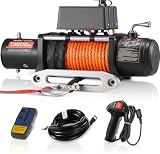
A wireless remote is convenient when the operator can stand well clear of the line, but it depends on batteries and a working radio link. A wired remote is a useful backup and avoids pairing or battery problems. Prefer models that include both, and test controls before a recovery rather than while the line is loaded.
Fit is a frequent source of costly mistakes. Compare the winch’s bolt pattern, overall dimensions, drum position, fairlead opening, and rope exit angle against the bumper or mounting plate drawing. Check clearance for the clutch handle and wiring, and confirm the mount’s capacity. A winch that bolts on but forces the rope to rub a bumper edge is not a suitable fit.
What ownership costs and upkeep look like
Basic compact winches commonly fall in the low hundreds of dollars; established full-size recovery models often run from several hundred to over a thousand dollars. Heavy-duty systems and custom mounting can cost more. Budget for installation, a correctly rated mount, electrical upgrades if required, and replacement rope or other consumables—not only the winch itself.
Rope and electrical connections are common wear points. Before each use, inspect the rope for cuts, abrasion, kinks, or broken strands; check the hook, fairlead, mounting bolts, and wiring; and confirm the clutch and controls work. After use, clean off grit and salt, dry the rope as its maker directs, and respool it evenly under light tension. Avoid shock-loading, side-pulling across the drum, and running the winch until the battery is depleted. These habits help prevent damage that a higher rated line pull cannot compensate for.
Bottom line
For general vehicle recovery, compare 9,500–12,000 lb models first, then narrow the choice by rope type, stated duty limits, water protection, control redundancy, and mounting fit. For light utility work, a compact winch may be more sensible; for frequent heavy pulling, select a documented heavy-duty system and verify the entire electrical and mounting setup. The best electric winches are the ones matched to the load and used within their limits—not simply the ones with the largest number on the box.