How to Maintain Jointer Table Wax and Surface Protection
What's inside
As an Amazon Associate I earn from qualifying purchases. This post may contain affiliate links at no extra cost to you.
Contents
Why Bare Cast Iron Needs Protection
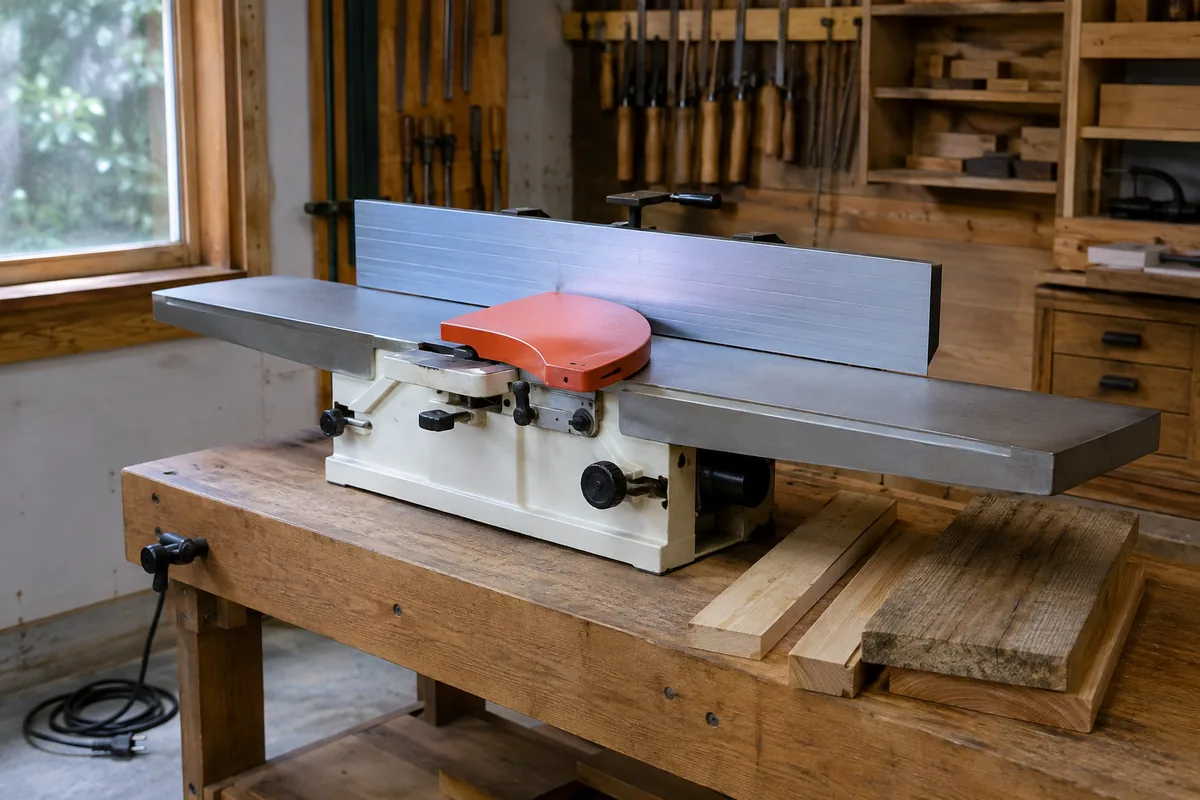
Jointer tables are ground cast iron. It’s flat, heavy, and porous at a microscopic level. Leave it bare and it does two things poorly: it rusts, and it creates friction. Even in a heated shop, moisture from your hands, green wood, or a cold night followed by a warm day will leave a faint orange haze in 24 to 48 hours. That haze becomes pitting if you ignore it, and pitting leaves drag marks on your workpiece forever.
Wax does two jobs at once. It fills those pores with a hydrophobic layer so water can’t sit on the iron, and it lowers the coefficient of friction so boards glide instead of stuttering across the infeed and outfeed tables. A properly waxed jointer takes noticeably less push pressure, which matters for control and for keeping consistent down-pressure over the cutterhead.
When and How Often to Wax
There is no single schedule. Base it on use and environment, not the calendar.
In a climate-controlled shop at 35-50% relative humidity with 5-10 hours of jointer use per week, a good paste wax coat lasts 3 to 6 weeks. In an unheated garage or a basement where humidity regularly exceeds 60%, plan on every 10 to 20 hours of use or every 2 weeks, whichever comes first. If you joint resinous softwoods, MDF, or wet wood, wax breaks down faster and you may need to reapply weekly.
The test is simple: wipe the table clean, then run the back of your hand across it. If it doesn’t feel slick and your hand doesn’t glide effortlessly, it’s time. Another tell is feed resistance. If you have to noticeably push harder or the board hesitates at the infeed table lip, the wax is gone. Don’t wait for visible rust.
What to Use on a Jointer Table
Not all protection is equal, and silicone is the deal-breaker. Any product containing silicone will contaminate wood and cause fish-eye in your finish. Never use automotive wax, silicone spray, or WD-40 as a protectant.
For jointers, you want a thin, hard, silicone-free film that doesn’t transfer to wood.
| Type | Durability | Slickness | Risk to Wood Finish | Best Use Case |
|---|---|---|---|---|
| Silicone-Free Paste Wax | 3-6 weeks in dry shop | Very high | None when buffed properly | Standard maintenance for all jointers |
| Paraffin / Canning Wax Block | 1-5 days | High but uneven | None | Quick rub-on before a heavy milling session |
| Dry PTFE / TopCote-style Spray | 1-2 weeks | Extremely high | Low if labeled for woodworking | High-production shops, sticky woods |
| Sealant + Wax Combo (e.g., Boeshield + Wax) | 2-4 months | Moderate | None | Humid, unheated shops or long-term storage |
For 90% of owners, a quality silicone-free paste wax for cast iron is the right answer and the cheapest long-term. It goes on thin, buffs hard, and doesn’t build up. Paraffin is fine in a pinch — woodworkers have used a block of canning wax rubbed directly on the table for decades — but it wears off quickly and can leave streaks on light-colored woods if applied thick. Dry PTFE sprays are the slickest option and great if you process a lot of maple or cherry that tends to drag, but they provide almost no rust prevention on their own.
If your jointer lives in a damp garage, the best trade-off is a corrosion inhibitor as a base coat, then paste wax on top. The inhibitor handles the rust protection, the wax handles the glide.
How to Strip, Clean, and Wax Step by Step
You don’t need to strip to bare metal every time. Do a full strip 1 to 2 times per year, or when you see uneven patches, sticky buildup, or light rust. Otherwise, a clean-and-recoat is enough.
For a routine recoat: Unplug the jointer. Lower the tables or remove the fence if it gets in the way. Vacuum dust, then wipe the tables with a rag dampened with mineral spirits to cut pitch and old wax. Let it flash off for 5 minutes. Apply a thin coat of paste wax with a clean cotton rag or gray Scotch-Brite pad — thin enough that you can barely see it. If you can see white clumps, it’s too thick. Let it haze for 10 to 15 minutes, then buff hard with a clean, dry cotton towel until the surface is glossy and slick. Do the fence face the same way.
For a full strip and decontamination: After the mineral spirits wipe, use a maroon Scotch-Brite pad with a small amount of mineral spirits to scrub the tables lengthwise, not in circles. This levels light oxidation without scratching the grind marks. Wipe completely clean. Some owners follow with rust remover for cast iron tools only if orange spots remain, but avoid acids and naval jelly unless you have real pitting — they etch the surface if left too long. Once clean and dry, apply two thin coats of paste wax, buffing thoroughly between coats. Two thin coats last far longer than one thick coat.
Temperature matters. Don’t wax a cold table brought in from outside. Let the iron come to room temperature or the wax won’t bond and you’ll get a gummy layer that actually increases friction.
Avoid These Common Mistakes
The most common failure is applying too much wax. A thick coat never fully hardens. It stays soft, collects dust and pitch, and transfers to your wood as a greasy residue that repels stain. If your rag drags when buffing or the table looks cloudy, you used too much. Strip it with mineral spirits and start over with less.
The second mistake is using steel wool. Fine steel wool leaves embedded steel particles that rust overnight and create new spots. Use synthetic pads only. Likewise, don’t use random orbital sanders or sandpaper on jointer tables. You’ll dish the surface around the cutterhead and ruin the flatness you paid for.
Never wax over rust or dust. Wax seals in whatever is underneath. If you trap acidic sawdust or moisture under the film, you accelerate corrosion instead of preventing it. And keep wax off the cutterhead, knives, and belt. Wipe any overspray immediately.
Finally, don’t use cutting board oil, camellia oil, or 3-IN-ONE as a table protectant. They stay oily, attract dust, and provide no real barrier after a day. They are for hand tools, not cast iron tables.
Rust Removal vs. Prevention
If you already have light surface rust — orange dust that comes off on your hand but no pitting — you can save it in 20 minutes. Wipe with mineral spirits, scrub lengthwise with a maroon synthetic pad or 320-grit wet/dry paper lubricated with mineral oil, then clean thoroughly and wax twice. Don’t go coarser than 320 unless you have deep pitting, and if you do, work up through 400 and 600 to restore the sheen.
For heavy rust with pitting, you need to lap more aggressively, but understand the trade-off: every abrasive step removes ground iron and can introduce low spots. If pits are deep enough to catch a fingernail, it’s often better to live with them under a good wax coating than to grind the table unflat chasing perfection. A pitted but waxed table will still joint accurately; a dished table will not.
Prevention is cheaper than restoration. A $15 can of paste wax is enough for 20 to 30 applications on a 6-inch jointer. That’s years of protection. If you are constantly fighting rust despite regular waxing, the problem is humidity, not wax brand. Fix the air, not the coating.
Long-Term Storage and Humid Shops
If the jointer will sit unused for a month or more, or you work in a shop that swings from 40% to 85% humidity, a single coat of paste wax is not enough. Clean the tables, apply a dedicated rust inhibitor like Boeshield T-9, let it dry for 2 to 4 hours, then top with a thin coat of paste wax for slickness. For winter storage in an unheated space, some woodworkers add a fitted cover or even a moving blanket draped over the tables to reduce condensation from temperature swings. Avoid plastic tarps — they trap moisture underneath.
Before using the jointer again after storage, wipe the tables with a mineral spirits rag to remove any excess inhibitor, then re-wax and buff. Check the fence and the cutterhead guard the same way. A light wipe of dry lube for woodworking machines on the fence slide and height adjustment screws keeps those moving parts from seizing without contaminating your stock.
Keep a shop towel dedicated only to buffing wax. Launder it separately without fabric softener, which contains silicone. Store your paste wax sealed tight — if it dries out and crumbles, it won’t form a continuous film. Done right, maintenance takes 8 to 10 minutes and saves hours of rust cleanup and frustrating, jerky cuts.