How to Lubricate Table Saw Height and Tilt Mechanisms
What's inside
As an Amazon Associate I earn from qualifying purchases. This post may contain affiliate links at no extra cost to you.
A table saw’s height and tilt mechanisms work in a dirty environment. Sawdust mixes with old grease, forming an abrasive paste on the elevation screw, worm gear, handwheel shaft, and trunnion pivots. The result is a stiff handwheel, a tilt mechanism that binds near one end of its travel, or a saw that will not hold its setting.
Lubrication is straightforward, but the lubricant matters. Use too little and the mechanism remains rough; use too much and the grease becomes a dust magnet. Before starting, check your saw’s manual. Some manufacturers specify grease, while others call for a dry lubricant on exposed threads.
Contents
What Needs Lubrication
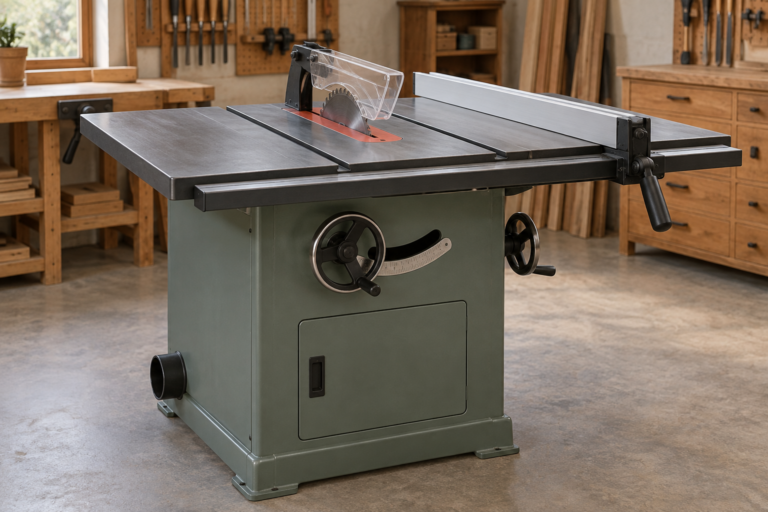
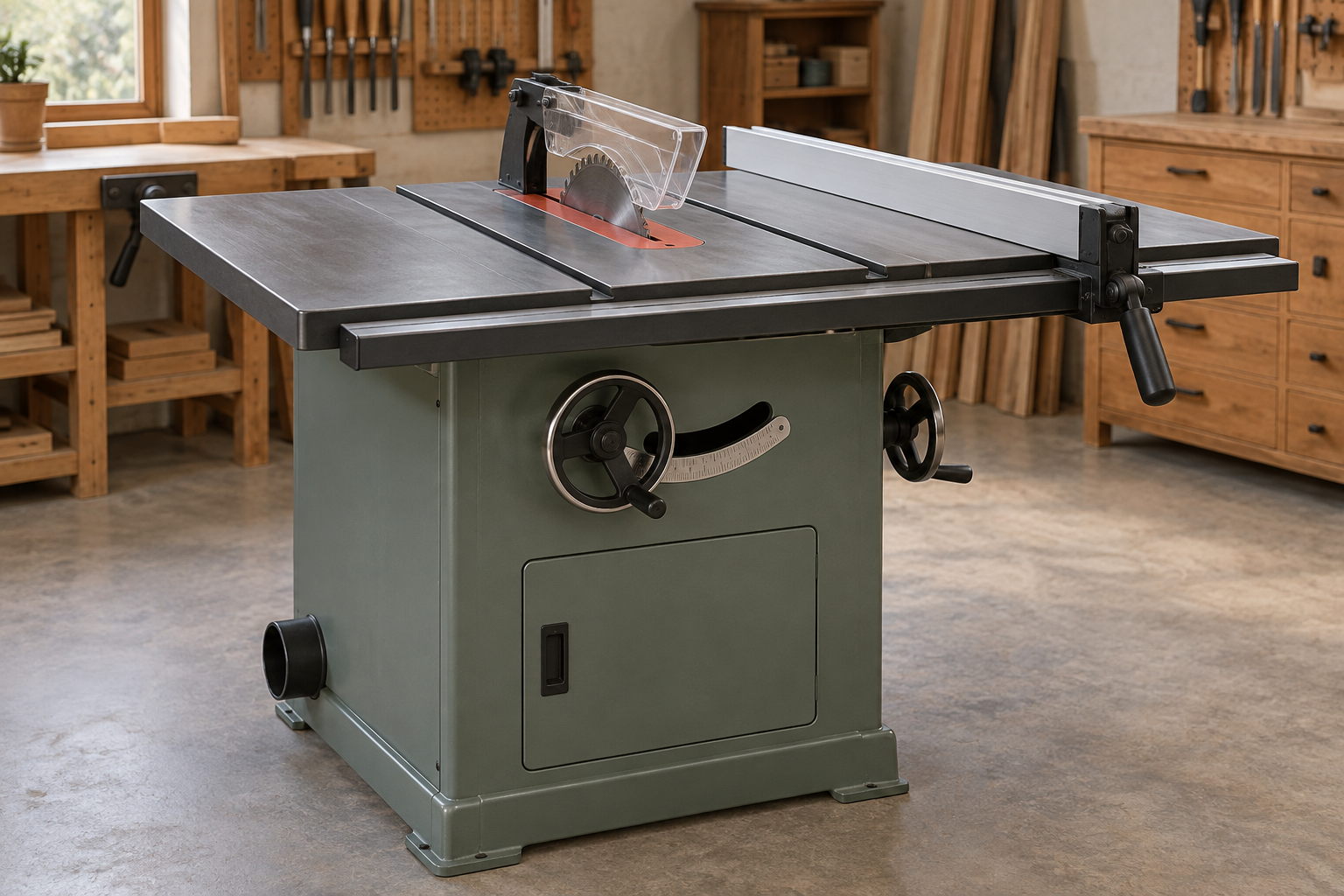
Most stationary table saws have four areas that may need attention:
- Elevation screw: The large threaded shaft that raises and lowers the arbor assembly.
- Elevation worm gear: The gear driven by the height handwheel or gearbox.
- Tilt worm gear and sector gear: These move the arbor assembly through its tilt range.
- Trunnion pivots and sliding surfaces: These allow the arbor assembly to tilt and, on some saws, support alignment adjustments.
The height and tilt handwheel shafts may also have bushings or bearings. These usually need only a small amount of light machine oil if the manufacturer permits it. Do not assume every visible hole is an oil port; some are access holes or adjustment points.
Choose the Right Lubricant
For exposed screws and gears, the best choice depends on the saw’s design and how much dust it produces. A dry PTFE product stays cleaner than conventional grease, but it may not protect heavily loaded worm gears as well. A light lithium or synthetic grease lasts longer, but it collects dust if applied heavily.
| Lubricant | Best use | Advantages | Drawbacks |
|---|---|---|---|
| Dry PTFE lubricant | Elevation screws and exposed sliding parts | Resists forming a thick dust-and-grease paste | Does not provide the same film strength as grease |
| Light lithium or synthetic grease | Worm gears, pivots, and protected threads | Good load capacity and long service life | Attracts sawdust when overapplied |
| Light machine oil | Handwheel shafts and approved bushings | Penetrates small bearing surfaces easily | Runs onto belts, switches, and nearby surfaces |
| Penetrating oil or water-displacing spray | Temporary freeing of stuck parts only | Useful for loosening corrosion | Usually not a durable mechanism lubricant |
A small tube of white lithium grease is adequate for many contractor and cabinet saws. If your shop produces fine MDF dust or you rarely clean the saw, a dry PTFE lubricant is often the cleaner option. The cheaper lubricant is fine when it matches the manual and you apply it sparingly.
Prepare the Saw
Unplug the saw. Remove the throat plate and blade if they obstruct access, and lower the arbor assembly as far as practical. Brush or vacuum loose sawdust from underneath the table and around the trunnions. Do not blow dust deeper into the motor or switch with compressed air.
Move the height and tilt handwheels through their full travel before cleaning. This shows where the mechanism binds and spreads debris across the working surfaces. If a handwheel is extremely difficult to turn, do not force it with a long pipe or wrench. A bent screw, damaged gear, or seized trunnion may be the real problem.
Remove old, hardened grease with a rag, nylon brush, or plastic scraper. For stubborn residue, use a small amount of a suitable degreaser on the rag rather than flooding the mechanism. Keep solvents away from painted surfaces, bearings, electrical parts, and belts unless the manufacturer approves them.
Apply Lubricant Correctly
For a threaded elevation screw, apply a thin continuous film to the threads. A bead roughly 1 to 2 millimeters thick is more than enough; you should still be able to see the thread peaks. Turn the handwheel through its complete range several times, then wipe off excess from the screw and nearby castings.
For worm gears, brush a thin coat onto the gear teeth while slowly turning the handwheel. A pea-sized amount is commonly sufficient for one gear set. Work the grease into the teeth rather than covering the entire housing interior. If the saw has an enclosed gearbox, lubricate it only through the specified service point.
Put a small smear on trunnion pivot surfaces or sliding ways if the manual calls for grease. These parts often need less lubricant than the elevation screw. For handwheel shafts or bushings, one or two drops of light machine oil is usually enough. Wipe away any oil that can migrate toward the motor, belt, or electrical switch.
Check Operation and Maintenance
After lubrication, cycle the height and tilt mechanisms from stop to stop. They should move smoothly without a tight spot, grinding sound, or sudden jump. Lock and unlock the tilt mechanism and verify that the arbor assembly stays put. If the handwheel is still stiff, inspect for misaligned trunnions, a damaged worm gear, bent elevation screw, or packed sawdust inside the housing.
Do not lubricate the blade, arbor flange, belts, brake components, or table surface with these products. Oil or grease in those areas can create slipping, contamination, or a safety hazard.
For a regularly used saw, inspect the mechanism every three months and lubricate about every six to twelve months, depending on dust and use. A hobby saw used a few times each month may need only an annual service. Cleaning is often more important than adding lubricant: a clean, thin film works better than a heavy coating over packed dust.