How to Align a Table Saw Miter Slot with the Blade
What's inside
As an Amazon Associate I earn from qualifying purchases. This post may contain affiliate links at no extra cost to you.
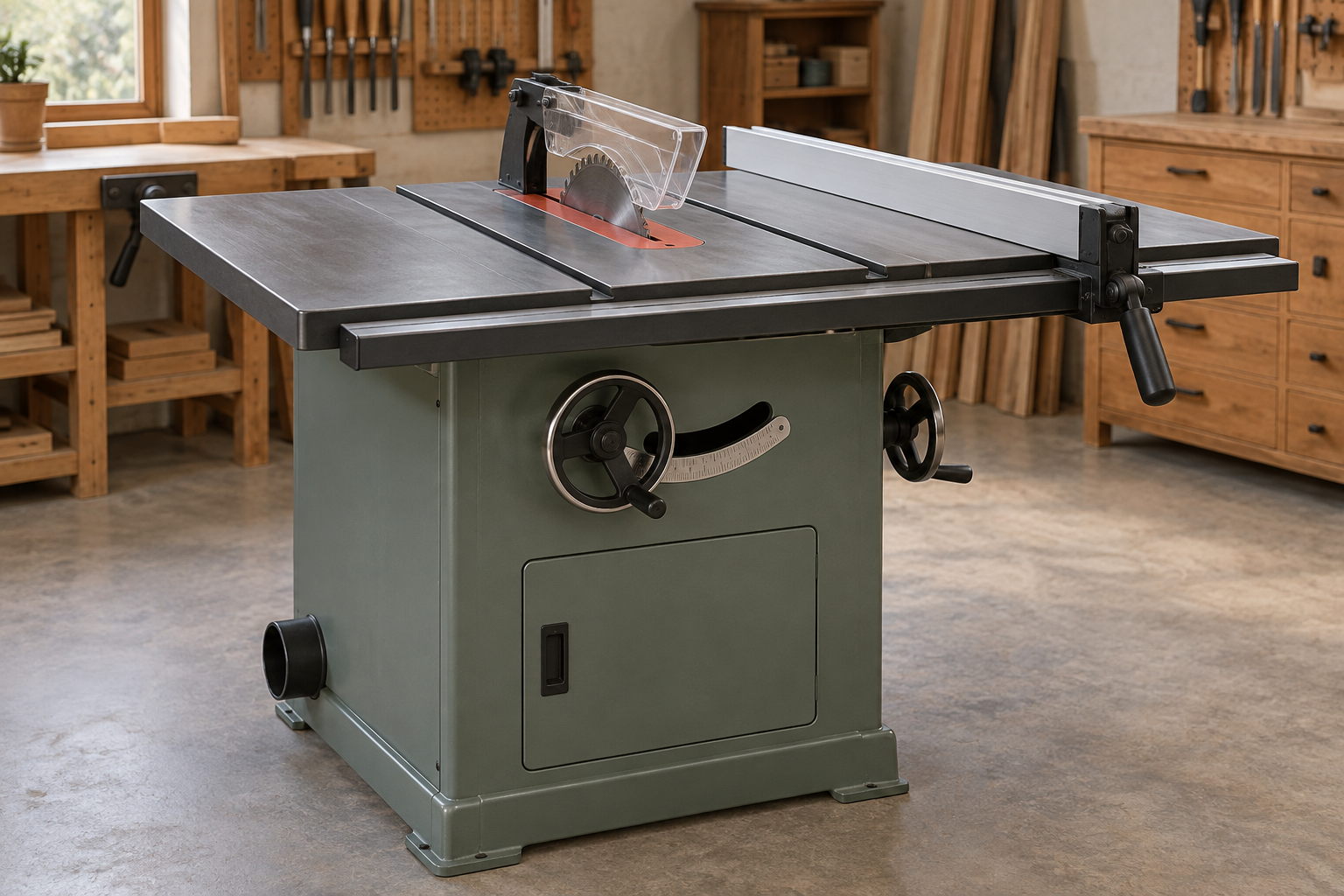
A table saw miter slot should run parallel to the blade, not merely look straight from above. If it is out of alignment, a miter gauge, crosscut sled, or featherboard can push work into the blade as the cut progresses. The result may be burning, inaccurate crosscuts, or kickback.
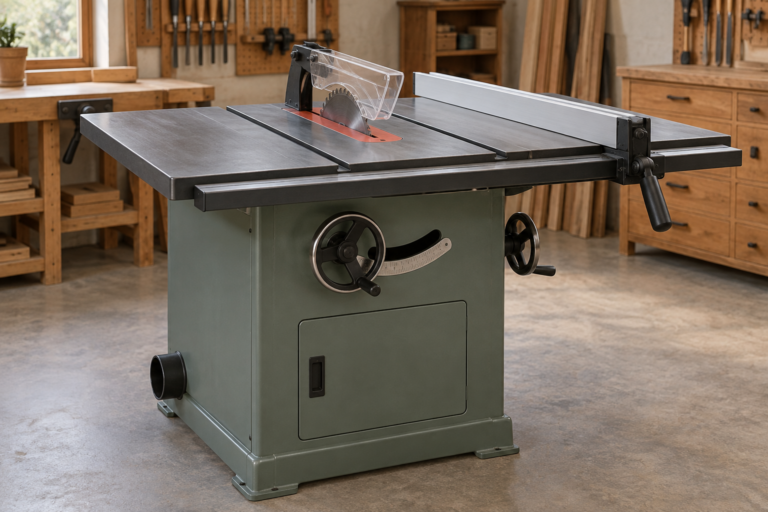
Most table saws allow the blade and trunnion assembly to be adjusted relative to the table. On some saws, the slot is fixed and the blade assembly moves. On others, the table or top must be shifted. Check your saw’s manual before loosening anything, and disconnect the power before making adjustments.
Contents
What You Need
You do not need an expensive alignment system. A reliable setup includes a combination square, a straight piece of hardwood or aluminum, a pencil, and a feeler gauge or accurate ruler. A dial indicator makes the measurement easier to repeat, but it is optional.
For a basic job, a good table saw alignment gauge can reduce guesswork. It is most useful if you regularly set up machines for fine furniture work. For occasional shop use, a straightedge and careful measurements are usually enough.
| Tool | Best use | Trade-off |
|---|---|---|
| Straightedge and feeler gauge | Low-cost alignment checks | Slower and more dependent on technique |
| Combination square | Checking blade squareness and reference marks | Must be accurate and free of burrs |
| Dial indicator | Repeatable parallelism measurements | Costs more and needs a stable holder |
| Alignment plate or gauge | Fast, repeatable setup work | Useful mainly for frequent adjustments |
Prepare the Saw
Unplug the saw. Remove the throat plate, blade guard, splitter, and riving knife if they interfere with access. Clean sawdust from the table, miter slot, arbor flange, and blade. A small chip under the throat plate or a dirty arbor flange can create a false alignment problem.
Install a clean, sharp blade and raise it fully or nearly fully. A blade with bent teeth or excessive runout will make alignment readings inconsistent. If the blade wobbles visibly, check the blade and arbor before adjusting the trunnions.
Set the blade to 90 degrees with a reliable square. The square should touch the blade body, not a tooth, because carbide teeth can be wider than the steel plate. Lock the blade angle firmly. Alignment is meaningless if the blade tilts while you measure it.
Check the Miter Slot Against the Blade
Choose one miter slot as your reference. The slot closest to the blade is usually convenient, but either slot works. Slide a straight piece of hardwood or an alignment bar into the slot. It should fit without noticeable side-to-side play. If the bar rocks in the slot, use a better-fitting bar or an alignment gauge; do not try to compensate for a loose fit.
Rotate the blade by hand so one tooth is at the front of the blade, just above the table. Mark that tooth with a pencil. Position the straightedge or bar so it lightly touches the marked tooth. Do not push the tooth sideways. Lock the bar or hold it firmly, then slide the blade toward the back of the table.
Rotate the same marked tooth to the rear and compare the gap between the tooth and the bar. Measure the difference with a feeler gauge or ruler. Repeat the test with a second tooth to make sure a damaged or unusually wide tooth is not affecting the result.
A difference of about 0.003 inch or less over the blade’s diameter is excellent for general woodworking. Up to approximately 0.005 inch is normally acceptable for construction work. If the rear of the blade is closer to the bar than the front, the blade is pointing toward the slot. If the rear gap is larger, it is pointing away from the slot.
Make the Adjustment
On many contractor and hybrid saws, the blade is attached to a trunnion assembly below the table. Loosen the trunnion mounting bolts just enough that the assembly can shift, but not so much that it moves uncontrollably. The number and location of the bolts vary widely, so use the manual as your guide.
Make small movements. A light tap with a hardwood block is safer than striking the trunnion directly with a steel hammer. After each tap, snug the bolts, rotate the blade, and repeat the front-to-back measurement. Tightening the bolts can pull the assembly out of position, so always recheck after final tightening.
Some cabinet saws allow the table to shift instead of the trunnions. Loosen the table mounting bolts and move the top in the required direction. This can be easier than moving a heavy trunnion assembly, but it may disturb the alignment of extension wings or a router table. Mark the original position before loosening anything.
If your saw uses a sliding table or has a removable top, check that the table is seated correctly before changing alignment. A mounting bolt that is bent, missing, or tightened against a chip can make the adjustment impossible to hold.
Verify the Result With a Cut
After the blade is parallel to the slot, reinstall the throat plate, guard, splitter, and riving knife. Confirm that the riving knife follows the blade without rubbing. Then make a test cut in straight, flat scrap at least 24 inches long.
For a rip cut, compare the cut edges and look for burn marks near the back of the blade. Burning at the front can indicate a dull blade or poor feed technique; burning at the rear often indicates misalignment. For a crosscut, use a miter gauge or sled and check the cut with a square.
A simple five-cut test is useful for a crosscut sled, but it does not replace blade-to-slot alignment. The sled’s fence may be out of square even when the saw is correctly adjusted. Diagnose the saw first, then tune the sled.
When an Alignment Gauge Is Worth Buying
If you set up multiple stationary machines, use a dial indicator or an table saw dial indicator alignment kit. It makes changes easier to quantify and helps you find movement while tightening bolts. The benefit is repeatability, not magically higher cutting accuracy.
For a single saw that needs adjustment once or twice a year, the cheaper method is fine. Spend the money instead on a flat reference bar, an accurate square, and a sharp blade. Alignment should be checked whenever the saw is moved, the blade assembly is serviced, or cuts begin showing unexplained burning and drift.