
What's inside
As an Amazon Associate I earn from qualifying purchases. This post may contain affiliate links at no extra cost to you.
For a small woodworking shop, the most practical setup is a dust extractor or shop vacuum with a cyclone separator for hand tools and sanders, plus a single-stage dust collector with larger hose for planers and table saws. Add an air filter for fine dust. This guide explains the pieces, how they fit together, and which products are worth a look.
| Pick | Best for | Key feature |
|---|---|---|
| Oneida Dust Deputy Deluxe | Adding a cyclone to a shop vacuum | Keeps most chips out of the vacuum filter |
| Shop Fox W1685 Dust Collector | Planers, jointers and saws | Higher airflow than a vacuum |
| DeWalt DWV012 Dust Extractor | Sanders and portable tools | Auto-start with compatible tools |
| WEN 3410 Dust Collector | Budget single-stage collection | Compact and simple design |
| Rockler Dust Right Hose Kit | Connecting tools to a vacuum | Fittings for different port sizes |
Contents
Our Top Picks

Why Dust Collection Matters
Wood dust is more than a mess. Fine dust stays in the air for a long time, gets into lungs, and can irritate the eyes and skin. Some woods are more irritating than others, and long-term exposure is a health concern. Good collection also protects your tools by keeping chips out of motors and adjustments, and it improves finishes because less dust lands on wet surfaces. Even in a small shop, a thoughtful setup makes a big difference.
1. Oneida Dust Deputy Deluxe Cyclone
A cyclone separator sits between your tool and a vacuum and spins chips out of the air stream into a bucket. That means your vacuum filter stays cleaner and keeps suction longer. The Dust Deputy is a favorite for small shops because it is inexpensive and effective. It does not remove fine dust by itself, so a good filter on the vacuum is still needed. It is ideal for sanders, routers, and small tools.
Oneida Dust Deputy Deluxe Cyclone
2. Shop Fox W1685 Dust Collector
Planers and table saws create a high volume of chips, and shop vacuums cannot keep up. A single-stage dust collector moves a lot more air through larger hose. The Shop Fox W1685 is a common pick for hobby shops that need to handle a planer or jointer. It needs space, a power outlet that can handle the load, and a way to hang hoses. Remember that collectors move air at lower suction, so keep hose runs short.
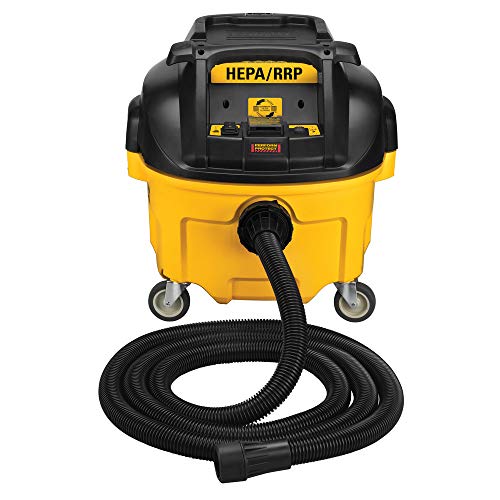
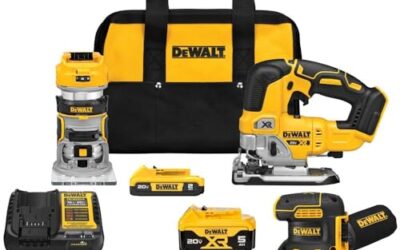
3. DeWalt DWV012 Dust Extractor
A dust extractor is like a high-quality shop vacuum designed to work with power tools. The DWV012 offers automatic start when connected to compatible tools, so the extractor runs when you pull the trigger. This is convenient for sanders and handheld saws. It has strong suction and decent filtration. It is not as large as a collector, so it is best for portable tools rather than a planer. Check which hose diameter works with your tools.
4. WEN 3410 Dust Collector
For a woodworker on a budget, the WEN 3410 is a simple way to add chip collection. It uses a bag system and a modest motor, which suits a few machines used one at a time. Expect to empty the bags often, and note that fine dust escapes through cheaper bags unless you upgrade the filter. It is a decent stepping stone, and you can improve it with a better filter or a cyclone later.
5. Rockler Dust Right Hose Kit
Hoses and fittings are the unglamorous part of a dust system, but they decide how well it works. A kit with adapters for different port sizes helps you connect tools to a vacuum or collector without tape and guesswork. Choose smooth-bore hose where possible, because ridged hose creates turbulence. Check your tool ports and match the diameters before ordering.
Planning the Layout
A small shop does not need ductwork on every wall. Start by listing your tools and ranking them by how much dust they create. Planers, table saws, and sanders produce the most. Place a collector close to the heaviest producer and run a flexible hose, moving it between machines as needed. Use blast gates, simple sliding doors in the hose, to direct airflow to one tool at a time.
Keep hose runs short and avoid sharp bends, since both reduce airflow. Where you can, use larger diameter hose for the main run and reduce at the tool. Mount a separator bucket where you can empty it easily, and store spare bags or filters nearby. For fine dust, add an ambient air filter hung from the ceiling, and run it during and after sanding. Finally, wear a respirator for dusty tasks regardless of how good your setup is.
Budgeting and Building in Stages
You do not have to buy everything at once. A sensible order is to start with personal protection, then add a vacuum or extractor with a cyclone for hand tools and sanders. Once you buy a planer or a jointer, add a collector or upgrade to a larger hose. Air filtration comes next, because fine dust that escapes the system is still a problem. Each stage improves your shop without a large outlay.
Think about the long-term costs, too. Filters and bags are consumables, and bins need regular emptying. A system that is awkward to maintain will fall out of use. Choose a design where you can reach the bin and filter easily, and set up a spot for waste so that emptying is a quick job. It is also worth checking that your electrical circuit can handle the motor, especially if you run a collector and a planer at the same time.
Noise is another factor in small shops, particularly garages in residential areas. Dust collectors can be loud, so plan to wear hearing protection and consider where the unit sits. Mounting it on a rubber pad or a shelf away from the main work area can help. Finally, think about whether to vent outside. It is tempting in a small shop, but fine dust still needs filtering, and you lose heated or cooled air in the process.
Common Mistakes
- Relying on a shop vacuum for a planer. It clogs quickly and does not move enough air.
- Using long, narrow hose. Airflow drops sharply.
- Skipping filtration. Cheap bags release fine dust back into the room.
- Not emptying the bin. A full bucket reduces cyclone efficiency.
- Forgetting personal protection. Masks matter even with collection.
Frequently Asked Questions
Do I need both a vacuum and a collector?
Many shops use both. A vacuum with a cyclone handles hand tools, while a collector handles large chips from stationary machines.
What is the difference between a dust extractor and a shop vac?
Extractors usually have better filtration and tool integration, while shop vacuums are more general-purpose.
How do I handle fine dust?
Use a good filter, an air cleaner, and a respirator. Fine dust is the part that stays in the air.
Is a cyclone worth it?
Yes, for most small shops. It keeps filters clean and reduces maintenance.
Conclusion
You do not need an elaborate system to improve your shop air. Based on specifications and reviewer feedback, a cyclone, a capable vacuum or extractor, and a collector for larger machines cover most needs. Plan short hose runs, add filtration, and protect yourself with a respirator.
As an Amazon Associate we earn from qualifying purchases.
Related guides
More from Amazon
Programs that pair well with the guide above. Offers and eligibility are set by Amazon and may change.
A free business account with business pricing and bulk-buying tools for work, shop or home office.
Create a business accountFree shipping on eligible items, Prime Video and more. Eligible new members can start with a free trial.
Start a Prime free trialAudiobooks and podcasts to listen to on the go. Eligible new members can start with a free trial.
Try Audible freeAd-free music streaming. Eligible new subscribers can start with a free trial.
Try Music Unlimited freeAs an Amazon Associate we earn from qualifying purchases.


Write Your Review
No reviews yet. Be the first to share your experience!