
What's inside
- Where Cordless Has Caught Up
- Where Corded Tools Still Win
- 1. DeWalt DCD791D2 20V Max XR Drill Driver Kit
- 2. Milwaukee 2803-20 M18 Fuel Drill Driver
- 3. Makita XFD131 18V LXT Brushless Drill Driver
- 4. DeWalt DCS570B 20V Max Circular Saw
- 5. Milwaukee 2732-20 M18 Fuel Circular Saw
- How to Choose a Battery Platform
- Battery Care and Runtime Tips
- Common Mistakes
- Frequently Asked Questions
- Conclusion
As an Amazon Associate I earn from qualifying purchases. This post may contain affiliate links at no extra cost to you.
Cordless tools now handle most woodworking tasks, but corded tools still make sense for sustained, high-load work such as planing, long rips, and heavy sanding. The practical question is no longer whether battery tools are good enough; it is which battery platform to commit to and which tools to keep plugged in. Here is a balanced look, with five tools that show where the trend stands.
| Pick | Best for | Key feature |
|---|---|---|
| DeWalt DCD791D2 Drill Driver Kit | All-round drilling and driving | Brushless motor, compact body |
| Milwaukee 2803-20 M18 Fuel Drill Driver | Heavy-duty drilling on the M18 system | High torque in a bare tool |
| Makita XFD131 18V LXT Drill Driver | Compact, smooth drilling | Brushless motor with LXT compatibility |
| DeWalt DCS570B Circular Saw | Cordless crosscuts and framing | Brushless saw for 20V batteries |
| Milwaukee 2732-20 M18 Fuel Circular Saw | Rip cuts and sheet goods on battery | Strong motor and good dust blower |
Contents
- Where Cordless Has Caught Up
- Where Corded Tools Still Win
- 1. DeWalt DCD791D2 20V Max XR Drill Driver Kit
- 2. Milwaukee 2803-20 M18 Fuel Drill Driver
- 3. Makita XFD131 18V LXT Brushless Drill Driver
- 4. DeWalt DCS570B 20V Max Circular Saw
- 5. Milwaukee 2732-20 M18 Fuel Circular Saw
- How to Choose a Battery Platform
- Battery Care and Runtime Tips
- Common Mistakes
- Frequently Asked Questions
- Conclusion
Where Cordless Has Caught Up
Brushless motors and improved lithium-ion cells have changed the equation. A modern cordless drill driver delivers torque that once required a cord, and a cordless circular saw can cut through lumber and plywood all day with a couple of batteries. For tasks where you move around, such as assembly, installing hardware, or working on a site, cordless tools are more convenient and often safer, because you are not dragging a cord across the floor.
Cordless tools have also become quieter in many cases and gain features such as electronic speed control and better dust handling. The industry has also expanded each brand’s battery platform, so you can swap one battery among a growing list of tools. That makes the platform decision more important than any single tool.
Where Corded Tools Still Win
Corded tools do not run out of battery, which matters for planers, large sanders, stationary machines, and long sessions with a router table. They are often lighter at the same power because they do not carry a battery, and they usually cost less per unit of power. For a shop where you stay near outlets, corded tools remain an excellent value.
The weak point of corded tools is the cord itself, which can snag and limit where you can use them. For dust-producing work, a corded tool attached to a vacuum is often a cleaner solution than a cordless tool with a battery that blocks the port. The best shops tend to combine both types, picking each by task.
1. DeWalt DCD791D2 20V Max XR Drill Driver Kit
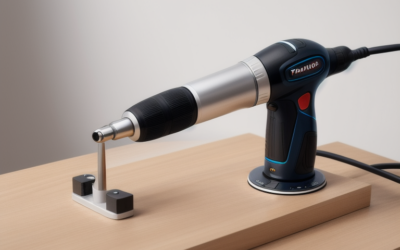
This compact brushless drill driver is a common choice for woodworkers who want a lightweight tool for daily use. It has enough torque for large screws and mid-size bits, and it comes with two batteries and a charger. It is a good entry point to the DeWalt 20V platform. It is not the most powerful option for heavy auger bits, so look at higher-end models for that. Check that the kit includes the accessories you need.
DeWalt DCD791D2 Drill Driver Kit
2. Milwaukee 2803-20 M18 Fuel Drill Driver
If you want a drill that can handle serious work, the Milwaukee M18 Fuel drill driver is designed for heavy drilling and driving. It is typically sold as a bare tool, so you must have or buy M18 batteries and a charger. That makes sense if you are building a tool collection around Milwaukee. It is a bit larger than compact drills, so consider the weight if you will use it overhead. Pair it with a good bit set.
Milwaukee 2803-20 M18 Fuel Drill Driver
3. Makita XFD131 18V LXT Brushless Drill Driver
Makita’s LXT platform is well regarded for its range of tools and its smooth, compact designs. The XFD131 is a brushless drill driver with good balance, which makes it comfortable for long assembly sessions. It is a sound choice if you plan to add other LXT tools such as impact drivers and saws. As with other bare tools, you must verify what is included. Compare it with other drills in the same class to match your hand size.
Makita XFD131 18V LXT Drill Driver
4. DeWalt DCS570B 20V Max Circular Saw
A cordless circular saw lets you break down plywood on sawhorses, make crosscuts away from outlets, and cut lumber on a site. The DCS570B is a brushless 7-1/4 inch saw that fits the DeWalt 20V battery family. It is well suited to carpentry and general woodworking, and it pairs with a track or a straightedge for precision. Runtime depends on the battery and the material, so carry a spare if you will cut a lot.
5. Milwaukee 2732-20 M18 Fuel Circular Saw
This saw targets users who want corded-like performance without a cord. It is designed to power through dense lumber and long rip cuts, and the blower keeps the cut line clear. As with other M18 tools, it is sold bare. It is heavier than some alternatives when a large battery is attached, so evaluate comfort. If you already own M18 batteries, it is an easy addition.
Milwaukee 2732-20 M18 Fuel Circular Saw
How to Choose a Battery Platform
Look at the tools you want in five years
Browse each brand’s lineup for the tools you plan to buy, such as routers, sanders, vacuums, and lighting. A platform with a gap in your key tool may force you to mix systems.
Consider batteries, not just tools
Batteries and chargers are a major part of the cost. Buying bare tools after your first kit is the economical way to expand. Make sure you understand the amp-hour ratings and which batteries suit high-draw tools.
Check service and availability
Think about where you will buy batteries and replacements, and how long each platform has been supported. A platform that is easy to buy into locally is easier to live with.
Do not feel locked in
Adapters exist between some brands, but they come with tradeoffs. It is usually better to commit to one main platform and use corded or alternative tools for the gaps.
Battery Care and Runtime Tips
Batteries are consumables, and how you treat them affects their lifespan. Store them at moderate temperatures, away from a hot truck or a freezing garage. Avoid draining them completely, and do not leave them on the charger for months at a time unless the manufacturer says it is fine. When you plan a long project, rotate two or three batteries so each has time to cool between uses.
Runtime depends on the tool and the task. Sawing dense hardwood draws far more current than driving screws, so a battery that lasts all day on assembly may drain quickly on a long rip. Larger amp-hour batteries last longer but add weight, which you will notice on overhead work. Match the battery to the job rather than always using the biggest one. It is also worth checking that the charger is fast enough for your pace, since a slow charger leaves you waiting.
Common Mistakes
- Buying tools from several platforms. You end up with too many chargers.
- Ignoring weight with large batteries. Comfort matters on overhead work.
- Using a cordless tool for continuous heavy planing. Batteries drain quickly.
- Skipping a spare battery. A single battery can stop a project.
- Storing batteries in extreme heat or cold. It shortens their life.
Frequently Asked Questions
Are cordless tools as powerful as corded ones?
For many tasks, yes. For continuous high-load work, corded tools still have the advantage.
How many batteries do I need?
Two is a good start for a drill and saw, so one can charge while you work.
Are brushless motors worth it?
They are more efficient and usually last longer, which is why most current premium tools use them.
Should I keep my corded tools?
Yes. They are often a better fit for stationary or sustained work and cost less to run.
Conclusion
The best shops mix both. Based on specifications and reviewer feedback, cordless tools shine for mobility and convenience, while corded tools still dominate long, heavy tasks. Choose one battery platform carefully, buy bare tools to expand, and keep the corded tools that serve you well.
As an Amazon Associate we earn from qualifying purchases.
Related guides
More from Amazon
Programs that pair well with the guide above. Offers and eligibility are set by Amazon and may change.
A free business account with business pricing and bulk-buying tools for work, shop or home office.
Create a business accountFree shipping on eligible items, Prime Video and more. Eligible new members can start with a free trial.
Start a Prime free trialAudiobooks and podcasts to listen to on the go. Eligible new members can start with a free trial.
Try Audible freeAd-free music streaming. Eligible new subscribers can start with a free trial.
Try Music Unlimited freeAs an Amazon Associate we earn from qualifying purchases.



Write Your Review
No reviews yet. Be the first to share your experience!