
Our Top Picks


What's inside
As an Amazon Associate I earn from qualifying purchases. This post may contain affiliate links at no extra cost to you.
A cabinet maker does not buy a floor standing band saw for one cut. The same machine has to resaw wide boards into bookmatched door panels, rip veneer, cut curved aprons and shaped brackets, and leave a straight edge that needs little cleanup before glue-up. Too small a saw means slow feeds, wandering cuts and burnt edges on hardwood, while too large a saw crowds the shop and may need wiring the room lacks. The decision is about matching resaw height, motor power and table support to the stock you cut most often.
This guide is for cabinet makers who build kitchens, fitted wardrobes and furniture from solid wood and sheet goods, for small professional shops that resaw every week, and for serious home woodworkers setting up a permanent shop. The four saws below were chosen from the names and specifications shown on their Amazon product pages, with an emphasis on floor standing frames, useful resaw capacity and fences that hold a setting through a long cut.
Contents
Quick Picks
As an Amazon Associate we earn from qualifying purchases.
| Product | Best for | Key spec from title |
|---|---|---|
| JET JWBS-14SFX 14-Inch Woodworking Bandsaw | Everyday cabinet resawing in a permanent shop | 1-3/4 HP, 115/230V |
| RIKON Power Tools 10-326 14-Inch Deluxe Bandsaw | Frequent blade changes and drift adjustment | 14-inch deluxe bandsaw |
| Powermatic PM1500 15-Inch Woodworking Bandsaw | Heavy hardwood resawing in a professional shop | 3 HP, 230V |
| Powermatic PWBS-14CS 14-Inch Woodworking Bandsaw | A solid 14-inch saw for mixed cabinet work | 1-1/2 HP, 115/230V |
How to Choose
Throat and Resaw Capacity
Resaw capacity is the height of stock that fits between the table and the raised upper blade guide, and throat capacity is the distance from the blade to the frame. For cabinet work, resaw height matters first, because it decides whether a wide board can be split into two bookmatched panels in one pass. A saw with 13 inches of resaw height handles most door and drawer-front stock, while a saw under 9 inches forces wide boards to be cut in stages. Throat depth matters for curves in wide panels, since a shallow throat limits how far a panel can turn. Measure the widest boards you resaw regularly, then choose a saw that clears that size with room to spare.
Motor Power and Wiring
Motor power decides whether a saw keeps its blade speed through thick hardwood or slows, drifts and burns. A 1-3/4 HP motor suits most cabinet resawing in maple, oak and walnut, provided the blade is sharp and the feed is steady. A 1-1/2 HP motor can serve a mixed shop that resaws occasionally and cuts curves more often, but it needs a slower feed on wide stock. A 3 HP motor suits a professional shop that resaws tall hardwood daily, yet it usually needs a 230V circuit, so check the panel before ordering and confirm the voltage the saw is prewired for.
Blade Speed and Blade Choice
Blade speed, given in feet per minute, changes how cleanly a saw cuts different materials. A single speed around 3000 FPM suits general wood cutting and keeps the choice simple for a shop that mainly cuts hardwood and sheet goods. Two speeds give more room: a lower speed near 1445 FPM suits dense hardwood and resawing, where control matters more than speed, while a higher speed near 2950 FPM suits softer wood and faster ripping. Blade width matters just as much. A narrow blade near 1/8 inch follows tight curves, while a wide blade near 3/4 inch tracks straighter for resawing. Check blade length and the widths the saw accepts before buying blades.
Table, Fence and Dust Collection
A cabinet saw earns its keep on long, straight cuts, so the table and fence deserve close attention. A large cast iron table supports wide panels without tipping, and a table that tilts to 45 degrees covers bevel cuts on door frames and angled parts. Look for a fence that locks square, adjusts for drift without tools, and stands tall enough to support a wide board on edge during resawing. A short fence lets tall stock lean and wander, which shows up as uneven veneer thickness. Dust collection also matters, since fine dust settles on finished parts. Check the dust port size and whether your collector can reach the saw without a long hose run across the floor.
The 4 Best Options
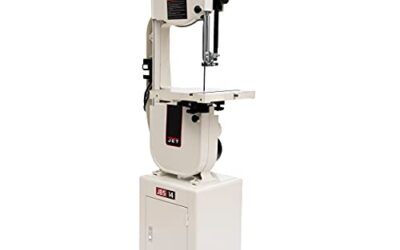
JET JWBS-14SFX 14-Inch Woodworking Bandsaw
The JET JWBS-14SFX fits a cabinet maker who wants one dependable floor standing saw for daily resawing, ripping and curved work without moving up to a much larger frame. Its 13-inch resaw height covers wide door panels and drawer fronts, and the large cast iron table gives long boards steady support through the cut. The steel frame suits a permanent shop position, where the saw stays put and the fence stays set. A maker who resaws hardwood several times a week and still needs to shape aprons and brackets will find this size a practical middle ground between a benchtop saw and a heavy industrial machine.
Specs
- 14-inch woodworking bandsaw, model JWBS-14SFX, stock number 714400K
- Motor: 1-3/4 HP, 115/230V, single phase, prewired for 115V
- Resaw capacity: 13 inches; throat capacity: 13-1/2 inches
- Blade length: 116 inches; blade width from 1/8 inch to 3/4 inch
- Blade speed: 3000 FPM
- Table: cast iron, 21 x 17 inches, tilts to 45 degrees
- Dual 4-inch dust ports
- Net weight: 272 pounds
Best for: Cabinet makers who resaw wide hardwood panels most weeks and want a permanent 14-inch floor saw.
Watch out for: Check floor space, a 20-amp circuit, and help for moving a 272-pound machine, and confirm whether a blade is included before ordering.
RIKON Power Tools 10-326 14-Inch Deluxe Bandsaw

The RIKON 10-326 fits a cabinet maker who changes blades often and values quick, tool-free adjustment over raw size. Its two blade speeds suit a shop that moves between dense hardwood resawing and faster work in softer stock, and the quick-adjust fence helps when drift needs correcting between cuts. The spring-loaded, tool-free blade guides shorten setup time, which matters when one day brings veneer slicing, curved brackets and straight ripping in turn. This saw suits a small professional shop where one person does the setup and cutting, and where a fence reset in moments saves more time than extra horsepower would.
Specs
- 14-inch deluxe bandsaw, model 10-326
- Motor: 1-3/4 HP, 115/230V
- Cutting capacity: 13 inches
- Blade length: 111 inches; blade width from 3/16 inch to 5/8 inch
- Blade speeds: 1445 and 2950 FPM
- Table: cast iron, 21-1/2 x 15-3/4 inches
- Quick-adjust rip fence with 6-inch tall resaw position
- Tool-free, spring-loaded blade guides
- Warranty: 5 years
Best for: Cabinet makers who switch blades and adjust the fence often and want tool-free guides.
Watch out for: Check the 5/8-inch maximum blade width against your resaw blade plans, and measure floor space and delivery access for a heavy floor standing saw.
Powermatic PM1500 15-Inch Woodworking Bandsaw
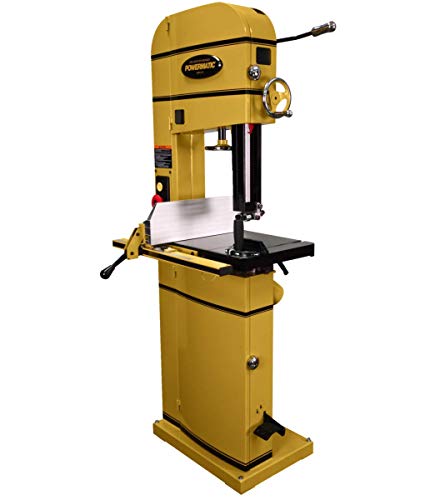
The Powermatic PM1500 fits a professional cabinet shop that resaws tall, dense hardwood in volume and needs extra power and mass to keep cuts straight. Its 3 HP motor and 15-inch frame suit wide boards that would slow a smaller saw, and the heavy cast iron construction helps damp vibration during long cuts. The included fence assembly, miter gauge and resaw pin cover the main cabinet tasks from the start, while toolless adjustments shorten setup between jobs. This is the saw for a shop where resawing is daily work and the machine earns a fixed position with proper wiring and dust extraction.
Specs
- 15-inch woodworking bandsaw, model PM1500, part number 1791500
- Motor: 3 HP, 230V, single phase
- Blade length: 153 inches
- Material: alloy steel and cast iron
- Special features: brake and toolless adjustments
- Included components: bandsaw, blade, fence assembly, miter gauge, resaw pin and handle, manual, warranty card
- Item weight: 394 pounds
- Warranty: 5 years
Best for: Professional cabinet shops that resaw tall hardwood daily and can supply 230V power.
Watch out for: Confirm a 230V circuit, a clear delivery route for a 394-pound machine, and enough floor space for a permanent position with dust extraction.
Powermatic PWBS-14CS 14-Inch Woodworking Bandsaw
The Powermatic PWBS-14CS fits a cabinet maker who wants a solid 14-inch floor saw for mixed work without stepping up to a 3 HP machine or a 230V-only supply. Its 1-1/2 HP motor handles regular ripping, curved cuts and moderate resawing, while the large two-piece cast iron table supports panels and case parts without flexing. The balanced nine-spoke cast iron wheel helps the saw run smoothly, which shows in cleaner edges on visible cabinet parts. This saw suits a small shop that builds cabinets in batches and resaws stock that is wide but not at the limit of the machine.
Specs
- 14-inch woodworking bandsaw, model PWBS-14CS, item model number 1791216K
- Motor: 1-1/2 HP, 115/230V, single phase
- Table: extra large, two-piece cast iron
- Balanced nine-spoke cast iron wheel
- Surface recommendation: wood
- Power source: corded electric
Best for: Small cabinet shops that need a steady 14-inch saw for mixed ripping, curves and moderate resawing.
Watch out for: Check the available circuit and the saw voltage setting on delivery, and plan floor space and help for moving a heavy cast iron floor saw.
Which One Fits Your Situation
You Resaw Wide Panels Every Week
Choose the JET JWBS-14SFX. Its 13-inch resaw height, 1-3/4 HP motor and large cast iron table cover bookmatched door panels and drawer fronts without forcing wide boards through in stages. The dual dust ports also help in a shop where resawing produces a steady stream of fine dust, and the 116-inch blade is a common size to replace.
You Change Blades and Settings Several Times a Day
Choose the RIKON 10-326. Its tool-free blade guides, quick-release blade tension lever and quick-adjust fence shorten the setup between veneer, curves and ripping. Two blade speeds add flexibility when the day moves from dense hardwood to softer stock, and the 13-inch cutting capacity still covers most cabinet panels without a larger frame.
You Run a Professional Shop With Heavy Hardwood
Choose the Powermatic PM1500. Its 3 HP motor, 15-inch frame and 394-pound build hold blade speed through tall hardwood that would slow a smaller saw. The included fence, miter gauge and resaw pin cover the main cabinet tasks, provided the shop has 230V power and a fixed position for the machine.
You Need One Steady Saw for Mixed Cabinet Work
Choose the Powermatic PWBS-14CS. Its 1-1/2 HP motor and large cast iron table handle ripping, curves and moderate resawing in a small shop, without the wiring and floor demands of the larger Powermatic. It suits batch cabinet work where no single cut dominates the week, and its dual-voltage motor gives more wiring options than a 230V-only machine.
Common Mistakes
- Buying on wheel size alone and ignoring resaw height, so wide panels still cannot be split in one pass.
- Choosing a motor that needs 230V without checking the panel, then finding no free circuit near the saw position.
- Fitting a narrow blade for resawing, which wanders and leaves uneven veneer, instead of a wide blade with a low tooth count.
- Skipping fence setup and drift adjustment, then blaming the blade for cuts that wander.
- Forgetting dust collection, so fine dust settles on cabinet parts and clogs the lower wheel housing.
Frequently Asked Questions
What resaw capacity does a cabinet maker need?
Most cabinet makers need at least 12 to 13 inches of resaw height to split wide boards into bookmatched door and drawer panels in one pass. A smaller capacity still works for narrow stock and curves, but wide panels then need staged cuts or another machine. Measure the widest boards you resaw regularly and choose a saw that clears that height with room to spare.
Is a 14-inch band saw enough for cabinet work?
Yes, for most cabinet shops a 14-inch floor standing saw is enough. It handles resawing, ripping and curved cuts in the stock sizes used for doors, drawers and case parts. A larger 15-inch or 17-inch saw helps a professional shop that resaws tall hardwood daily, but it adds weight, floor space and wiring demands that a smaller shop may not need.
What blade should I use for resawing cabinet panels?
Use a wide blade, usually 1/2 inch to 3/4 inch where the saw allows it, with a low tooth count for clearing sawdust from a deep cut. A wide blade tracks straighter and leaves a more even veneer thickness. Check the saw listing for its blade length and its minimum and maximum blade widths before ordering, since lengths differ between models.
How much floor space does a floor standing band saw need?
Allow space for the saw footprint plus room to feed long boards in and out, room to open the wheel doors for blade changes, and a clear path to the dust port. A 14-inch saw is roughly a metre tall and needs a permanent position, while a heavier 15-inch saw needs more clearance and help to move. Measure the delivery route as well as the final position.
Related guides
More from Amazon
Programs that pair well with the guide above. Offers and eligibility are set by Amazon and may change.
A free business account with business pricing and bulk-buying tools for work, shop or home office.
Create a business accountFree shipping on eligible items, Prime Video and more. Eligible new members can start with a free trial.
Start a Prime free trialAudiobooks and podcasts to listen to on the go. Eligible new members can start with a free trial.
Try Audible freeAd-free music streaming. Eligible new subscribers can start with a free trial.
Try Music Unlimited freeAs an Amazon Associate we earn from qualifying purchases.
Write Your Review
No reviews yet. Be the first to share your experience!