
Key takeaways
- Compare the best resaw band saws for weekend woodworking projects: resaw height, motor power, fences, guides and dust collection, so you buy right first.
What's inside
As an Amazon Associate I earn from qualifying purchases. This post may contain affiliate links at no extra cost to you.
Resawing turns one thick board into two thinner ones, and that single cut decides whether a weekend project gets bookmatched panels, shop-sawn veneer, or thin drawer sides. The real decision is not which saw looks strongest on a spec sheet. It is how tall a board you need to split, how much floor space and electrical supply your shop can spare, and whether the saw still feels right after a full Saturday of cutting. A saw that tops out at six inches of resaw height handles small boxes and thin stock, yet it stops short the first time you try to slice a wide walnut board in half.
This guide is for weekend woodworkers who build furniture, boxes, and small cabinets in a garage or basement shop and want one band saw that earns its floor space. Both saws below were chosen from their names and specifications on their Amazon product pages, with resaw capacity, motor power, blade range, and fence design weighed against what a part-time woodworker actually cuts.
Contents
Quick Picks
As an Amazon Associate we earn from qualifying purchases.
| Product | Best for | Key spec from title |
|---|---|---|
| RIKON Power Tools 10-326 14″ Deluxe Bandsaw | Splitting the widest boards in a home shop | 14-inch Deluxe Bandsaw, 1-3/4 HP |
| Laguna Tools MBAND1412-175 14 x 12 Bandsaw | Fine furniture, veneer, and bookmatched panels | 14 x 12 Bandsaw, 1-3/4 HP |
How to Choose
Resaw Height and Throat Depth
Resaw height is the tallest board the saw can split, measured from table to upper guide, and it limits your work most directly. A 14-inch saw with 12 or 13 inches of resaw height can slice a wide board into two bookmatched halves in one pass, while a saw with only six inches forces you to flip the board and clean up the ridge left in the middle. Throat depth, the distance from the blade to the frame, decides how wide a panel you can cut across. For weekend projects, aim for at least 12 inches of resaw height, so chair backs, drawer fronts, and veneer sheets stay within reach.
Motor Power and Blade Speed
A resaw cut pushes a wide blade through dense wood for a long time, so motor power decides whether the saw keeps its speed or bogs down halfway through a board. For weekend work in hardwoods such as maple, walnut, and white oak, a 1-3/4 HP motor on a 14-inch saw is a practical target. Smaller motors can still resaw, but they demand a slower feed rate and a sharp, well-chosen blade, and they struggle with figured grain. Two-speed saws add flexibility: a lower speed suits dense hardwoods and resawing, while a higher speed suits curves and softer stock. Check whether the motor runs on a standard household circuit or needs rewiring before you buy.
Blade Width and Guide System
Blade width shapes what the saw does well. A wide blade, around 1/2 inch to 3/4 inch, tracks straight through thick stock and resists wandering during a resaw cut. A narrow blade, around 1/8 inch to 1/4 inch, turns tight curves for chair parts and bandsawn boxes. A saw that accepts the full range, from 1/8 inch to 3/4 inch, covers both jobs without a second machine. The guide system matters just as much: upper and lower guides that adjust close to the work support the blade and reduce drift. Look for guides that move smoothly, lock firmly, and can be set without tools you have to hunt for.
Fence, Table, and Dust Collection
A resaw cut is only as straight as the fence guiding it. A tall fence supports a wide board on edge, and a fence that adjusts for blade drift lets you correct a cut that wanders instead of fighting it all afternoon. Cast iron tables stay flat and damp vibration, and a table that tilts makes angled cuts possible without a separate jig. Dust collection is easy to overlook until the shop fills with fine dust from a long resaw session, so a 4-inch dust port that connects to a shop vacuum or collector keeps the cut line visible and the air cleaner. Measure the table size against the panels you build most often.
The 2 Best Options
RIKON Power Tools 10-326 14″ Deluxe Bandsaw

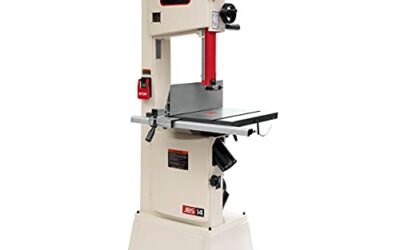
The RIKON 10-326 fits the weekend woodworker whose projects keep outgrowing a smaller saw. With 13 inches of resaw height and a 1-3/4 HP motor, it splits wide hardwood boards that would stall a benchtop machine, and its two-speed setup lets you slow down for dense stock or speed up for curves. The included drift fence helps you correct a wandering cut, and the wide blade range means one saw covers resawing, ripping thin stock, and cutting chair curves. It is a floor-standing machine, so it suits a garage or basement shop where it can stay put between weekends.
Specs
- 14-inch Deluxe Bandsaw, model 10-326
- 1-3/4 HP motor
- 13-inch resaw capacity
- Two-speed operation
- Accepts blades from 1/8 inch to 3/4 inch wide
- Includes drift fence
Best for: Weekend woodworkers who resaw wide hardwood boards and want one floor-standing saw for resawing and curved cuts.
Watch out for: Measure your floor space, doorway width, and electrical supply before ordering, and arrange help to move and position a heavy floor-standing machine.
Laguna Tools MBAND1412-175 14 x 12 Bandsaw

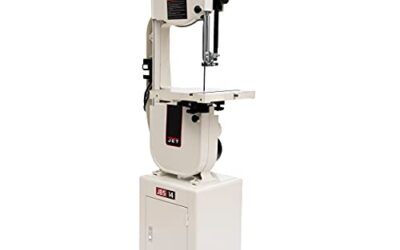
The Laguna 14|12 fits the weekend woodworker who builds fine furniture and cares about the quality of each cut as much as the size of the board. Its 12-inch resaw capacity handles bookmatched panels and shop-sawn veneer, while the large 21-1/2 x 16 inch table supports wide work without tipping. A 1-3/4 HP motor drives a 115-inch blade through hardwoods, and the 4-inch dust port connects to a collector so long resaw sessions stay cleaner. The blade range from 1/8 inch to 3/4 inch covers delicate curves as well as straight resaw cuts, making this a strong single-saw choice for a small furniture shop.
Specs
- 14 x 12 Bandsaw, model MBAND1412-175
- 1-3/4 HP motor
- 12-inch resaw capacity
- 115-inch blade length
- Accepts blades from 1/8 inch to 3/4 inch wide
- 21-1/2 x 16 inch table
- 4-inch dust port
- Runs on 110 volts, rewirable for 230 volts
Best for: Fine furniture makers and veneer work in a weekend shop where table size, dust collection, and steady resaw cuts matter.
Watch out for: Check the table height, floor footprint, and your dust collection hose size before buying, and confirm your circuit matches the voltage the saw is wired for on arrival.
Which One Fits Your Situation
You Want to Split the Widest Boards You Own
Choose the RIKON 10-326. Its 13-inch resaw height is the tallest of the two saws here, so a wide walnut or maple board can be split into bookmatched halves in a single pass. The 1-3/4 HP motor holds speed through dense stock, and the drift fence helps keep long cuts straight. When your projects start with thick rough-sawn lumber, that extra inch removes a real limit.
You Build Fine Furniture and Cut Veneer
Choose the Laguna 14|12. Its 12-inch resaw capacity is ample for veneer and bookmatched panels, and the large 21-1/2 x 16 inch table gives wide boards steady support through the cut. The 4-inch dust port keeps fine dust out of the cut line during long sessions, and the wide blade range lets you switch from resawing to curved chair parts without changing machines. It is the steadier pick when finish quality matters.
You Need One Saw for Resawing and Curves
Choose the RIKON 10-326. Both saws accept blades from 1/8 inch to 3/4 inch, but the RIKON pairs that range with two speeds, so you can run a narrow blade fast for tight curves and a wide blade slow for thick resaw cuts. That flexibility suits a weekend shop where one machine must cover boxes, chairs, and panels. Keep both blades on hand, and the saw changes roles in minutes.
Your Shop Is Small and Shares Space With Everything Else
Choose the Laguna 14|12, and plan its spot before it arrives. Both saws are floor-standing machines, so neither hides on a shelf, but the Laguna’s table height and dust port suit a compact shop where dust control and a stable work surface matter. Measure the footprint, leave room to feed long boards from both sides, and confirm you have a clear path from the door to its final position.
Common Mistakes
- Buying for wheel size alone and ignoring resaw height, which is the limit that actually stops a project.
- Choosing a saw with too little motor power for dense hardwoods, then feeding slowly and burning the cut.
- Resawing with a dull or narrow blade, which drifts, wanders, and leaves a wavy surface to clean up.
- Skipping the fence setup and drift adjustment, so every long cut curves away from the line.
- Forgetting dust collection, floor space, and the electrical circuit until the saw is already in the shop.
Frequently Asked Questions
How much resaw height does a weekend woodworker need?
Twelve inches covers most weekend work, including bookmatched panels, veneer, and drawer sides from wide boards. Thirteen inches adds headroom for the occasional extra-wide board. Anything under eight inches will limit you to small boxes and thin stock, and you will feel that limit the first time you try to split a wide hardwood board.
Can a 1-3/4 HP band saw resaw hardwoods like maple and walnut?
Yes, with a sharp wide blade and a steady feed rate. A 1-3/4 HP motor on a 14-inch saw handles dense hardwoods well for weekend use. Feed slowly enough to let the blade cut rather than forcing it, and the saw will hold its speed through the board.
What blade should I use for resawing?
Use a wide blade, usually 1/2 inch to 3/4 inch, with a low tooth count so sawdust clears the cut. A hook-tooth pattern clears chips well in thick stock. Keep the blade sharp, tension it to the maker’s guidance, and set the guides close to the board for a straight cut.
Do I need a riser block to resaw wide boards?
Not with the saws in this guide. Both offer 12 or 13 inches of resaw height built in, so no riser block is needed. Riser blocks are an option for older 14-inch saws that start at six inches, but they add setup work, so a saw with tall capacity from the factory is simpler.
Related guides
More from Amazon
Programs that pair well with the guide above. Offers and eligibility are set by Amazon and may change.
A free business account with business pricing and bulk-buying tools for work, shop or home office.
Create a business accountFree shipping on eligible items, Prime Video and more. Eligible new members can start with a free trial.
Start a Prime free trialAudiobooks and podcasts to listen to on the go. Eligible new members can start with a free trial.
Try Audible freeAd-free music streaming. Eligible new subscribers can start with a free trial.
Try Music Unlimited freeAs an Amazon Associate we earn from qualifying purchases.
Write Your Review
No reviews yet. Be the first to share your experience!