
Key takeaways
- Beginners are choosing hand tool woodworking because it asks for less space, less noise.
What's inside
As an Amazon Associate I earn from qualifying purchases. This post may contain affiliate links at no extra cost to you.
Beginners are choosing hand tool woodworking because it asks for less space, less noise, less dust and a smaller starting budget than a power-tool shop, while teaching the fundamentals of wood in a way that machines often hide. A handful of sharp tools, a sturdy bench and a few hours on a weekend are enough to build something real.
That does not mean hand tools are better for everyone. This article explains why so many newcomers are leaning that way in 2026, what the approach demands in return and how to decide whether it fits your home, your schedule and your goals.
Contents
What Is Drawing Beginners In
Several practical forces push in the same direction. Many new woodworkers live in apartments, shared houses or small garages where a table saw, planer and dust collector simply will not fit, and where neighbors would hear them. Hand tools store in a cabinet or a tool chest and make little more noise than a saw and a mallet.
Safety and comfort matter too. A hand saw or chisel is still sharp, but a beginner is less likely to face a kickback or a spinning blade at speed. Hand work is slower, which gives time to think, and it produces shavings and sawdust that are easier to sweep than a cloud of fine dust.
There is also a learning argument. When you plane a board by hand, you feel grain direction, tear-out and flatness with your own arms. When you cut a dovetail with a saw and chisel, the geometry of the joint becomes obvious. Those lessons transfer to power tools later, and many woodworkers say they set up machines better after learning the manual way first.
Finally, there is the pleasure of the craft itself. A hand plane produces a surface that needs little sanding, and the work is quiet enough to listen to music or a podcast. For people who spend their days in front of a screen, working with wood by hand is an appealing change of pace.
What Hand Tool Work Asks of You
Sharpening is part of the craft
Edge tools only work when they are sharp. Planes, chisels and saws need regular honing, and a beginner must learn at least one reliable sharpening method. This is a skill, not an obstacle, but it takes practice and a small set-up of stones or abrasives and a flat reference surface.
Patience and physical effort
Flattening a rough board by hand can take a long time and some muscle. Beginners who start with pre-surfaced lumber avoid much of that effort and can focus on joinery and assembly. Many people use a hybrid approach, letting a machine do rough work and then finishing by hand.
A solid bench and work holding
The bench matters more than any single tool. A heavy, stable surface with a vise or holdfasts keeps boards from sliding, which makes every cut safer and more accurate. A simple, sturdy bench built from construction lumber is a common first project.
Hand Tools and Power Tools Compared
| Factor | Hand tool approach | Power tool approach |
|---|---|---|
| Space needed | A bench and a cabinet | Room for machines and dust control |
| Noise and dust | Low | High, needs hearing protection and collection |
| Starting outlay | Modest, builds gradually | Higher, grows quickly |
| Speed on big projects | Slower | Faster |
| Skill learned | Reading grain, sharpening, layout | Machine set-up, jigs, accuracy |
| Best for | Small spaces, furniture details | Large builds, repeated parts |
A Starter Approach That Works
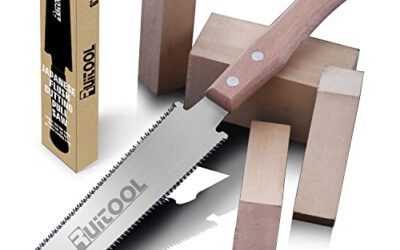
Most beginners do well with a small, versatile set rather than a large collection. Typical categories include a handsaw for crosscuts and rips, a block plane, a smoothing plane, a few bench chisels, a mallet, a square, a marking gauge and a sharpening setup. Buy quality for the edge tools and the measuring tools, where accuracy matters most, and improvise on the rest.
Start with small projects that teach one thing at a time: a cutting board for flattening, a box for dovetails, a shelf for dados and a stool for mortises. Each one adds a skill without demanding the full toolkit. Keep the first lumber simple, such as a straight-grained softwood or a forgiving hardwood, and sharpen before you begin each session.
Online lessons, local woodworking clubs and library books provide guidance on technique. Watching someone cut a joint is more helpful than reading about it, so try to find a mentor or a class if you can. Join a group, ask questions and share your mistakes; most woodworkers remember the same early frustrations. Even a single afternoon with a patient mentor can save weeks of trial and error.
Early Frustrations and How Beginners Get Past Them
Almost every newcomer hits the same walls. Chisels that will not hold an edge, planes that chatter or dig in, saw cuts that wander off the line and joints that gap are all normal on the way to competence. Most trace back to a handful of causes: dull tools, poor work holding, rushed layout or a bench that is too low or too wobbly.
Fixing them is usually simple. Sharpen before each session, scribe lines with a knife instead of a pencil for joinery, and cut on the waste side of the line so you can pare to fit. Plane with the grain and watch the direction of the rising fibers, and take thin shavings rather than forcing a heavy cut. When something goes wrong, change one variable at a time and write down what helped.
It also helps to keep early projects forgiving. Choose stock that is easy to cut, make extra parts for practice and accept that the first few joints will be imperfect. Progress shows quickly when you repeat the same cut a dozen times on scrap, and small, repeatable drills build muscle memory faster than a single large project.
Hand Tools in a Hybrid Shop
Many woodworkers who begin with hand tools eventually add a few machines, and the skills carry over. A bandsaw or a small planer saves hours of rough milling, while hand planes and chisels still handle fitting, trimming and fine surface work. The reverse path also works: a person who started with power tools may add a few hand tools for joinery and finishing and find that quality improves.
The best approach is the one that keeps you building. If a beginner enjoys the quiet and the ritual of hand work, there is no obligation to buy machines. If time is short and projects are large, using a machine for the dull parts frees energy for the interesting ones. Neither path is wrong, and both lead to the same fundamentals of layout, accuracy and respect for the material.
Before You Start Checklist
- Decide where the bench will live and how much floor space you can spare.
- Pick a first project that uses simple joinery and inexpensive lumber.
- Plan a sharpening method before buying more tools.
- Set aside a reliable square, a marking tool and a flat reference surface.
- Wear eye protection when chiseling or mallet work could throw chips.
- Keep fingers behind the cutting edge and clamp the work, never hold it in one hand.
Related guides
- Plunge Router Vs Fixed Base Router: Which To Buy First
- Why Loose Tenon Joinery Is Taking Off In Small Shops
- Random Orbital Sander For Furniture Refinishing
Frequently Asked Questions
Do I need power tools to build furniture?
No, but they save time on milling and repetitive cuts. Many builders mix both, doing rough work by machine and fine work by hand. Buying lumber already surfaced is another way to skip the heaviest labor while you learn.
How long does it take to learn?
Basic cuts and simple boxes come within a few sessions. Sharpening and accurate joinery take longer, and most woodworkers keep improving for years.
Are hand tools safer than power tools?
They avoid some risks, such as kickback, but sharp edges can still cut. Good work holding and sharp tools reduce accidents, since dull edges make people push harder and slip. Keep a first-aid kit in the shop and always cut away from your body.
What is the best first project?
A small box, stool or workbench teaches layout, cutting and assembly without a large time commitment. Pick something you will actually use so the finished piece keeps you motivated for the next one.
Related guides
More from Amazon
Programs that pair well with the guide above. Offers and eligibility are set by Amazon and may change.
A free business account with business pricing and bulk-buying tools for work, shop or home office.
Create a business accountFree shipping on eligible items, Prime Video and more. Eligible new members can start with a free trial.
Start a Prime free trialAudiobooks and podcasts to listen to on the go. Eligible new members can start with a free trial.
Try Audible freeAd-free music streaming. Eligible new subscribers can start with a free trial.
Try Music Unlimited freeAs an Amazon Associate we earn from qualifying purchases.


Write Your Review
No reviews yet. Be the first to share your experience!