
What's inside
As an Amazon Associate I earn from qualifying purchases. This post may contain affiliate links at no extra cost to you.
Choose a table saw if you rip and crosscut solid lumber all day, and choose a track saw if you mostly break down plywood and need clean, accurate cuts in a small space. Many woodworkers eventually own both, but if you have to pick one, the answer depends on your material, your space, and how you like to work. Here is a clear comparison, plus five tools to consider.
| Pick | Best for | Key feature |
|---|---|---|
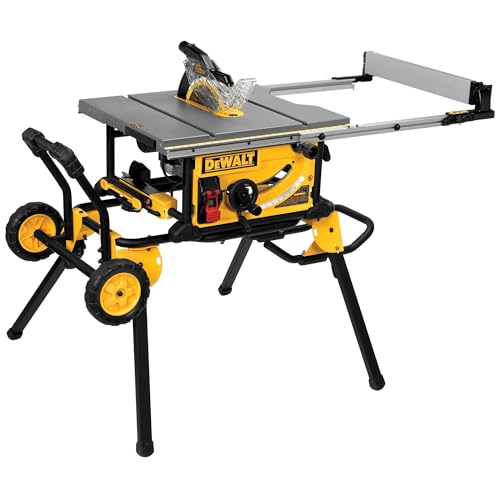
| DeWalt DWE7491RS Table Saw | A capable jobsite and small-shop saw | Rolling stand and rack-and-pinion fence |
| Bosch GTS1031 Table Saw | Compact, budget-minded table saw use | Lightweight benchtop design |
| Makita SP6000J1 Track Saw | Plywood and sheet goods | Plunge-cut with guide rail |
| DeWalt DWS520SK Track Saw | DeWalt battery or tool owners | Precise rail system and splinter guard |
| Festool TS 55 REQ Track Saw | Fine furniture and cabinet work | Smooth plunge action and rail accuracy |
Contents
Our Top Picks
 BOSCH GTS15-10 10 Inch Portable Jobsite Table Saw10 in28.1 x 27.8 x 13.53 inches102.95 poundsCheck on Amazon


How the Two Saws Differ
A table saw holds the blade stationary and you push the wood through it. A track saw is a circular saw that rides on a guide rail and you move the saw along the material. That single difference creates every other trade-off. On a table saw, the wood is moving, so large panels are awkward and need helpers or outfeed support. On a track saw, the panel can stay on the floor or a foam board while the saw does the moving, which is easier and safer for full sheets.
Accuracy is also different. A well-tuned table saw gives repeatable rips with a fence and quick, consistent cuts for many parts. A track saw gives a straight, splinter-free edge on a single cut, and it excels at cutting long pieces to size. For repetitive cuts of small parts, a table saw is faster. For occasional big cuts and finish-quality edges on veneered plywood, a track saw is a better match.
1. DeWalt DWE7491RS Table Saw
The DWE7491RS is a well-known 10-inch jobsite saw with a rolling stand and rack-and-pinion fence. It is large enough for ripping boards and portable enough to move between a garage and a driveway. It handles hardwood rips better than smaller models, though it is heavy to lift and takes up floor space even when folded. Choose it if you work with solid lumber, need dado capability, and want a saw you can build a shop around. Be sure to add a good blade and a dust solution.
2. Bosch GTS1031 Table Saw
The Bosch GTS1031 is a compact benchtop saw that appeals to people who want a table saw but lack space. It is lighter and easier to store than the DeWalt, and it suits small projects, trim, and light ripping. Its limited rip capacity and smaller table mean you will need a different approach to full sheets of plywood. It is a good fit for hobbyists on a budget, though you should expect to adjust and tune it to get the best accuracy.
3. Makita SP6000J1 Plunge Track Saw
This is a popular track saw among woodworkers who want good performance without the highest price tier. It comes with a guide rail, and the plunge action starts cuts cleanly in the middle of a panel. It is well suited to cutting plywood, melamine, and countertops. The dust port works with a vacuum, and the splinter guard helps give a clean edge. Rails are not cheap, so consider the lengths you need. It is a smart buy if you break down sheets in a small shop.
Makita SP6000J1 Plunge Track Saw
4. DeWalt DWS520SK Track Saw Kit
DeWalt’s corded track saw kit includes a rail and a case, which is convenient for people starting from scratch. It is compatible with the brand’s dust extraction accessories, and it performs well on a variety of sheet goods. If you already own DeWalt tools, it integrates nicely into your setup. As with other track saws, you will want to buy extra rail length for full sheets. Check the kit contents carefully before buying.
5. Festool TS 55 REQ Plunge Cut Track Saw
The Festool TS 55 is often held up as the reference track saw. Its plunge motion is smooth, the rail is precise, and the dust extraction is very effective when paired with a compatible vacuum. It is the choice for woodworkers who build fine furniture or cabinetry and value accuracy and refinement. The cost of entry is high, and accessories add up, so make sure your work justifies it. For many people, a less expensive track saw is enough.
Festool TS 55 REQ Plunge Cut Track Saw
Side-by-Side: What Matters Most
Material
Solid lumber rips are easier on a table saw, where the fence guides the stock. Sheet goods and large panels favor a track saw. If you do both, the table saw handles the lumber and the track saw handles the plywood.
Space and storage
A track saw and rail fit in a case or on a wall. A table saw, even a compact one, needs floor space and outfeed support. If your shop is a one-car garage, that difference is significant.
Safety
Both saws can be dangerous if misused. A table saw can kick back wood toward you, so use a riving knife, push sticks, and a blade guard. A track saw’s blade is covered when not cutting and the rail keeps the saw controlled, which many people find less intimidating.
Cost of ownership
Track saws need rails, clamps, and a vacuum for best results. Table saws need blades, a stand, and dust collection. Both can add up, so plan for the full setup rather than only the tool.
A Practical Way to Decide
Write down the last five projects you built, then note how each one started. If three or more began with a full sheet of plywood, the track saw will pay for itself quickly. If most began with rough or surfaced boards that needed ripping, resawing, or dados, the table saw is the natural center of the shop. People who build cabinets often use both: the track saw reduces sheets to manageable panels, and the table saw finishes the parts to exact size.
It is also worth thinking about workflow. A track saw can be used in the driveway, the garage floor, or the room where you are installing something, which suits remodelers and renters. A table saw anchors you to one place, but gives you speed once everything is set up. Consider how often you will move your tools before you decide.
Common Mistakes
- Expecting a track saw to replace a table saw for repeated narrow rips. It can do them, but slowly.
- Buying a table saw without enough room. You need clearance around the machine.
- Using the wrong blade. A cheap blade gives rough edges on either saw.
- Ignoring dust collection. Both saws create fine dust.
- Skipping a support surface under sheet goods. A foam board prevents binding and tear-out.
Frequently Asked Questions
Can a track saw replace a table saw?
For many hobbyists who work mainly with plywood, it can. For repetitive ripping of solid lumber, it is slower and less convenient.
Is a track saw safer than a table saw?
Many woodworkers find it less intimidating because the blade is below the surface of the work and the saw rides on a rail. Both require proper technique.
Do I need a special blade?
Use a blade designed for the saw and the material. A fine-tooth blade gives cleaner edges on plywood.
Which is better for a small shop?
A track saw usually wins on space. A compact table saw is an alternative if you work with solid lumber.
Conclusion
If your projects revolve around plywood and cabinets, a track saw offers accuracy and flexibility in a small footprint. If you rip solid boards constantly, a table saw is the productive choice. Based on specifications and reviewer feedback, the tools above cover a range of budgets, and many shops end up with both.
As an Amazon Associate we earn from qualifying purchases.
Related guides
More from Amazon
Programs that pair well with the guide above. Offers and eligibility are set by Amazon and may change.
A free business account with business pricing and bulk-buying tools for work, shop or home office.
Create a business accountFree shipping on eligible items, Prime Video and more. Eligible new members can start with a free trial.
Start a Prime free trialAudiobooks and podcasts to listen to on the go. Eligible new members can start with a free trial.
Try Audible freeAd-free music streaming. Eligible new subscribers can start with a free trial.
Try Music Unlimited freeAs an Amazon Associate we earn from qualifying purchases.


Write Your Review
No reviews yet. Be the first to share your experience!