Best Automotive Diagnostic Computer
What's inside
As an Amazon Associate I earn from qualifying purchases. This post may contain affiliate links at no extra cost to you.
A check engine light is one of the most common reasons drivers visit a shop, and many of those visits result in a diagnostic fee that rivals the repair itself. The best automotive diagnostic computer eliminates that middleman by letting you read and clear trouble codes, view live sensor data, and in some cases actuate components from your driveway. We compared published specifications, current prices, and aggregated owner feedback across eight OBD2 scan tools to identify which models deliver the most diagnostic value at each tier.
What separates a worthwhile scanner from a frustrating purchase comes down to four things: code coverage depth (engine-only versus ABS, SRS, and transmission systems), whether the tool supports bidirectional commands for component testing, how readable the data output is on a built-in screen, and whether the manufacturer provides meaningful software updates and post-sale support. A $16 code reader that handles basic engine faults competently is a better purchase for many owners than a $320 bidirectional tool sitting unused in a drawer.
As an Amazon Associate we earn from qualifying purchases at no extra cost to you. Product prices and availability are accurate as of the date shown and are subject to change.




Quick Picks
| Product | Best for | Price |
|---|---|---|
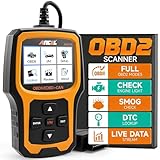
| ANCEL AD310 | Basic engine code reading and clearing | $29.99 |
| Innova 5210 | Live data with Bluetooth smartphone pairing | $89.99 |
| TOPDON AD900 Lite | Bidirectional testing on a large screen | $320 |
| FOXWELL NT301 | Live data with a clear standalone readout | $55.95 |
| Innova 5610 | Full-system diagnostics with US-based support | $268.98 |
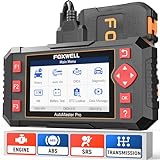
| FOXWELL NT604 Elite | Four-system coverage without bidirectional commands | $139.99 |
| MOTOPOWER MP69033 | Lowest-cost OBD2 code reading | $15.96 |
| ANCEL AD410 | Enhanced engine diagnostics on a tight budget | $38.96 |
How We Picked
We evaluated each tool on four criteria: breadth of systems it can read (engine-only versus multiple control modules), support for bidirectional control during troubleshooting, usability of its data display for interpreting live sensor values, and quality of manufacturer support including firmware updates and technical assistance. Price was treated as a constraint rather than a scoring factor, so a $16 tool that does its job well earns the same recommendation weight as a $320 tool that does more.
The 8 Best Automotive Diagnostic Computer in 2026
ANCEL AD310 Classic
Owner feedback consistently praises the AD310 for its plug-and-play simplicity. Connect to the OBD2 port, read codes, clear the light — no app, no registration, no learning curve. The display shows plain-language code definitions rather than bare alphanumeric strings, helping beginners judge whether a fault needs immediate attention or can wait. Build quality feels durable for the price, and it covers all OBD2-compliant vehicles from 1996 forward.
- Pros: Reads and clears engine codes with readable definitions; fully standalone operation.
- Cons: Engine and emissions systems only; no ABS, SRS, or transmission coverage.
Skip this if you need to investigate a brake warning light, airbag code, or transmission issue.
Innova 5210
The 5210 bridges the gap between standalone readers and phone-dependent tools. It reads engine codes and live data on its own screen, then pairs via Bluetooth with Innova’s RepairSolutions2 app for code-based repair guidance and a battery test function. Owners appreciate the app’s diagnostic help pages that contextualize codes for specific makes. For anyone wanting slightly more than basic code reading without jumping to a four-system tool, this is a natural step up.
- Pros: Bluetooth app adds repair guidance and battery testing; live data on the unit itself.
- Cons: Engine system only — no ABS, SRS, or transmission module access.
Skip this if you are comfortable using a phone app exclusively and do not want a separate handheld device.
TOPDON AD900 Lite
The AD900 Lite is the most capable tool on this list. Its eight-inch screen renders live data graphs, bidirectional test controls, and full-system scans in a format that feels like a shop tablet rather than a handheld gadget. Bidirectional commands let you cycle solenoids, run fuel pump tests, and actuate components to confirm repairs. Owners with moderate mechanical experience praise how it turns guesswork into verification. The trade-off is the highest price here and a learning curve casual users may find unnecessary.
- Pros: Bidirectional control plus wide system coverage on a large touchscreen; professional-grade graphs.
- Cons: Highest price on this list and a meaningful interface learning curve.
Skip this if you only need to read and clear a check engine light; you will not use most capabilities.
FOXWELL NT301
The NT301 occupies a middle ground that surprises owners: it reads engine codes, displays live data, and provides I/M readiness checks for emissions testing. The screen is readable in sunlight, and the color-coded readiness display tells you at a glance whether your car will pass a smog check. Foxwell’s published documentation is thorough, and the tool supports CAN-protocol vehicles without requiring app pairing. For a driver wanting more than basic code reading without a phone workflow, the NT301 is a self-contained answer.
- Pros: Live data plus I/M readiness on a standalone screen; no registration needed.
- Cons: Engine and emissions systems only; no bidirectional functions.
Skip this if you want to diagnose ABS, airbag, or transmission issues.
Innova 5610
The 5610 extends Innova’s reach into bidirectional territory with full-system coverage across engine, transmission, ABS, and SRS modules. Owners report that RepairSolutions app pairing adds vehicle-specific diagnostic help that shortens troubleshooting time. Innova bundles software updates and provides US-based technical support, which matters for buyers who want a reliable escalation path when a code looks ambiguous. For a DIY mechanic moving beyond reading codes into confirming repairs, the 5610 hits the best price-to-capability ratio on this list.
- Pros: Bidirectional control with four-system coverage; included updates and responsive US-based support.
- Cons: Smaller screen than the AD900 Lite makes data graphs harder to read in some conditions.
Skip this if you want the largest possible display or a tablet-style interface without phone pairing.
FOXWELL NT604 Elite
The NT604 Elite is the entry point for four-system diagnostics — engine, ABS, SRS, and transmission — without crossing into bidirectional territory. It reads and clears codes across those modules and displays live data, making it a genuine step above engine-only readers for owners dealing with brake lights, airbag warnings, or shifting problems. Foxwell’s customer support receives positive mentions in owner feedback, and the device operates fully independently of any app. At its price it fills a gap that neither $30 readers nor $270 bidirectional tools cover well.
- Pros: Four-system coverage at a moderate price; completely standalone with no app dependency.
- Cons: No bidirectional functions, so you cannot actuate components to verify a repair.
Skip this if you need active tests or service functions like oil resets and throttle relearns.
MOTOPOWER MP69033
At under $16, the MP69033 is the cheapest path to reading and clearing engine fault codes on any OBD2-compliant vehicle from 1996 onward. Owner feedback highlights its compact size, readable screen, and no-frills operation. It lacks live data, readiness monitors, and multi-system coverage, but those absences are consistent with its price point. For a glovebox backup or a first tool before committing to something more capable, it removes the excuse of paying a shop to read one code.
- Pros: Lowest cost on this list; one-button operation with plain-language code definitions.
- Cons: Engine codes only; no live data, readiness checks, or advanced features of any kind.
Skip this if you are interested in sensor trends, emissions readiness, or systems beyond engine.
ANCEL AD410
The AD410 is the AD310’s more capable sibling, adding enhanced OBD2 functions including live data streams, readiness status, and a richer code-definition library. Owners note that the live data feature transforms vague check-engine scenarios into actionable information — seeing a coolant temperature reading that contradicts the dashboard gauge, for instance. At under $40, it occupies the most cost-effective tier for anyone wanting more than basic code reading without committing to a phone-connected workflow.
- Pros: Live data plus enhanced readiness checks at a price barely above basic readers; covers all OBD2 vehicles from 1996 forward.
- Cons: Still limited to engine and emissions systems; no ABS, SRS, or transmission access.
Skip this if you need to investigate or clear codes in brake, airbag, or drivetrain modules.
Buying Guide
System Coverage: Engine-Only Versus Multi-Module
The single most important specification is how many vehicle modules the scanner accesses. Engine and emissions systems are universal across all OBD2-compliant vehicles, so every tool on this list handles them. ABS, SRS, and transmission modules require higher-protocol access that only the TOPDON AD900 Lite, Innova 5610, and FOXWELL NT604 Elite provide here. If your vehicle’s brake light, airbag warning, or shift complaint is the reason you are shopping, you must choose one of those three or look beyond this roundup.
Bidirectional Control: What It Adds and When You Need It
Bidirectional capability lets the tool send commands to the vehicle rather than only receiving data. Practical uses include cycling a fuel injector to confirm it clicks, commanding a solenoid to verify actuation, or triggering a regeneration sequence. This separates troubleshooting from guessing: after replacing a part, you confirm the vehicle responds correctly. The TOPDON AD900 Lite and Innova 5610 support this. If you regularly perform your own repairs and want verification steps, the capability justifies the premium over read-and-clear-only tools.
Display and Interface: Screen Size, Live Data Readability, and Standalone Operation
A scanner’s value depends on how quickly you interpret what it shows. Small monochrome screens work for code reading but make live-data graphs difficult to follow. The AD900 Lite’s eight-inch touchscreen is the clear leader, while the NT301 and AD410 offer readable color displays sufficient for their feature sets. Consider also whether the tool works without a phone. Standalone operation is genuinely useful in a garage with poor cellular reception, and several tools here — the NT301, NT604 Elite, and MP69033 — need no app connection at all.
Our Verdict
The Innova 5610 is our top pick for the best automotive diagnostic computer on this list. It balances bidirectional control, full-system coverage, included software updates, and US-based technical support at a price that remains practical for a committed DIY mechanic. For budget buyers who just need a reliable engine-code reader, the ANCEL AD310 is the safest recommendation at its price point. If your priority is a large-screen experience with the widest system coverage and you do not mind spending more, the TOPDON AD900 Lite wins that argument.
FAQ
Do all OBD2 scanners work on every car?
All OBD2-compliant vehicles from 1996 onward support basic engine and emissions protocols that any scanner here can read. However, access to ABS, SRS, transmission, and proprietary modules varies by manufacturer, and only higher-end bidirectional tools reliably reach those systems across all brands.
Can a scan tool clear a check engine light permanently?
A scanner clears the stored code and turns off the light, but