Paslode 18-Gauge Finish Nailer Review: Fuel-Powered Trim Performance
What's inside
As an Amazon Associate I earn from qualifying purchases. This post may contain affiliate links at no extra cost to you.
Contents
Paslode 18-Gauge Finish Nailer Review: Fuel-Powered Trim Performance
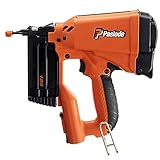
For trim work away from a compressor, the Paslode 18-gauge finish nailer is a practical choice if you value a light, cordless tool more than low running costs; in hardwood, expect to tune depth and nail length rather than assume every fastener will finish flush.
Its main advantage over a compressor-driven brad nailer is mobility: there is no hose to drag around, and the tool’s compact head is easier to position near corners and overhead. The tradeoff is an ongoing supply of fuel cells and batteries, plus the need to manage depth carefully as wood hardness and trim thickness change.
As an Amazon Associate we earn from qualifying purchases at no extra cost to you.


What matters for hardwood trim
An 18-gauge nailer drives narrow brads, making it useful for attaching casing, small moldings, and other trim where a relatively discreet hole is desirable. It is not a substitute for a finish nailer or a stronger fastening method when the workpiece, substrate, or joint requires more holding power. Check the tool’s manual and the trim manufacturer’s guidance for the particular application.
In hardwood, drive depth depends on more than the depth setting. Dense grain, knots, a nail’s length, the tool’s contact with the work, battery condition, and the relationship between the trim and backing material can all affect the result. A setting that leaves brads just below the surface in softwood may leave them proud in oak or maple.
- Make a test piece: Use offcuts of the same trim and backing material before starting the installation.
- Keep the nose square: An angled or rocking contact can leave a nail proud or drive it inconsistently.
- Adjust in small increments: If brads sit proud, increase depth gradually; if they bury too far, back it off.
- Inspect knots and edges: Dense areas and narrow profiles are more likely to deflect a brad or split.
Consistent flush driving is attainable with suitable nails and a correctly adjusted tool, but it is not automatic in hardwood. For visible trim, plan on filling nail holes and checking each run before moving on. If repeated test shots remain proud at the tool’s appropriate setting, reconsider nail length, backing, or fastening method rather than forcing the adjustment to an extreme.
Nail range, portability, and the compressor comparison
Paslode’s 18-gauge cordless finish nailer is generally specified for brads in the 5/8- to 2-inch range. Confirm the range for the exact model and use compatible fasteners; model revisions and regional versions can differ. A longer brad is not automatically better: it must pass through the trim and enter the backing without emerging on the far side or splitting a narrow piece.
| Decision point | Paslode 18-gauge fuel nailer | Typical compressor-driven brad nailer setup |
|---|---|---|
| Fastener range | Typically 5/8–2 in.; verify the model manual | Varies by tool; many accept brads up to 2 in. |
| Power arrangement | Fuel cell plus rechargeable battery | Compressed air from a separate compressor |
| Tool weight | About 4.6 lb, depending on model and configuration | Often around 2–3 lb for the nailer alone; hose adds drag |
| Setup burden | Low: load brads and maintain fuel and battery | Higher: compressor, hose, power source, and pressure setup |
| Running supplies | Brads, fuel cells, and battery charging | Brads and electricity for the compressor |
| Best fit | Room-to-room trim, punch lists, and sites without convenient air | Frequent shop use, multiple pneumatic tools, or users minimizing consumable costs |
Weight comparisons require care: a cordless tool carries its power source, while a pneumatic nailer’s stated weight usually excludes the compressor and hose. The Paslode’s relatively compact head helps with sightlines and access, but its complete tool is heavier than many bare pneumatic brad nailers. In a room with repeated repositioning, losing the hose can matter more than the difference in tool-only weight. For prolonged overhead use, the added mass may be less appealing.
Fuel and battery costs: a realistic ownership calculation
Fuel-powered convenience has a per-job cost that a listing price does not show. The exact fuel-cell yield depends on the compatible cell, firing pattern, temperature, and how long the tool is left ready to fire. Use the packaging’s rated yield as a planning figure, not a guarantee.
For example, if a compatible fuel cell is rated for roughly 1,000 shots and costs about $10–$15, its fuel cost is approximately 1–1.5 cents per shot. A 500-brad job would therefore use about $5–$7.50 of fuel at that rated rate, before accounting for waste, battery charging, brads, or the possibility that a partly used cell ages out before the next project. Actual results can differ.
That cost is easy to accept for occasional work where setup time and portability matter. For a shop that fires thousands of brads regularly, a pneumatic nailer may be cheaper to run, particularly if a compressor is already owned. Keep the battery charged, store fuel cells as their instructions specify, and avoid buying more cells than you can use within their stated shelf life.
Which setup fits your situation?
| Your situation | Better fit | Why |
|---|---|---|
| Occasional trim repairs; no compressor | Paslode cordless | Portable setup avoids buying and storing air equipment. |
| Frequent installations across several rooms | Paslode cordless, if mobility outweighs cell cost | No hose to move between rooms, with consumables to budget for. |
| High-volume shop work and compressor already available | Pneumatic brad nailer | Lower dependence on fuel cells and a lighter nailer in the hand. |
| New user fastening hardwood trim | Either, with test shots first | Depth setup and correct brad selection matter more than power source. |
| Very narrow or delicate molding | Choose by control and access, then test | Long or poorly placed brads can split trim regardless of nailer type. |
Ownership: what needs attention first
Fuel-powered tools need more than occasional battery charging. Keep the nose and contact area clear of dust and debris, check the manual for approved cleaning and lubrication procedures, and remove the battery or fuel cell before clearing a jam or servicing the tool. Do not apply oil or solvents unless the manufacturer permits them; incorrect products can damage components or affect operation.
Brads and fuel cells are recurring purchases, while batteries and the firing mechanism are longer-term ownership considerations. A weak or uncharged battery, an empty or improperly stored fuel cell, incompatible brads, or neglected debris can all cause poor or interrupted firing. If performance changes, check the consumables and follow the troubleshooting steps for the exact model before assuming the tool needs repair.
One common mistake is treating every proud brad as a reason to raise the depth setting. First verify that the fastener is within the approved range, the tool is firmly seated, and the backing is appropriate. Driving too deep can damage the trim face and create more filling work; using an excessively long brad can also increase the chance of splitting or an unwanted exit point.
Verdict
The Paslode 18 gauge finish nailer makes the most sense for installers and homeowners who value cordless mobility, work in several locations, or do not already own a compressor. Its compact head can be easier to maneuver than a compressor-driven brad nailer attached to a hose, but the complete tool is not necessarily lighter than a pneumatic nailer by itself.
For hardwood trim, regard depth consistency as something to set up and verify, not a guarantee. Its typical 5/8- to 2-inch brad range covers many trim tasks, while fuel and battery costs make frequent high-volume use less economical than a pneumatic setup. Choose it for portability; choose air power when the compressor is already part of a busy shop and lower consumable costs matter more.