Non Alcoholic Margarita Recipe
As an Amazon Associate I earn from qualifying purchases. This post may contain affiliate links at no extra cost to you.
Non Alcoholic Margarita Recipe
A balanced non alcoholic margarita recipe uses 2 ounces of lime juice, 1 ounce of orange juice, 1 ounce of non-alcoholic orange syrup or orange aperitif, ¾ ounce of agave syrup, and a small pinch of salt per serving—then finishes with chilled sparkling water for lift.
Single-Serving Recipe
This alcohol-free margarita has the familiar sharp lime, orange aroma, gentle sweetness, and salted finish of a classic margarita without tequila.
As an Amazon Associate we earn from qualifying purchases at no extra cost to you.


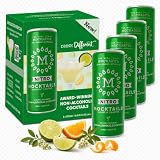
- 2 ounces freshly squeezed lime juice
- 1 ounce freshly squeezed orange juice
- 1 ounce non-alcoholic orange syrup or non-alcoholic orange aperitif
- ¾ ounce agave syrup, or ½ ounce for a tarter drink
- 1 small pinch of fine sea salt, approximately 1/16 teaspoon
- 2 ounces chilled sparkling water
- Ice
- Lime wedge and coarse salt for the rim, optional
To make it, rub the lime wedge around half of the rim rather than the entire rim. Dip that section into coarse salt. Add the lime juice, orange juice, orange ingredient, agave syrup, and fine salt to a shaker or jar with ice. Shake for 10 to 12 seconds, then strain over fresh ice in a 10- to 12-ounce glass. Top with sparkling water and stir once.
Partial salting gives you control over every sip. A fully salted rim can overpower a drink that already contains salt in the mixture.
Pitcher Recipe for 8 Servings
For a small gathering, mix the ingredients below in a 64-ounce pitcher. Keep the sparkling water separate until serving so the drink does not become flat.
| Ingredient | 8-serving amount | Purpose |
|---|---|---|
| Fresh lime juice | 16 ounces | Acid and the main margarita flavor |
| Fresh orange juice | 8 ounces | Roundness and natural citrus sweetness |
| Non-alcoholic orange syrup or aperitif | 8 ounces | Orange aroma and concentrated flavor |
| Agave syrup | 6 ounces | Sweetness and a smooth finish |
| Fine sea salt | ½ teaspoon | Balances acidity and sharpens citrus flavor |
| Chilled sparkling water | 16 ounces | Dilution and carbonation |
Combine everything except the sparkling water in the pitcher and stir until the salt and agave dissolve. Refrigerate for up to 4 hours. Add the sparkling water immediately before serving, stir gently, and pour over ice. The finished pitcher makes approximately 64 ounces, or eight 8-ounce pours before ice.
Choosing the Orange Component
The orange ingredient changes the drink more than most people expect. Choose according to the result you want rather than treating all substitutes as interchangeable.
| Orange option | Amount per serving | Best for | Adjustment |
|---|---|---|---|
| Fresh orange juice only | 2 ounces total orange juice | A lighter, breakfast-style mocktail | Use ½ ounce agave to prevent excess sweetness |
| Orange syrup | 1 ounce | A sweet, consistent party pitcher | Reduce agave to ½ ounce if the syrup is very sweet |
| Non-alcoholic orange aperitif | 1 ounce | A more complex, bittersweet profile | Keep the full ¾ ounce agave unless the product is sweetened |
| Orange zest and juice | 1 ounce juice plus a 2-inch zest strip | A fresher drink with less syrup | Steep the zest for 5 minutes, then remove it |
Read the label of a non-alcoholic orange product before adding agave. Some are highly concentrated and sweet, while others are designed to replace a bitter orange liqueur and may need additional syrup.
How to Adjust the Balance
Make the first drink exactly as written, then adjust in small increments. Citrus varies by season, ripeness, and juicing method, so the same measurements will not taste identical every time.
- Too sour: Add ¼ ounce agave syrup, stir, and taste again.
- Too sweet: Add ¼ ounce lime juice and a few grains of salt.
- Too flat: Add ¼ ounce lime juice or 1 teaspoon orange juice; do not add more sparkling water first.
- Too sharp or bitter: Add 1 ounce sparkling water and ¼ ounce orange juice.
- Missing the margarita character: Add a tiny pinch of salt and use a partial salted rim.
- Too watery: Shake with plenty of ice, strain onto fresh ice, and avoid letting the drink sit over melting ice.
Juicing and Mixing Tools That Make a Difference
You do not need specialized bar equipment, but the right tools improve consistency. A handheld citrus press is usually faster for one or two drinks, while a tabletop press is useful when making a full pitcher. For eight servings, plan on roughly 12 to 16 medium limes, depending on their size and juiciness.
| Tool | Useful capacity or specification | Best use | Ownership consideration |
|---|---|---|---|
| Handheld citrus press | One lime half at a time | One to four servings | Rinse immediately; pulp dries around the hinge |
| Manual tabletop juicer | Approximately 12 to 16 ounces per batch | Pitchers and repeated preparation | Check that removable parts are easy to clean |
| Fine-mesh strainer | Typically 3 to 5 inches wide | Removing seeds and excess pulp | Fine screens can retain pulp and need thorough rinsing |
| Glass pitcher | At least 64 ounces | Eight servings with room to stir | Leave headspace for sparkling water and ice |
| Digital kitchen scale | 1-gram increments | Repeatable syrup and salt measurements | Keep citrus juice away from the weighing surface |
For occasional use, a handheld press, measuring jigger, and large jar are sufficient. If you regularly make pitchers, a tabletop juicer saves time, but it also creates more parts to wash. The most important feature is not leverage; it is a smooth, accessible design that lets you remove pulp before it dries.
Worked Cost and Quantity Estimate
A pitcher requires 16 ounces of lime juice. If one lime yields about 1 ounce, you need approximately 16 limes. At a general market price of $0.35 to $0.75 per lime, the limes alone cost about $5.60 to $12.00. Add roughly $2 to $5 for oranges, $1 to $3 for agave, $2 to $8 for an orange syrup or non-alcoholic orange aperitif, and $1 to $3 for sparkling water.
That puts an eight-serving pitcher in an approximate $11.60 to $31.00 range, or about $1.45 to $3.88 per serving. The largest cost variable is the orange product. Fresh juice is usually less expensive, while a concentrated non-alcoholic aperitif offers more complexity but costs more per ounce.
Make-Ahead, Storage, and Common Mistakes
Fresh lime juice tastes brightest on the day it is squeezed. The still mixture can be refrigerated in a sealed container for up to 24 hours, although its aroma will gradually fade. Add sparkling water only at serving time. Do not store the finished carbonated drink in a sealed glass bottle unless the container is specifically designed for pressure.
- Do not substitute bottled lime juice without tasting first; its acidity and bitterness can vary widely.
- Do not add ice to the pitcher unless it will be consumed immediately, because melting ice changes the formula.
- Do not use table salt directly on the rim if you want a clean texture; coarse or flake salt is easier to control.
- Do not assume extra orange juice will replace orange syrup; it adds water and acidity but less concentrated orange aroma.
- Wash the juicer, strainer, and pitcher promptly. Citrus pulp and agave become sticky as they dry.
Frequently Asked Questions
Can I make this non alcoholic margarita recipe without sparkling water?
Yes. Shake the ingredients with ice and strain over fresh ice for a denser, more concentrated drink. Add 1 to 2 ounces cold water if the lime tastes too intense.
Can I use lemon juice instead of lime juice?
You can replace up to half the lime juice with lemon juice, but a full substitution tastes more like lemonade. If using lemon, add a little extra orange zest or orange syrup to restore the rounded citrus character.
How can I make it less sweet?
Start with ½ ounce agave syrup instead of ¾ ounce, use unsweetened orange juice, and add sweetness only after chilling and tasting. Salt can make a tart drink seem more balanced, but it cannot replace sugar completely.
Is this recipe suitable for children?
It contains no tequila, but check every packaged orange syrup or non-alcoholic aperitif for its ingredient and alcohol labeling. For children, use fresh orange juice and a clearly labeled alcohol-free syrup, and serve it as a small portion over ice.